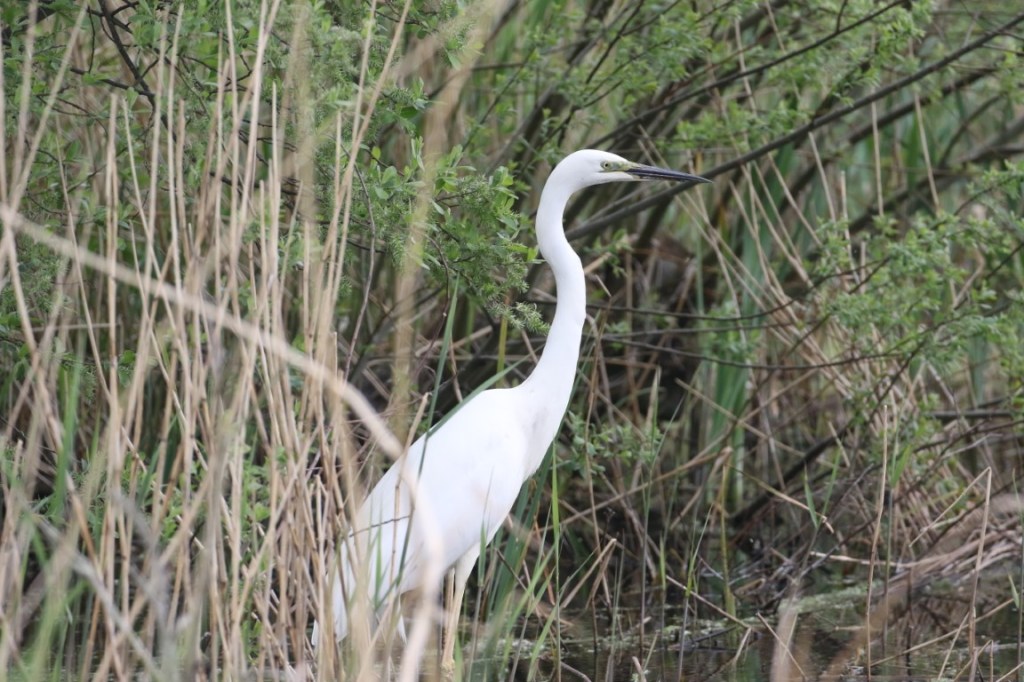
Yesterday (30th October 2024) I caught up with a great white egret (Ardea alba) at Waterhead, Ambleside.
This species is an increasingly common sight in the UK, but it’s still regarded as a rare species compared to its global range. In recent years, its status has shifted due to conservation efforts and changing environmental conditions.
Status Overview:
- Population: The great white egret has been recorded in the UK more frequently since the early 2000s. The population has been steadily increasing, especially in wetlands and nature reserves.
- Breeding: It started breeding in the UK relatively recently, with the first recorded breeding attempt in Somerset in 2012. Since then, the breeding population has expanded, with nesting sites established in areas like the Somerset Levels and Shapwick Heath.
- Conservation Status: The species is not considered endangered globally, but in the UK, it’s still regarded as a rare breeder. It is categorized as an Amber List species under the UK Birds of Conservation Concern, indicating that it has an unfavourable conservation status in Europe or a significant population decline.
- Habitat: The great white egret is found in wetland habitats such as marshes, lakes, and rivers. The establishment and protection of these habitats have been critical to its increased presence in the UK.
Overall, the great white egret’s status in the UK has increased, and it’s becoming a more familiar sight, especially in southern England. However, it is still considered a rare breeding bird.
Sightings in Cumbria:
The great white egret has been recorded in Cumbria, though it remains an infrequent sighting compared to southern parts of the UK. Cumbria, known for its wetlands, lakes, and coastal areas, provides suitable habitats for these birds, particularly in nature reserves and wetland areas.
The great white egret (also known simply as the great egret) has been recorded in Cumbria, though it remains an infrequent sighting compared to southern parts of the UK. Cumbria, known for its wetlands, lakes, and coastal areas, provides suitable habitats for these birds, particularly in nature reserves and wetland areas.
Recent Records: Sightings of the great white egret in Cumbria have increased in recent years, often reported around key wetland sites, such as the Solway Firth, Leighton Moss (which is just south of Cumbria in Lancashire but accessible to Cumbrian birders), and Bassenthwaite Lake.
Winter Visitors: Many of the egrets seen in Cumbria are winter visitors, as they migrate to the UK from continental Europe. They are typically spotted feeding in shallow water, especially in areas with abundant fish or amphibians.
Breeding: Although there have been no confirmed breeding records of great white egrets in Cumbria itself, their range is expanding northward, so it may become a possibility in the future.
If you’re interested in seeing great white egrets in Cumbria, keeping an eye on birdwatching reports from local reserves and wetlands, particularly during migration periods, will increase your chances of spotting one.

 Andrew Chick Ecology
Leave a comment