
The Rowan tree (Sorbus aucuparia), also known as the mountain ash, is a deciduous tree native to Europe, including the UK, as well as parts of Asia. It is well known for its bright red berries and pinnate leaves, and it plays an important role in folklore, culture, and ecosystems.
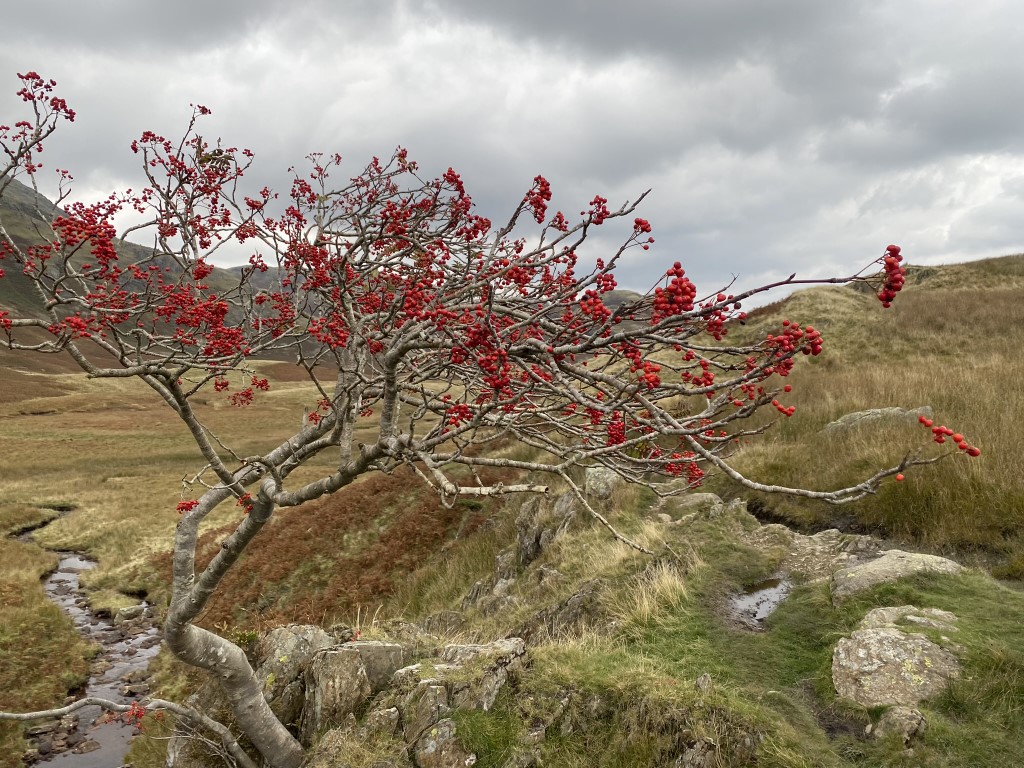
Key Features of the Rowan Tree:
- Height: Rowan trees are typically small to medium in size, growing up to 10-15 meters (30-50 feet) tall.
- Leaves: The leaves are pinnate (feather-like) with multiple leaflets (usually 5-9 pairs) along a central stem. The leaves are green in summer and turn yellow to red in autumn, adding seasonal color.
- Flowers: In late spring, the tree produces clusters of creamy-white, fragrant flowers that attract pollinators like bees.
- Berries: The bright red or orange berries that appear in autumn are one of the most distinctive features of the rowan. These berries are a rich food source for birds, especially thrushes and blackbirds, who help disperse the seeds.
Habitat:
The Rowan tree thrives in a variety of settings, including woodlands, rocky hillsides, and mountainous areas, giving it its other name, “mountain ash.” It is often found at higher altitudes in Europe and is known for growing in poor, rocky soils. Its ability to tolerate challenging environments makes it common in upland regions such as the Lake District and the Scottish Highlands.
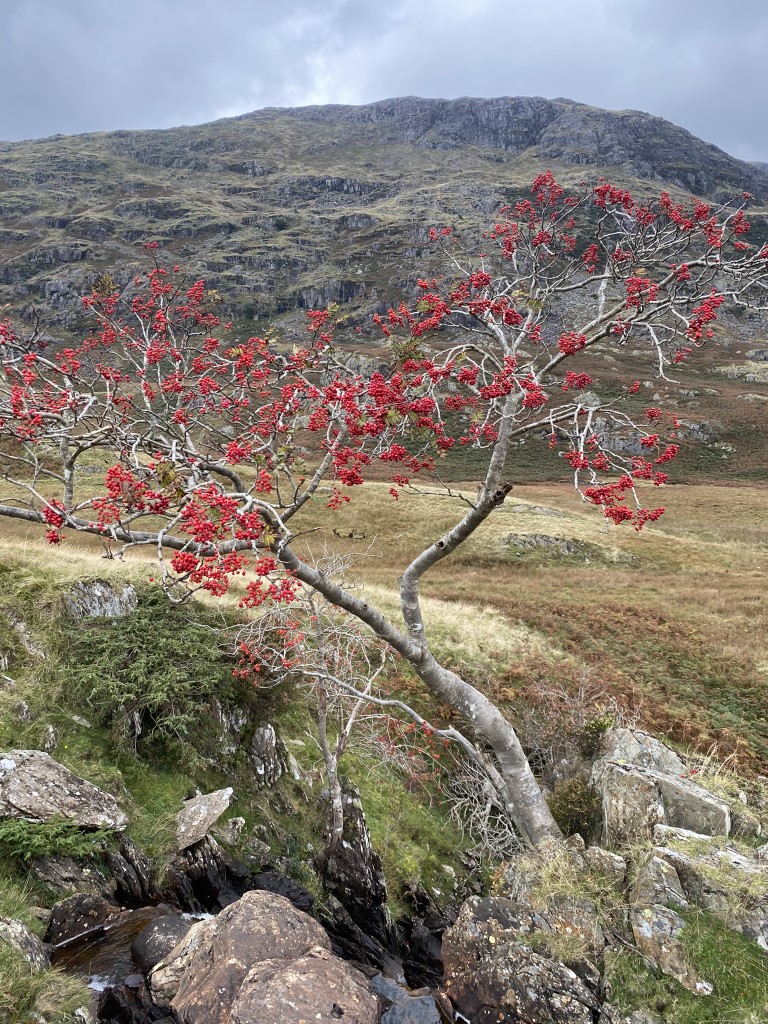
Rowan in The Lake District in the shadow of Wetherlam (c) Andrew P. Chick.
Folklore and Cultural Significance:
- Protection from Evil: In British and Celtic folklore, the Rowan tree has long been considered a symbol of protection. People believed that planting a rowan near their home would protect them from evil spirits and witches. Rowan wood was also used to craft protective amulets or crosses.
- Magic and Wisdom: The tree is associated with magic and wisdom, often linked to ancient Druid traditions. In Scottish Gaelic culture, it is referred to as the “Tree of Life,” and its berries are said to hold protective and magical properties.
Uses:
- Edible Berries: While the berries are quite bitter when raw, they can be used to make jellies, jams, or even wine once cooked, often combined with other fruits to balance the flavor.
- Medicinal Uses: In the past, rowan berries were believed to have medicinal properties, such as aiding digestion or treating sore throats, although they are not commonly used in modern herbal medicine.
Ecological Role:
The Rowan tree is a vital part of the ecosystem, especially in mountainous and upland areas. Its berries provide a key food source for birds and mammals during the autumn and winter months. The tree also supports various insect species that feed on its leaves, flowers, and bark.
The Rowan’s combination of beauty, folklore, and ecological importance makes it a tree with deep cultural resonance and practical value in both wild and managed landscapes.



 Andrew Chick Ecology
Leave a comment