
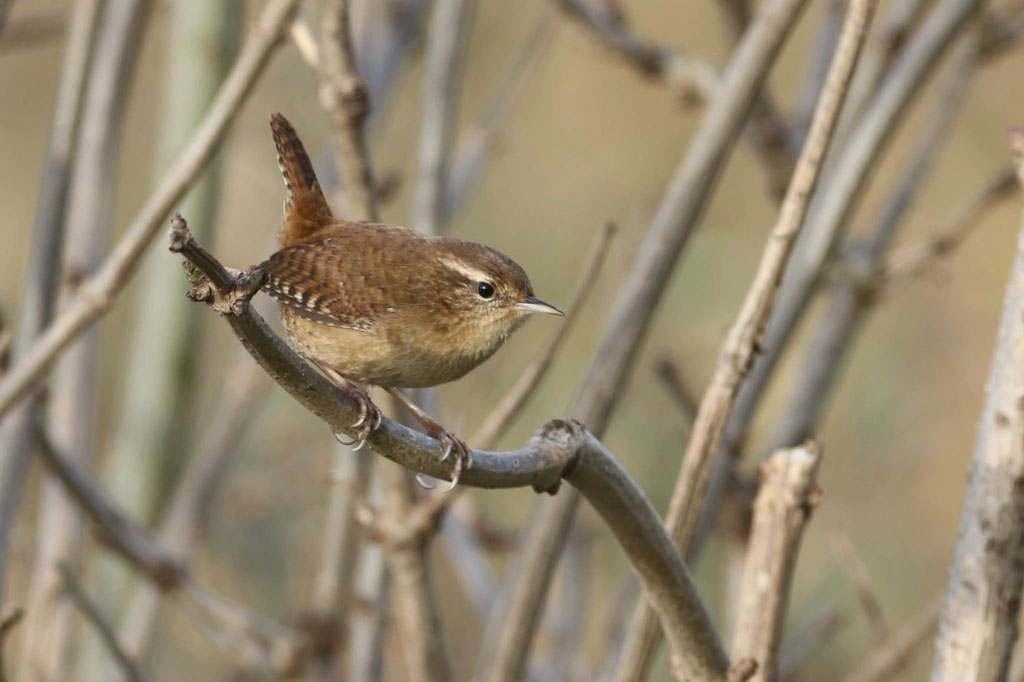
The Wren is one of the most abundant and widespread bird species in England and possibly the commonest bird in Cumbria!
It is not considered threatened and has a stable population overall. Wrens can be found across a wide range of habitats, including woodlands, hedgerows, gardens, coastal areas, and scrubby landscapes. They are particularly common in areas with dense vegetation, where they can find cover and food, such as insects and spiders.
The population in England has generally remained stable or even shown signs of slight increases over the last few decades. According to the RSPB, the UK population of Wrens is estimated at around 10 million breeding pairs, and they are considered a species of “least concern” by the International Union for Conservation of Nature (IUCN).
Wrens are small birds, more often heard than seen. They can be vulnerable to cold winters. Harsh winters can lead to higher mortality rates, but their population has shown resilience due to their ability to breed prolifically in spring and summer.
While the Wren is not under significant threat in England, certain local fluctuations can occur due to weather events or habitat changes. However, they are not subject to the same conservation concerns as some other bird species. Their adaptability to various habitats and availability of food sources has helped them maintain stable numbers.
While Wrens are adaptable, significant changes in land use, such as the loss of hedgerows and woodlands, can potentially affect their numbers in localized areas. In Cumbria the species is mostly absent from the fell tops due to the lack of scrub, something that has only happened in the last couple of hundred years…. Will rewilding projects give the birds a route back into Cumbria’s nature depleted uplands?
In conclusion, the Wren remains a common and widespread bird in England, with no major concerns regarding its overall population. It continues to thrive in a variety of habitats across the country, and is seen throughout ‘most’ of Cumbria….
All photos copyright Andrew P. Chick


 Andrew Chick Ecology
Leave a comment