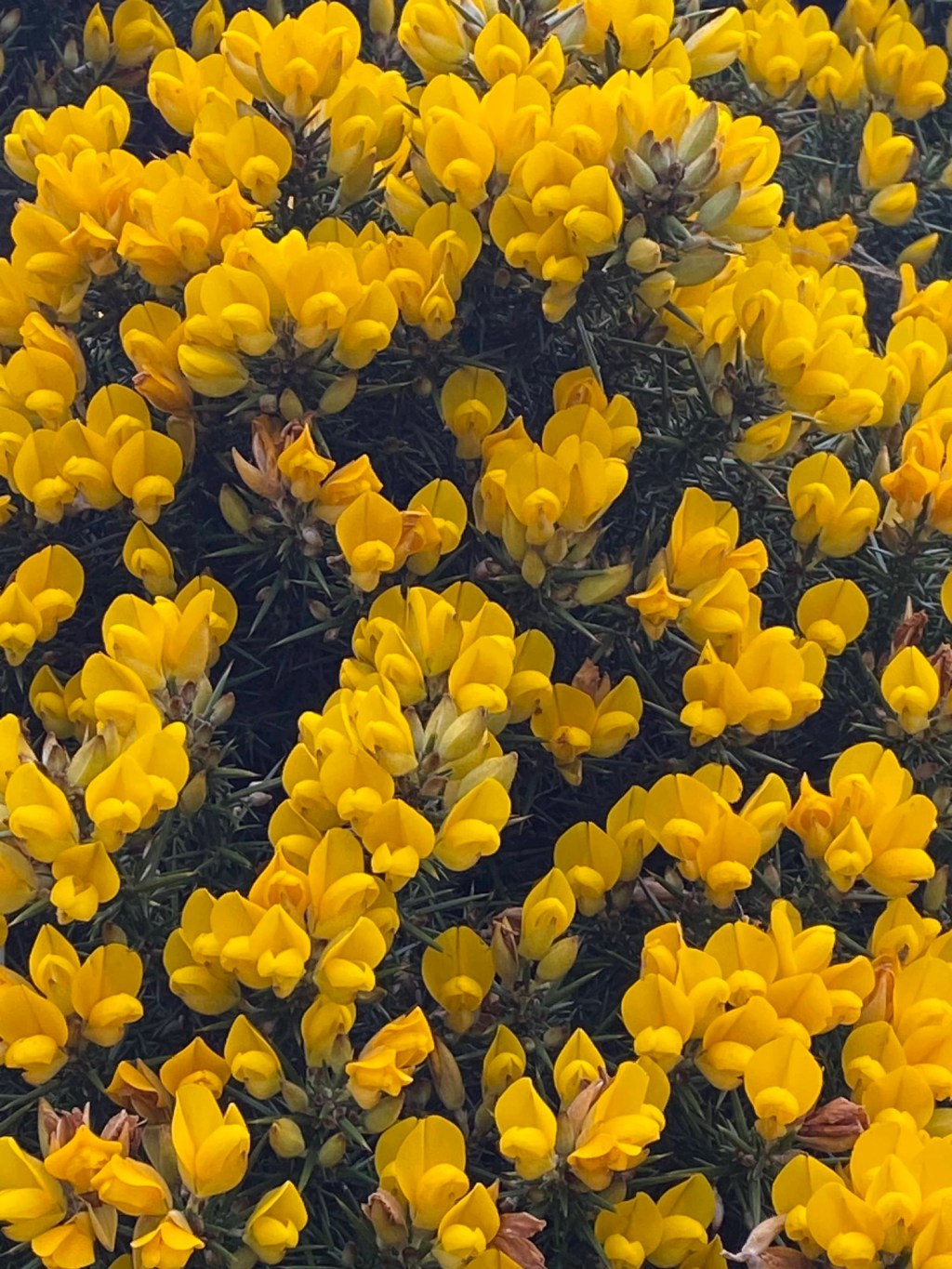
Bright yellow gorse, in sun’s embrace,
A splash of gold in nature’s space.
Thorns sharp as arrows, yet flowers bold,
Whispering warmth when the air turns cold.
On windswept hills and coastal shore,
You bloom in beauty, forevermore.
A fiery promise, soft yet true,
A wild heart beating in morning dew.
Gorse Ulex europaeus typically flowers in the spring, but it can bloom at various times throughout the year, especially in milder climates. In general, its peak flowering season is from late winter to early spring, often from February to May. In some areas with mild winters, gorse can flower sporadically year-round, as it is known for its ability to produce blooms in any month with favorable conditions. If you look hard enough you will find it flowering in Cumbria in every month….
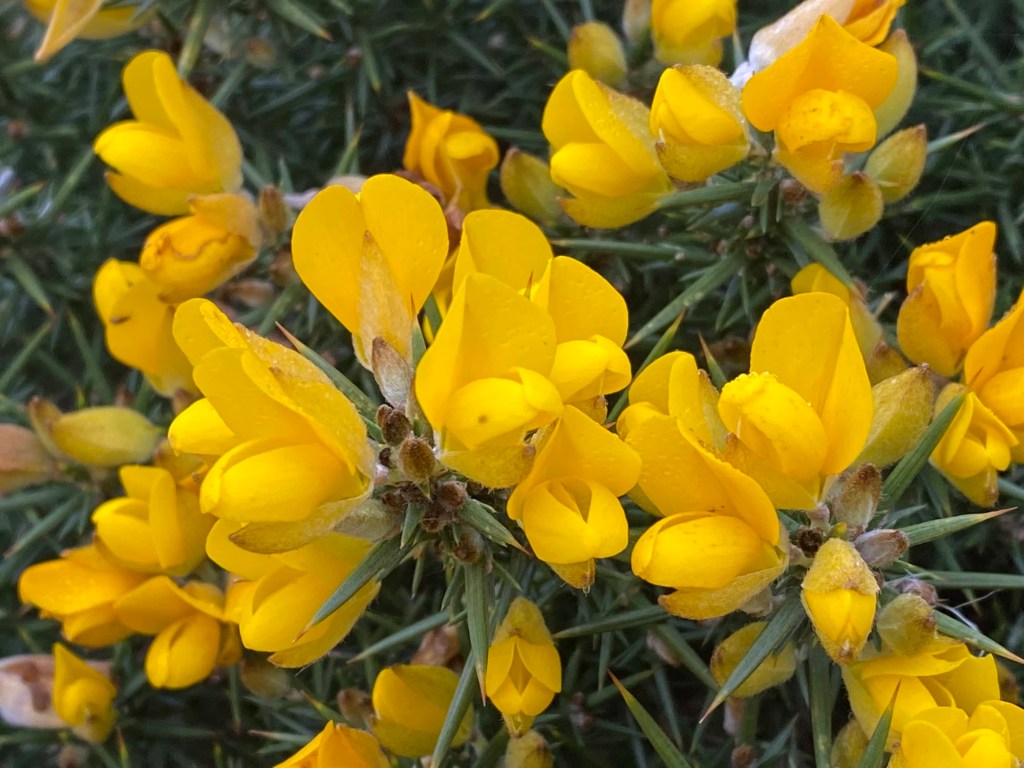
It is widely distributed across the UK, particularly in areas with well-drained, acidic soils. It thrives in a variety of habitats, including heathlands, coastal cliffs, wood edges, and open countryside. Here’s a breakdown of its distribution:
1. England: Gorse is found throughout much of England, particularly in the south and southwest (e.g., Cornwall, Devon, Dorset, and the South Downs). It is also common in the Midlands and parts of East Anglia, although it can be less frequent in the north.
2. Scotland: Gorse is present in many parts of Scotland, particularly in the southern and coastal areas. It is less common in the central and northern Highlands, but it can be found along some coastal regions and islands.
3. Wales: Gorse is abundant in many areas of Wales, especially in the lowland and coastal zones. The coastal areas, such as Pembrokeshire and parts of North Wales, have significant populations of gorse.
4. Northern Ireland: Gorse is common in Northern Ireland, particularly in the lowland and coastal regions.
Gorse is considered a “pioneer” species in many habitats, as it can colonize disturbed or bare ground, often forming dense thickets that can outcompete other vegetation. While it is native to the UK, it can also be invasive in some areas, particularly when it spreads into areas where it may disrupt other types of vegetation.

 Andrew Chick Ecology
Leave a comment