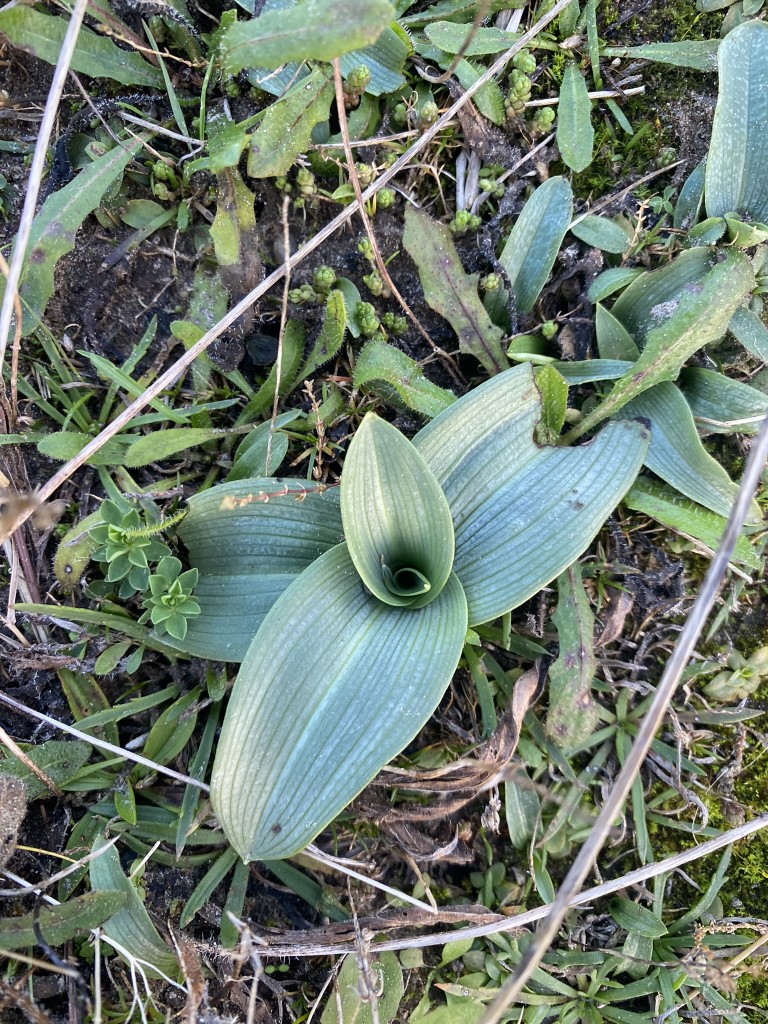
I was lucky to find 100’s of basal rosettes of Bee Orchids appearing at a local Lake District site at the end of November 2024, setting the stage for a stunning display in June 2025.
These plants have a facinating lifecycle….
Lifecycle of Bee Orchids
- Seed Dispersal (Summer to Early Autumn)
Bee orchids produce numerous tiny seeds after successful pollination. These seeds are wind-dispersed but require specific fungal partners (mycorrhizal fungi) in the soil to germinate, as they lack sufficient stored nutrients. - Germination and Underground Development (Autumn to Winter)
After the seeds land in a suitable location with compatible fungi, they begin germination. The fungal partner provides nutrients to the developing orchid seedling. This stage can last several years as the plant builds up energy reserves. - Basal Rosette Formation (Autumn)
In the autumn, bee orchids form a basal rosette of fleshy, green leaves close to the ground. This rosette helps the plant photosynthesize and store energy for flowering in the coming spring. - Winter Dormancy
The basal rosette persists through winter, remaining green and photosynthetic during mild conditions. The plant relies on stored energy during cold or less favorable periods. - Flowering (Late Spring to Early Summer)
By May or June, a tall flowering spike emerges from the basal rosette. This spike carries the iconic bee-like flowers, which mimic female bees to attract male bees for pollination. In the UK, however, self-pollination is more common as the specific bee species are often absent. - Seed Production (Summer)
After flowering, the fertilized flowers develop into seed capsules. The plant’s energy is now directed toward seed production. - Dieback (Late Summer)
Following seed dispersal, the flowering spike dies back, leaving the underground structures and any new basal rosette to prepare for the next season.
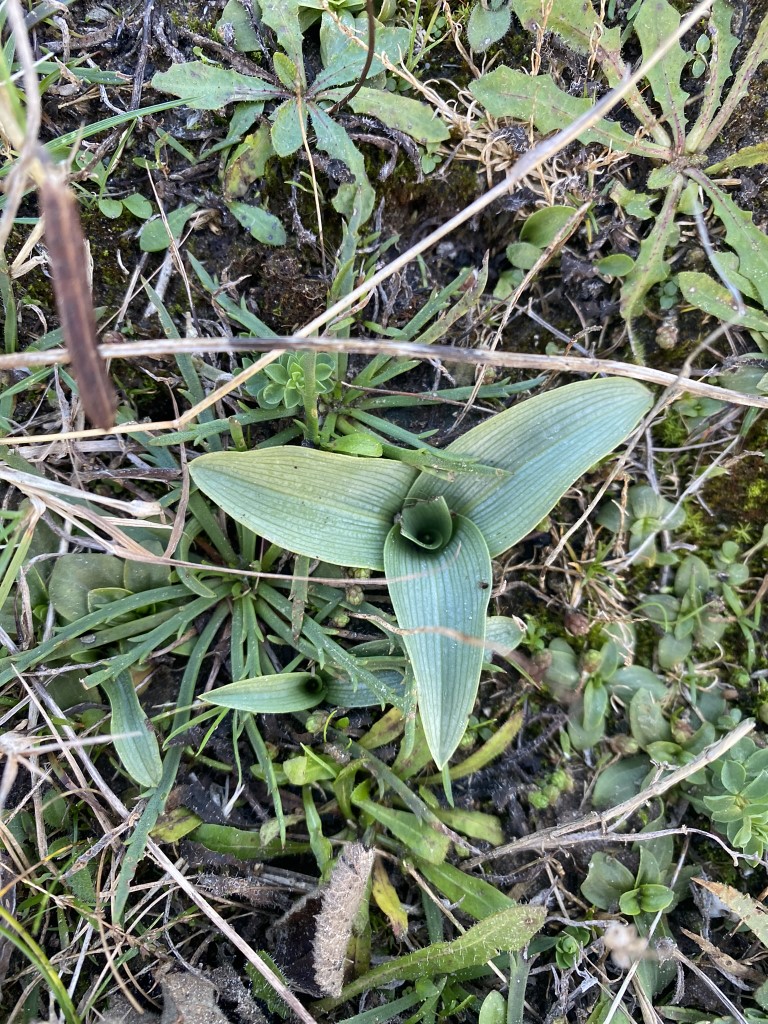
Look carefully, there are two Bee Orchids in this photograph (c) Andrew P. Chick Nov 2024.
Basal Rosettes
- Description:
Bee orchid basal rosettes are low to the ground, with lanceolate to oblong green leaves. The leaves are smooth, often slightly waxy, and grow in a rosette formation. - Function:
The rosette serves as a key energy reserve. It captures sunlight to build up energy for the flowering phase and helps the plant survive winter and adverse conditions. - Timing:
Rosettes typically appear in autumn and persist until the flowering spike develops in late spring.
Bee orchids are remarkable for their ability to self-pollinate and their dependency on specific ecological conditions. Protecting their habitats, including well-drained grasslands, is crucial for their survival in the UK.


 Andrew Chick Ecology
Leave a comment