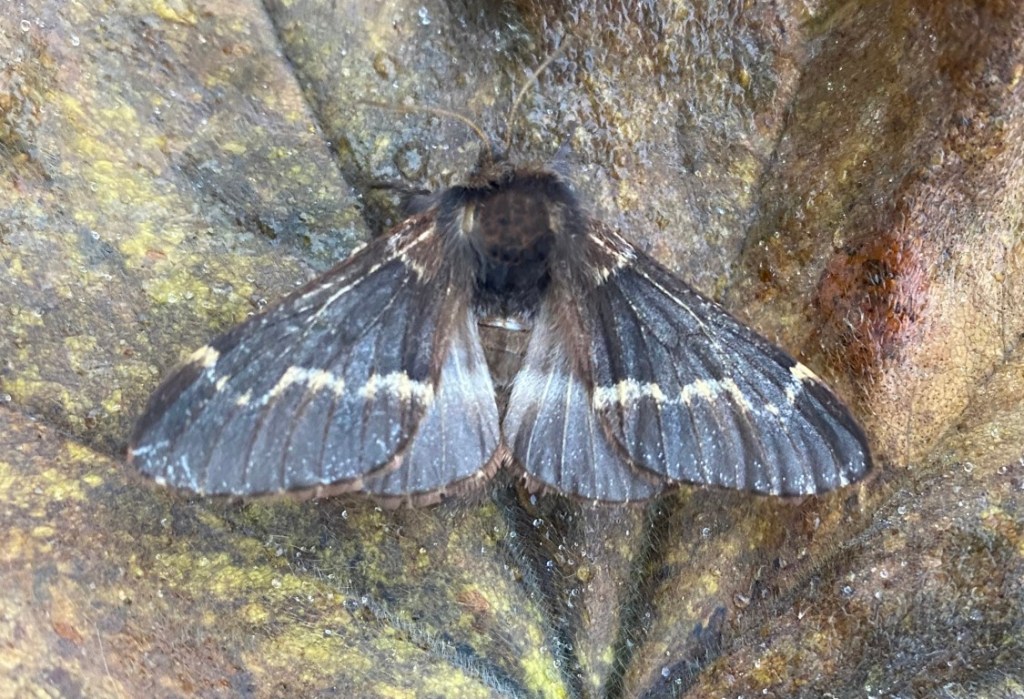
I was lucky to find this December Moth Poecilocampa populi in my Lake District garden on the 2nd December 2024. This is a common species in Cumbria and across the UK during the late autumn and early winter months, particularly from October to December.
They have a fascinating lifecycle that aligns closely with the changing seasons:
The Remarkable Lifecycle of the December Moth
The December Moth is one of the few hardy moth species in the UK that thrives during the colder months. Its lifecycle is a perfect example of adaptation to seasonal changes, ensuring survival and reproductive success. Let’s take a closer look at its fascinating journey through the year.
1. Winter Beginnings: The Adult Phase
The lifecycle begins in late autumn, with adult moths emerging from their pupal cocoons in October. True to their name, they remain active into December, braving the chilly nights. Adults are often drawn to light sources, making them easier to spot in urban and suburban areas.
Males, smaller than females, use their feather-like antennae to detect pheromones released by potential mates. After mating, the females lay their eggs on the bark or twigs of deciduous trees, such as oak, birch, lime, and hawthorn. These eggs mark the start of a dormant period that lasts throughout the harsh winter months.
2. Spring Awakening: The Egg Stage
As spring arrives, the warming temperatures awaken the dormant eggs, usually around April. The timing ensures the caterpillars hatch when fresh leaves are abundant, providing the necessary nourishment for their early development.
3. Growth and Feeding: The Larvae Phase
The newly hatched caterpillars, covered in fine hairs, begin their voracious feeding on the tender leaves of their host trees. These caterpillars are variable in coloration, with some displaying dark patterns with red spots, while others might show gray or orange-brown tones.
Throughout spring and into early summer, they grow rapidly, molting several times before reaching full size. By July, their feeding frenzy ends as they prepare for the next stage.
4. Preparation for the Future: The Pupation Stage
Once fully grown, the caterpillars descend to the ground or find secluded crevices in tree bark to spin their cocoons. Inside, they undergo metamorphosis, transitioning into the pupal stage. Here, they remain hidden through the late summer and early autumn, safe from predators and adverse weather.
5. Completing the Cycle: Emergence of Adults
As the temperatures drop and autumn deepens, the adult moths emerge from their cocoons. The cycle begins anew, with the moths taking to the frosty skies to find mates and continue their lineage.
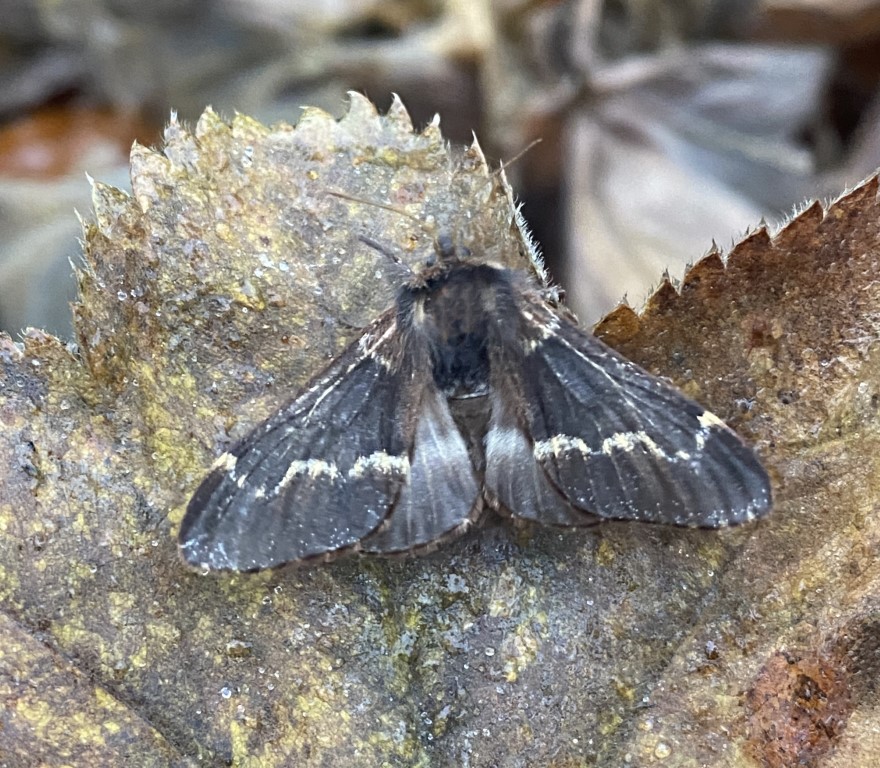
All photographs by Andrew P. Chick December 2024
Adaptations for Survival
The December Moth has several adaptations that make it uniquely suited to its winter activity. Its furry body acts as insulation against the cold, while its ability to mate and lay eggs during winter ensures the larvae can capitalize on spring’s bounty.
Where to Spot December Moths
If you’re keen on spotting these resilient insects, look for them near wooded areas, parks, and gardens on crisp winter nights. They are often drawn to outdoor lights, offering a glimpse of nature’s tenacity even in the colder months.
The December Moth’s lifecycle is a testament to the intricate ways in which wildlife adapts to its environment. As we marvel at these remarkable creatures, we are reminded of the delicate balance in nature and the importance of preserving habitats for such specialized species.

 Andrew Chick Ecology
Leave a comment