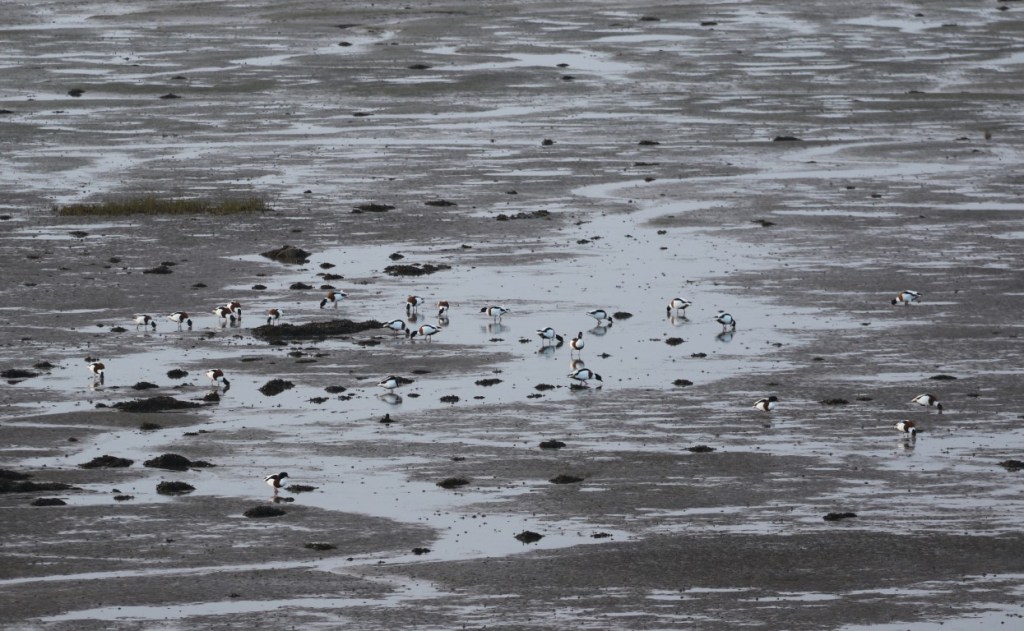
The winter movements of Shelduck Tadorna tadorna in England are closely tied to their migratory patterns and seasonal habitat preferences. Shelduck are medium-sized waterfowl commonly associated with coastal and estuarine environments. Here are the key points regarding their winter movements:
1. Migration Patterns
- Post-Breeding Dispersal: After the breeding season, many Shelduck migrate to molting grounds. Significant numbers from England head to the Wadden Sea in the Netherlands and Germany to undergo molting.
- Winter Return: Following molting, Shelduck return to the UK for winter. Their winter distribution is predominantly along estuaries and sheltered coastal areas.
2. Wintering Areas in England
- Shelduck are most commonly found in coastal estuaries, where they forage in intertidal mudflats.
- Key areas include: The Severn Estuary, The Wash, The Humber, Morecambe Bay andthe Thames Estuary.
- These areas provide abundant feeding opportunities, particularly foraging on small invertebrates like snails and worms.
3. Behavioral Observations
- Shelduck form large flocks during winter, often feeding communally.
- They are relatively sedentary during this period, moving locally within estuaries or nearby habitats in response to food availability and tidal cycles.
4. Conservation Considerations
- The wintering Shelduck population in England is significant for the species’ conservation and is monitored under international agreements like the African-Eurasian Waterbird Agreement (AEWA).
- Habitat loss due to coastal development or pollution poses a potential threat to their key wintering sites.

Summary
Shelduck’s winter movements in England highlight their reliance on estuarine habitats for survival during the colder months. They are a vital part of the biodiversity of these ecosystems and an important indicator species for estuarine health.

 Andrew Chick Ecology
Leave a comment