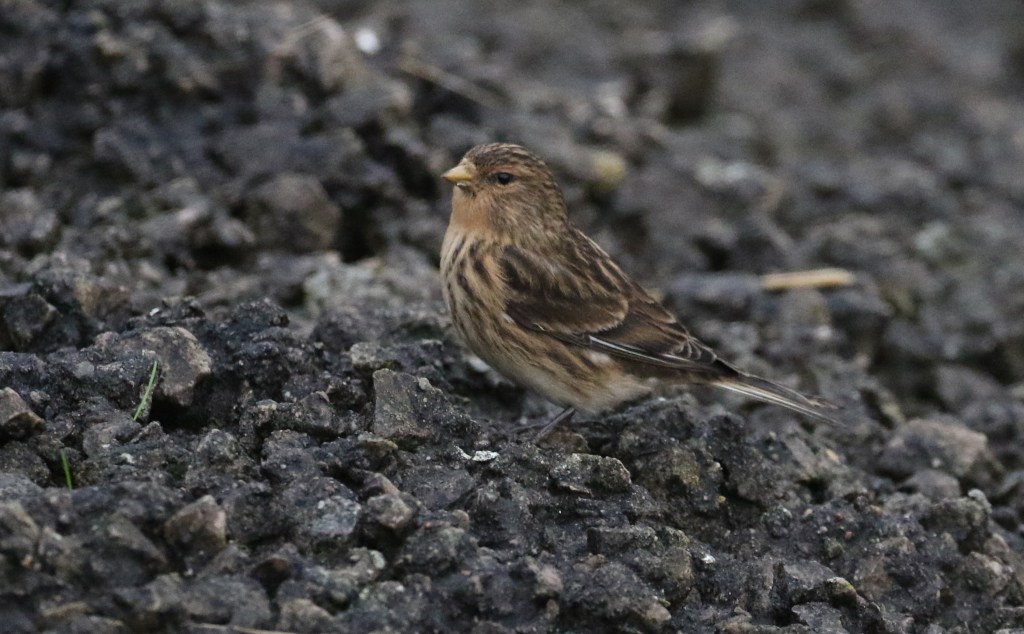
Image: Twite at Cavendish Dock, Barrow, Cumbria 07/12/24 (c) Andrew P. Chick
The Twite Carduelis flavirostris is a small, finch-like bird that has seen a worrying decline in both its range and population size in recent years. As a result, it is now classified as a red-listed species of conservation concern in the UK. Protecting this species requires a clear understanding of its movements between breeding and wintering sites — an essential piece of the puzzle for designing effective conservation strategies.
A comprehensive study carried out between 2003 and 2005 shed light on the migration patterns of Twite populations, focusing on two key groups:
- South Pennines Breeding Population
- Northwest Coast Wintering Population
The findings of this study reveal significant insights into the bird’s seasonal movements, migratory routes, and interactions between different populations.
Where Do Twite Spend the Winter?
The study used an intensive colour-ringing method to track the movements of Twite between their breeding and wintering grounds. Here’s what the researchers discovered about their winter destinations:
- South Pennines Breeders
- Primary Wintering Sites: The majority of birds that breed in the South Pennines migrate to the east and southeast coasts of England to overwinter.
- West Coast Exceptions: A small number of South Pennines-breeding Twite were found wintering on the west coast of England, although this was much less common.
- Staying Put: Interestingly, large flocks of South Pennines-bred Twite remained in the South Pennines throughout the winter, suggesting that some individuals do not follow the typical long-distance migration pattern.
- Northwest Coast Wintering Population
- Previous evidence suggested that birds wintering on the northwest coast of England (e.g., Lancashire and Cumbria) also originated from the South Pennines breeding population.
- However, this study revealed a different story. Most of these birds were found to breed on the west-coast islands of Scotland and, to a lesser extent, on the Scottish mainland.
Do the Two Populations Interact?
One of the key questions for conservation planning is whether the South Pennines and northwest coast populations interact. The study found that, while there is some level of interaction, the two groups are largely distinct populations with different breeding and wintering sites.
- Shared Wintering Sites
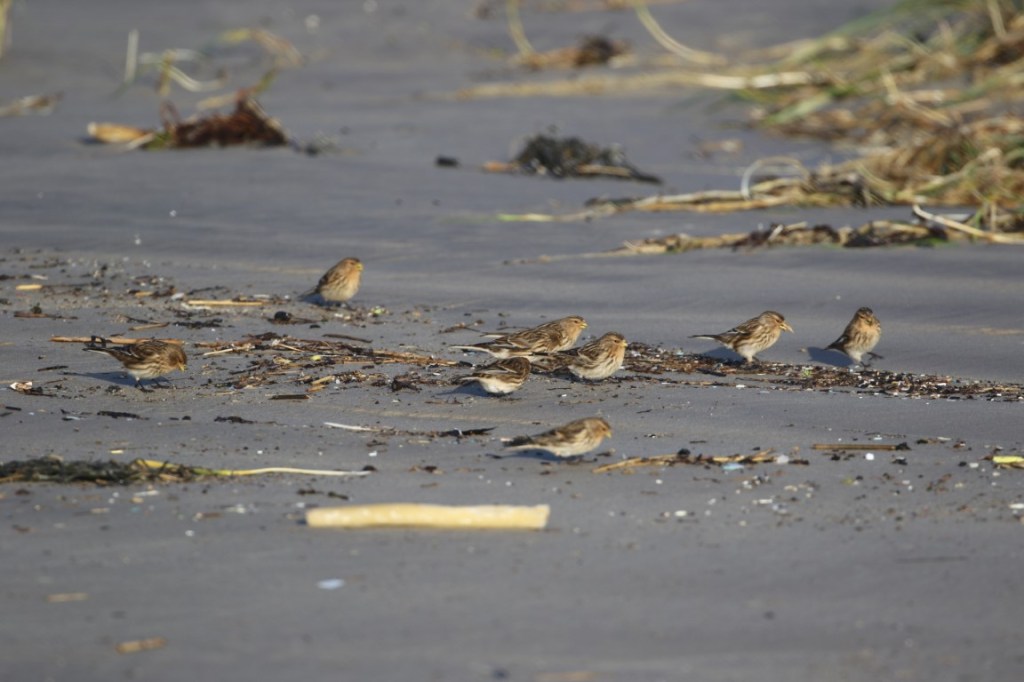
- Some Twite ringed on the northwest coast were later seen wintering on the Lincolnshire coast — a site also used by South Pennines-bred birds. This indicates some shared use of wintering areas, but it appears to be limited.
- Cross-Breeding
- While most South Pennines birds returned to the South Pennines to breed, two individuals bucked the trend:
- One bird bred in Scotland after initially being ringed in the South Pennines.
- Another bird bred in Wales after being ringed in the South Pennines.
- These cases of cross-dispersal are rare but important to note for conservation management.
- While most South Pennines birds returned to the South Pennines to breed, two individuals bucked the trend:
Conservation Implications
The study’s findings highlight the need to treat these two populations as separate management units when it comes to conservation planning. Here’s why this matters:
- Distinct Breeding Grounds: South Pennines birds breed locally but winter on the east and southeast coasts, while northwest coast-wintering birds primarily breed on the Scottish islands and mainland.
- Different Threats: Each population faces unique threats at its breeding and wintering sites. For example, habitat loss in the South Pennines uplands impacts its breeding population, while changes in coastal saltmarsh availability affect overwintering birds.
- Local Adaptations: The fact that some Twite remain in the South Pennines over winter indicates possible local adaptations, meaning that one-size-fits-all conservation strategies may not work for both populations.

What’s Next for Twite Conservation?
With populations in decline, targeted conservation measures are crucial. Based on this study, some key actions include:
- Protecting Wintering Habitats: Since Twite depend on coastal saltmarshes and estuarine habitats, protecting and restoring these sites along the east, southeast, and northwest coasts is essential.
- Securing Breeding Grounds: In the South Pennines, conservation actions should focus on maintaining and enhancing moorland habitats where Twite breed.
- Treating Populations Separately: Recognizing the distinct nature of the South Pennines and northwest coast populations allows for more focused conservation planning. Each population requires its own tailored strategy to address threats at both breeding and wintering sites.
In 2013, the UK breeding population of Twite was estimated at 7,831 pairs (with a 95% confidence range of 5,835 to 10,143 pairs). The majority of these birds — approximately 97.6% — were found in Scotland, where the population was estimated at 7,640 pairs.
In England, the total population was much smaller, with an estimated 164 pairs (2.1% of the UK total). Of these, the vast majority (162 pairs) were located within the South Pennine Moors Special Protection Area (SPA).
Twite populations in Northern Ireland and Wales were significantly lower, with estimates of just 17 pairs and 10 pairs, respectively. These figures highlight the heavy reliance of the UK Twite population on Scotland’s breeding habitats and underscore the need for targeted conservation in smaller, isolated populations elsewhere in the UK.
Conclusion
The Twite’s movement between breeding and wintering sites is more complex than previously thought. While South Pennines-bred birds typically winter on England’s east coast, others stay local, and a small number head west. Meanwhile, the northwest coast population breeds predominantly on Scottish islands, not in the South Pennines as once assumed.
This study has highlighted the importance of understanding the seasonal movements of bird populations to design effective conservation strategies. Moving forward, conservationists will need to manage these two populations as distinct groups, ensuring that breeding and wintering habitats are protected at both ends of the migration route.
Reference: Raine, A. F., Sowter, D. J., Brown, A. F., & Sutherland, W. J. (2006). Migration patterns of two populations of twite carduelis flavirostris in Britain. Ringing & Migration, 23(1), 45–52. https://doi.org/10.1080/03078698.2006.9674343
Wilkinson, N. I., Eaton, M. A., Colhoun, K., & Drewitt, A. L. (2018). The population status of breeding Twite Linaria flavirostris in the UK in 2013. Bird Study, 65(2), 174–188. https://doi.org/10.1080/00063657.2018.1476458

 Andrew Chick Ecology
Leave a comment