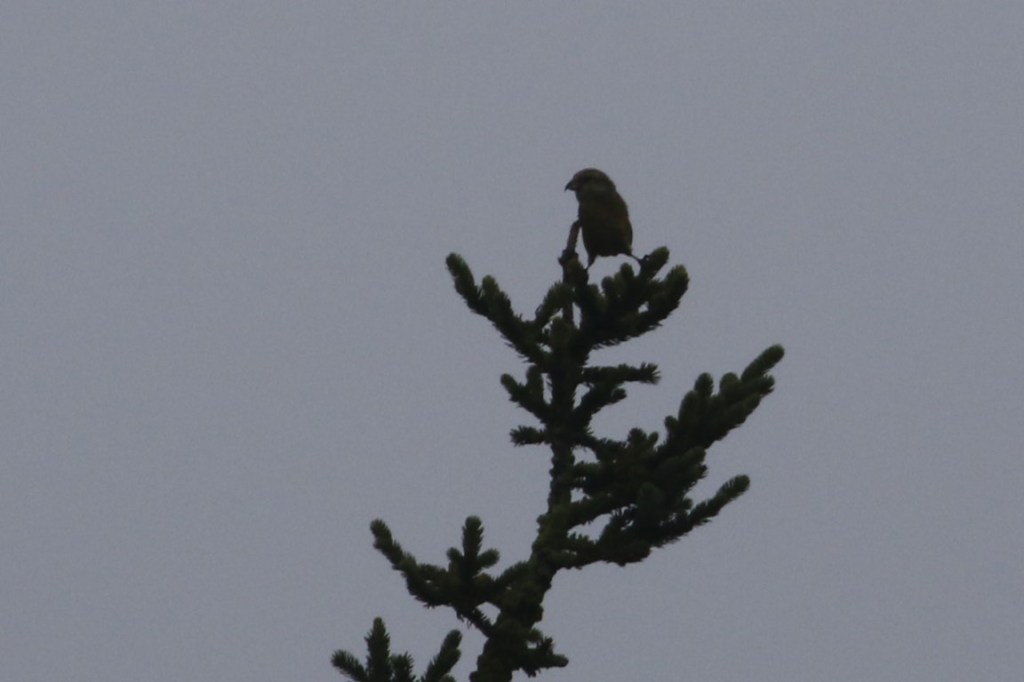
Looking for Crossbills in a misty Grizdale Forest..
The Common Crossbill Loxia curvirostra is an uncommon resident in Cumbria, known for its distinctive crossed bill adapted for extracting seeds from pine cones. It inhabits conifer woodlands and is present year-round, with breeding typically occurring early in the year to coincide with new pine cone crops.
In Cumbria, the Common Crossbill is considered an uncommon resident, as well as an irruptive passage migrant and winter visitor.
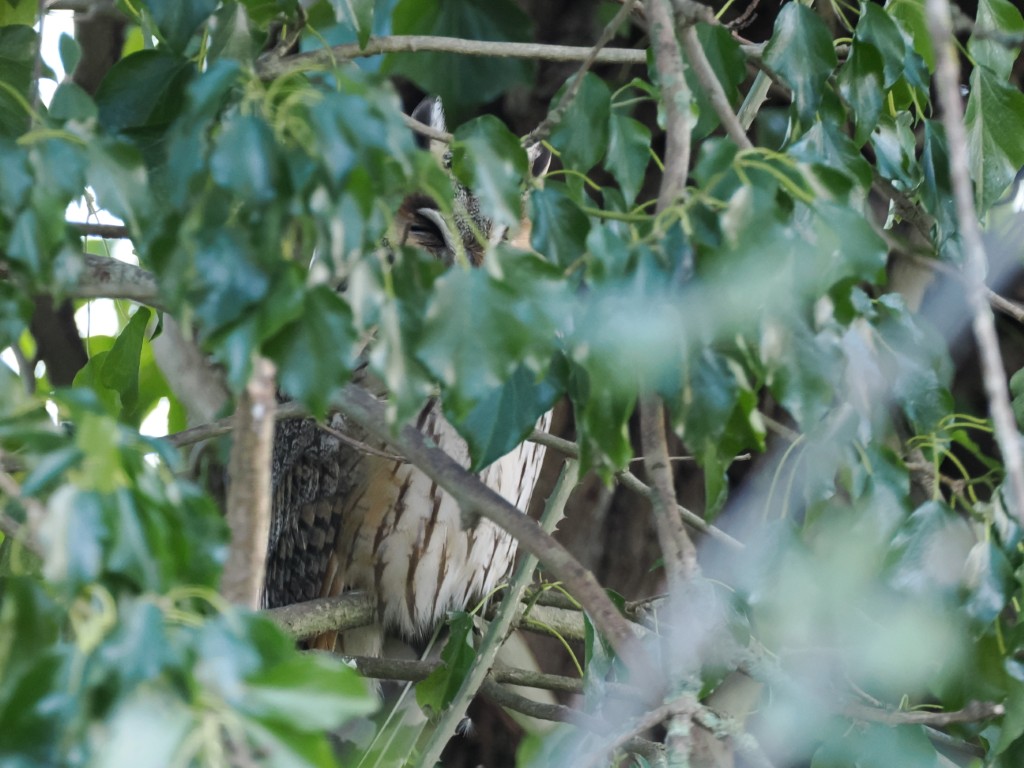
However, on a mistly day we heard more than we saw!
The Common Crossbill has a distinctive and varied call, often described as a series of sharp, metallic “chip” or “jip” sounds. These calls are typically used for communication within flocks. The most common vocalizations include:
- Flight Call: A loud, abrupt “chip-chip-chip” or “jip-jip-jip,” often heard as the birds move between feeding sites or during flight.
- Contact Call: A softer and less frequent variation of the flight call, used to maintain contact within the group.
- Song: A more complex and melodic combination of trills, warbles, and chirps, typically sung by males during the breeding season to attract mates and defend territory.
The exact tone and rhythm of their calls can vary regionally, and different populations may exhibit subtle variations known as “call types.”
Its population can experience significant fluctuations due to ‘irruptions,’ where large numbers move into the area from other regions in search of food. These irruptions are often linked to the availability of conifer cone crops, which constitute the primary food source for Crossbills.
Birds are strongly associated with coniferous woodlands, particularly areas with an abundance of cone-bearing trees like spruce, pine, and larch. They feed on seeds extracted from the cones, using their unique crossed bills. Here are some of the best types of woodlands and specific locations where you might have a good chance of spotting them:
Top Woodland Habitats
- Coniferous Forests: Mature plantations of Scots pine, spruce, or larch.
- Mixed Woodlands: Especially those with conifer components.
- Upland Areas: These often have extensive conifer plantations or natural pine forests.
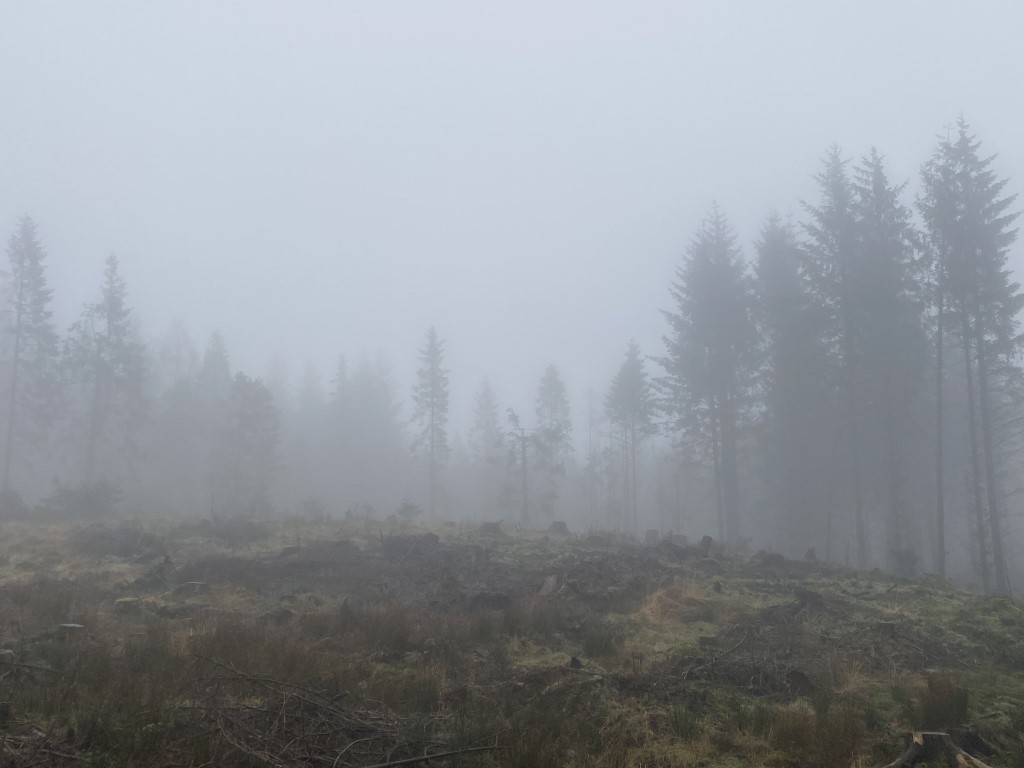
Grizdale Forest Track, December 2024….
The species is classified as ‘Green’ under the UK’s Birds of Conservation Concern 5: the Red List for Birds (2021), indicating it is not currently a conservation priority.
However, local population dynamics can vary, and monitoring continues to ensure any changes are detected promptly.
For birdwatchers in Cumbria, Crossbills can be observed in coniferous forests, particularly during years of high cone abundance. They are often seen in flocks near treetops and may descend to pools to drink. Notably, there have been exceptional influxes in the past; for example, in 1997, a significant irruption was recorded in the North West regions of England.
Overall, while the Common Crossbill is not abundant in Cumbria, its presence is notable, especially during irruption years when their numbers can increase markedly.
It’s probably best not to go looking for them on misty days!
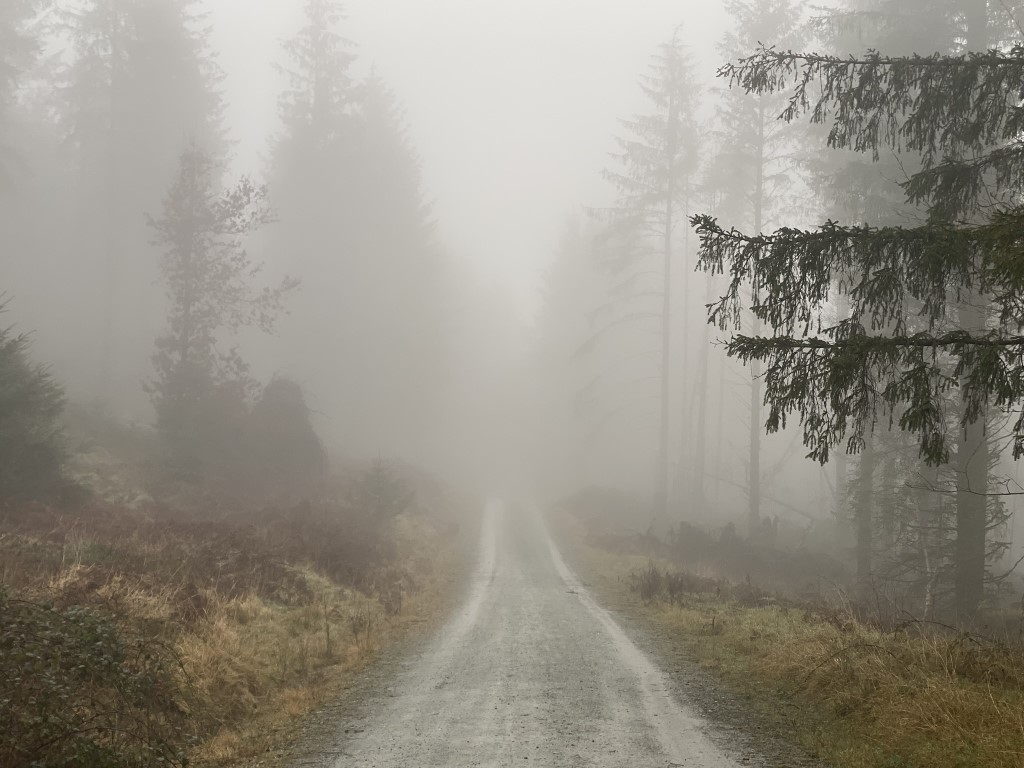
Grizdale Forest track, December 2024 (c) Andrew Chick

 Andrew Chick Ecology
Leave a comment