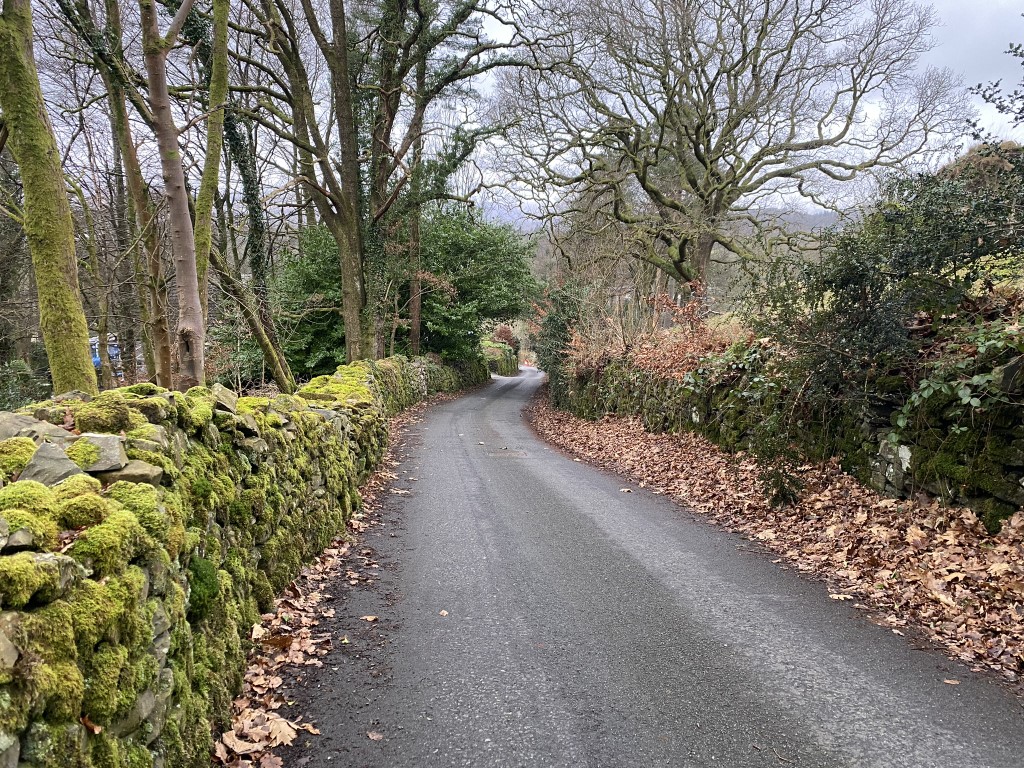
The BSBI New Year Plant Hunt is an annual citizen science project organized by the Botanical Society of Britain and Ireland (BSBI). It encourages people across Britain and Ireland to head outdoors during the first few days of the New Year to look for wild and naturalized plants in bloom.

This year, I participated in the Plant Hunt around Troutbeck and Troutbeck Bridge in Cumbria. Over the course of three hours, we searched for plants and identified the following 10 species:
Groundsel (Senecio vulgaris)
Daisy (Bellis perennis)
Dandelion (Taraxacum officinale agg.)
Cherry (Prunus)
Wavy bittercress (Cardamine flexuosa)
Ivy-leaved toadflax (Linaria cymbalaria)
Primrose (Primula vulgaris)
Common Alder (Alnus glutinosa)
Annual meadow grass (Poa annua)
Petty spurge (Euphorbia peplus)
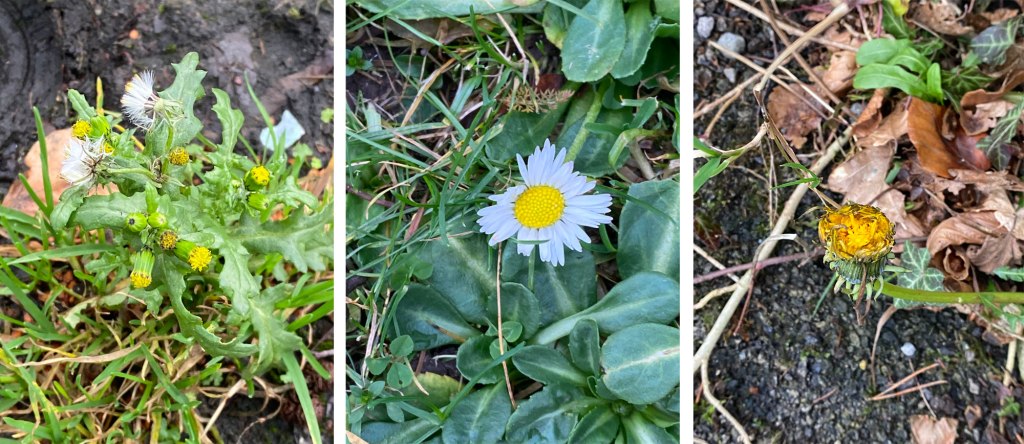
Groundsel (Senecio vulgaris), Daisy (Bellis perennis) and a sad looking Dandelion (Taraxacum officinale agg.)
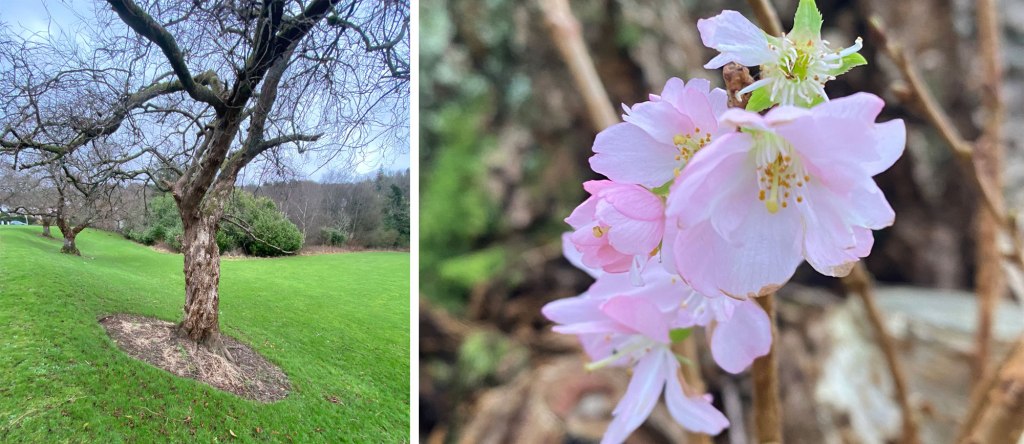
Some sort of ornamental cherry tree found in flower near The Lakes School. There were no leaves, but we recorded a small number of flowers!

Primrose (Primula vulgaris), Ivy-leaved toadflax (Linaria cymbalaria) and Annual meadow grass (Poa annua).
Recording 10 species during the BSBI New Year Plant Hunt in Cumbria is a respectable result, especially given the winter conditions and the region’s northern location. Factors that can influence the number of species found include:
- Regional Climate: Cumbria typically experiences cooler and wetter winters, which can limit the number of plants in bloom compared to milder regions in the south of Britain and Ireland.
- Habitat Diversity: The variety of habitats you explored around Troutbeck and Troutbeck Bridge may have influenced your findings.
- Search Time: Spending three hours is ideal, as it aligns with the BSBI’s recommended time for the hunt, increasing the chance of a thorough survey.
In southern England or urban areas with warmer microclimates, participants may find more species in bloom (sometimes 20-30+).In colder or more rural regions like Cumbria, 5-15 species is common and still provides valuable data for the BSBI.
Key Features of the New Year Plant Hunt:
- Timeframe:
- It typically takes place over a four-day period, starting around January 1st.
- Participants are asked to conduct their plant hunt for up to three hours during this timeframe.
- Purpose:
- To record which plants are flowering during the winter season.
- To gather data on how climate change and other environmental factors are affecting the timing of plant blooming.
- Participation:
- Open to everyone, from amateur plant enthusiasts to professional botanists.
- Participants can record their findings individually or in small groups.
- Submissions are made through the BSBI’s online portal or mobile app.
- Scientific Contribution:
- The data collected is used to study long-term trends in flowering times.
- It helps scientists understand changes in plant phenology and distribution.
- Focus:
- The event emphasizes spotting wild plants or those growing naturally, not garden plants intentionally cultivated.
The event is not only a fun way to engage with nature but also contributes valuable data for ecological and climate research. It has gained popularity as a family-friendly and educational New Year activity.
The following is a summary of last years data;
BSBI’s Thirteenth New Year Plant Hunt (NYPH 2024): A Record-Breaking Year for Citizen Science
The BSBI’s New Year Plant Hunt (NYPH) for 2024 marked its thirteenth year, running from Saturday, 30th December 2023, to Tuesday, 2nd January 2024. This annual event invites volunteers across Britain and Ireland to explore their local areas and record native and non-native plants found blooming in the wild during a three-hour walk. The collected data, submitted online via smartphones and other electronic devices, contributes to understanding seasonal trends and plant phenology.
Highlights from NYPH 2024:
- Participation Soared: A total of 3,336 recorders took part, nearly doubling the participation from 2023.
- Extensive Data Collection: Volunteers submitted 22,212 plant records across 2,205 lists. Notably, 40 of these lists reported no plants in flower, reflecting the diverse conditions faced by recorders.
- Diverse Flora Recorded: A remarkable 629 plant species were identified in bloom, marking a 30% increase compared to 2023 and the third-highest total in NYPH history.
Most Commonly Recorded Plants:
For yet another year, the top three species recorded were:
- Daisy (Bellis perennis)
- Dandelion (Taraxacum agg.)
- Groundsel (Senecio vulgaris)
These hardy species continue to dominate New Year findings due to their resilience and widespread distribution.
Trends in Flowering Patterns:
The 2024 results also shed light on flowering patterns:
- Late Flowering: 53% of species recorded were flowering later than their typical season.
- Early Flowering: 27% of species were blooming earlier than expected.
- Expected Flowering: 30% of species were flowering as anticipated for the New Year, including those that flower year-round.
Why These Results Matter:
The data collected during the NYPH helps scientists and researchers track changes in flowering times and plant behavior. This information is invaluable for understanding the impacts of climate change, habitat shifts, and other environmental factors on plant life.
With record-breaking participation and significant findings, NYPH 2024 demonstrates the power of citizen science in enhancing our understanding of the natural world. Whether you’re a seasoned botanist or a nature enthusiast, the New Year Plant Hunt continues to be a meaningful way to engage with the environment and contribute to vital research.

 Andrew Chick Ecology
Leave a comment