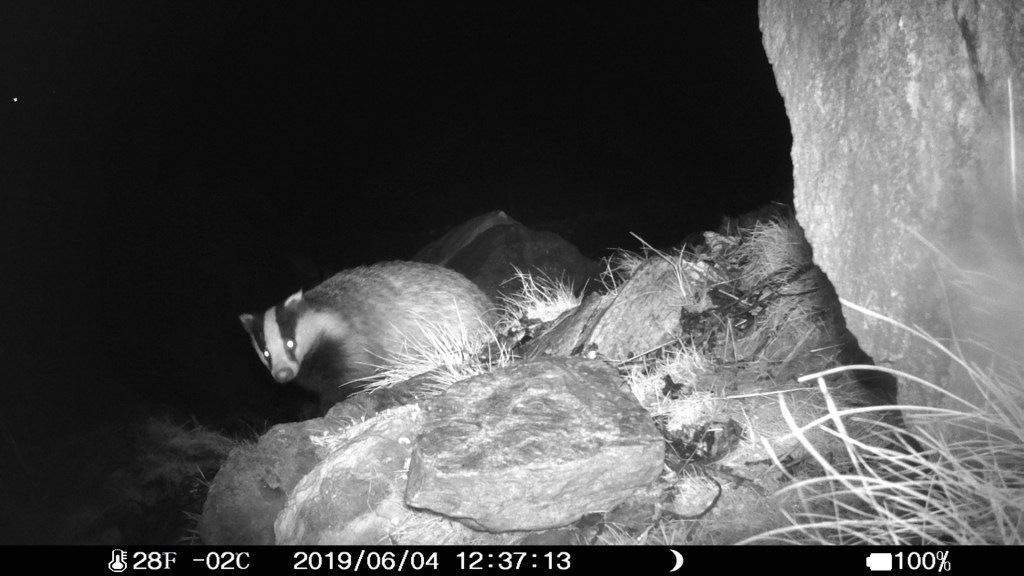
Badgers do not hibernate during the winter, but they enter a state of torpor, which is a period of reduced activity and metabolism. Here’s what they typically do during the colder months:
- Reduce Activity: Badgers stay in their burrows, known as setts, for extended periods to conserve energy. They might come out only occasionally to forage for food.
- Rely on Fat Reserves: During autumn, badgers build up body fat by eating more to prepare for the winter. This fat sustains them when food is scarce.
- Stay in Groups: Badgers are social animals and often share their setts with family groups. The shared body heat helps them stay warm.
- Forage Opportunistically: If the weather is mild or there’s an easy food source, badgers may venture out to feed. They eat a variety of foods, including earthworms, small mammals, fruits, and nuts.
- Maintenance of Setts: Badgers may still perform some maintenance on their setts, keeping the chambers clean and dry during winter.
Overall, badgers adapt to winter by balancing reduced activity with occasional foraging, relying heavily on their fat reserves and their insulated homes.
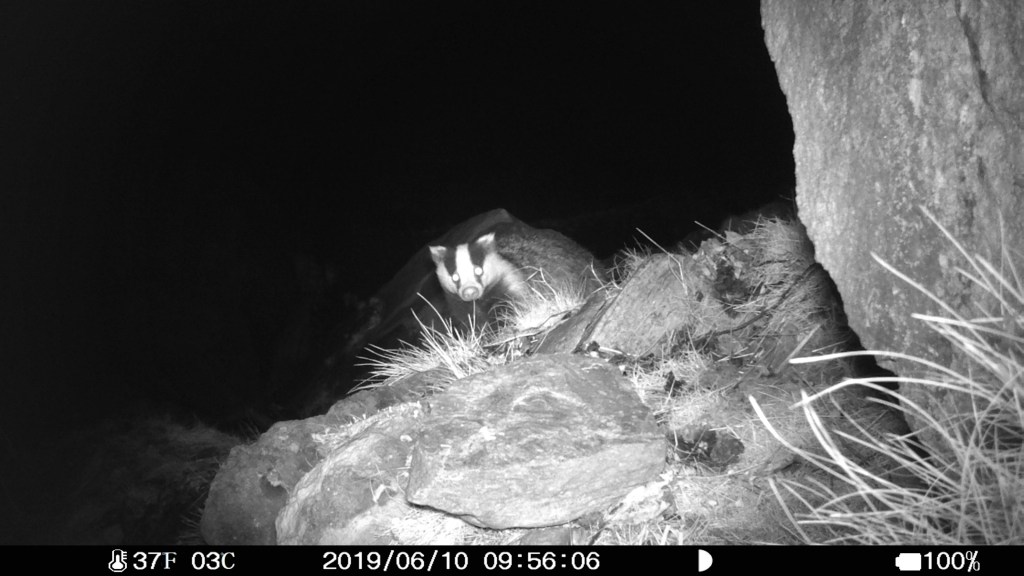
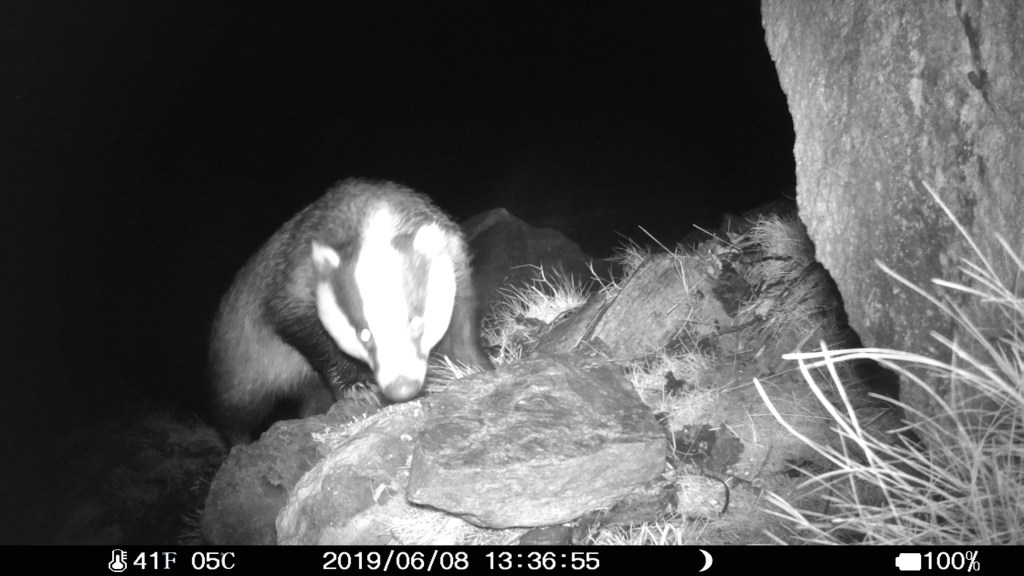
All photographs taken in 2025 – the clock on the camera trap was set wrong!
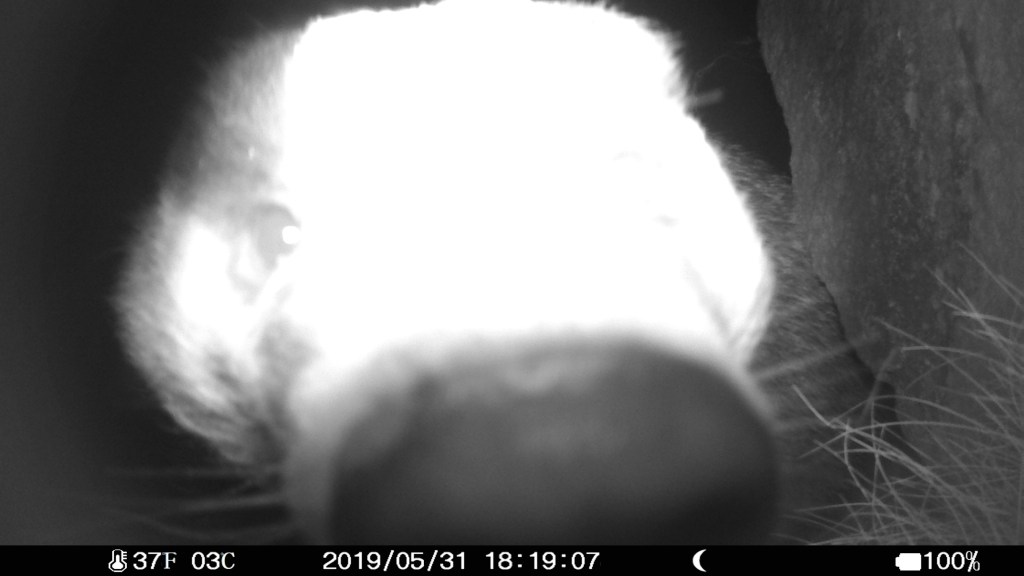
Badgers are incredibly curious mammals and can’t resist investigating a camera trap placed near their sett! Just look at the nose on this one…

 Andrew Chick Ecology
Leave a comment