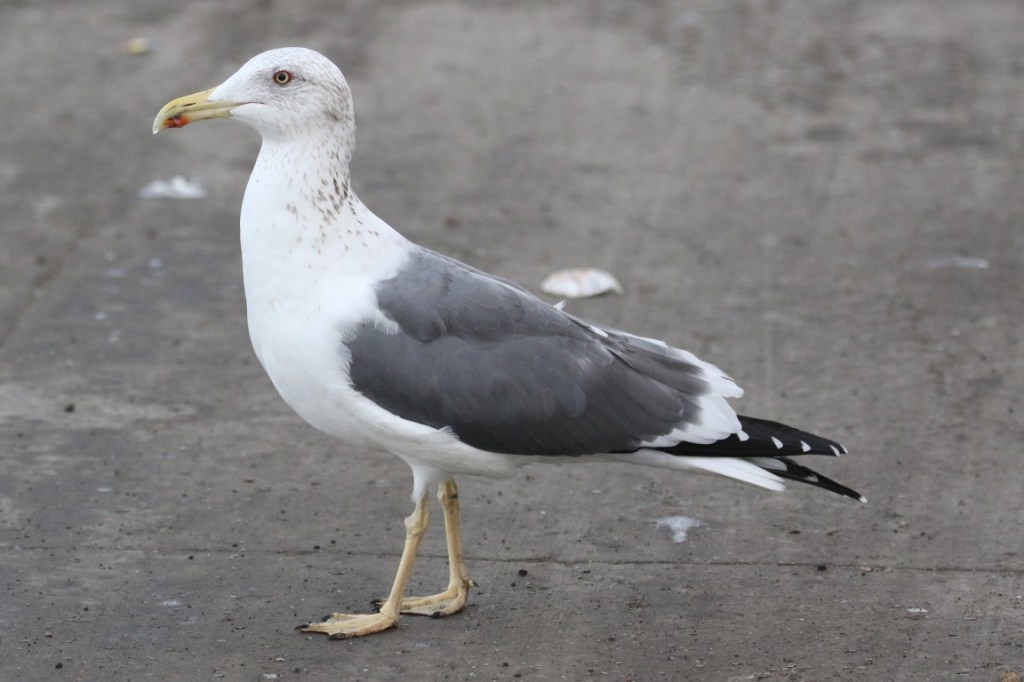
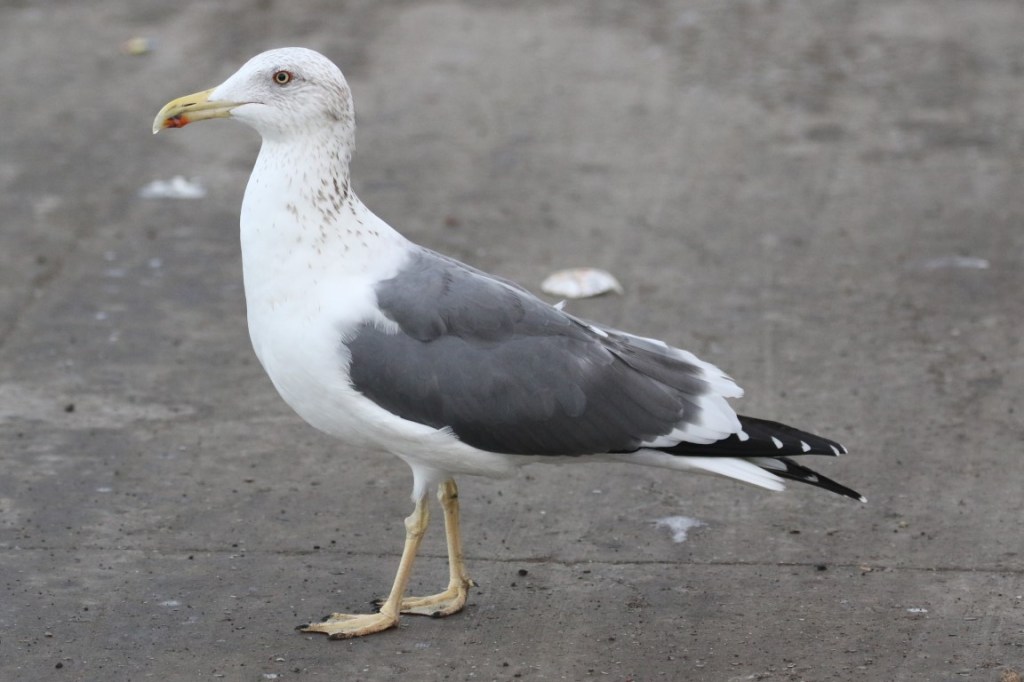
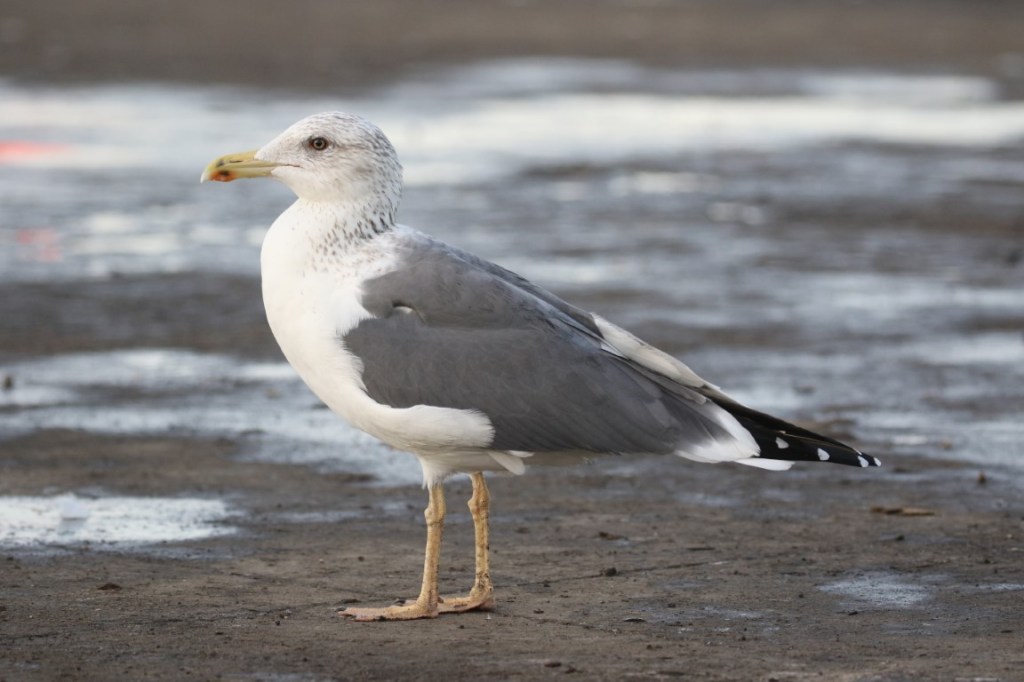
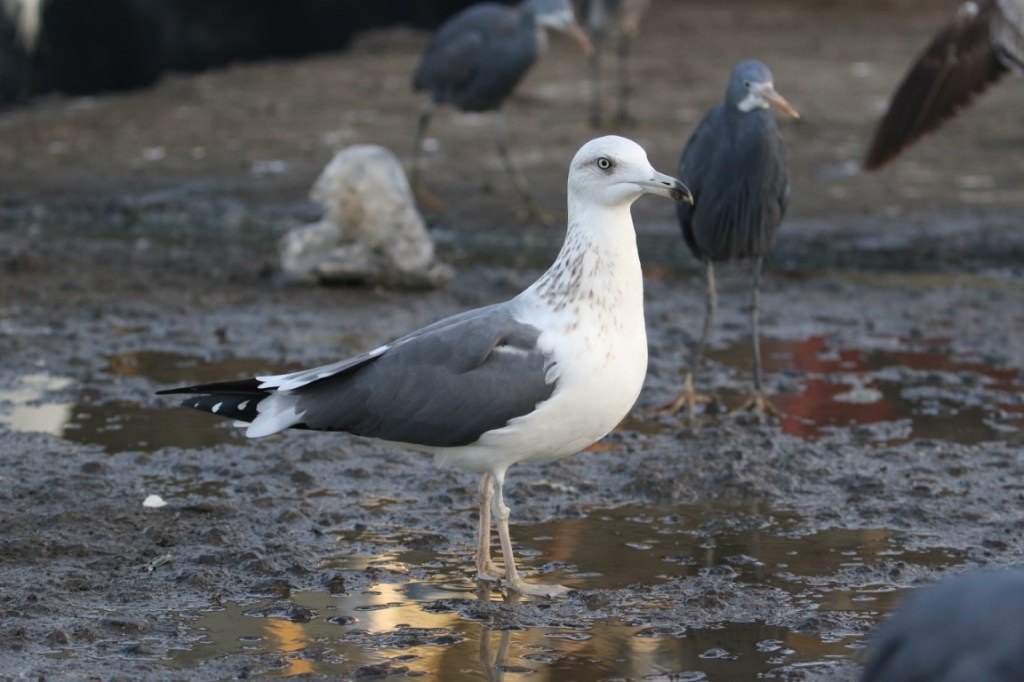
All photoraphs (c) Andrew P. Chick from Gujaret January 2025
Heuglin’s Gull (Larus fuscus heuglini), also known as Heuglin’s Lesser Black-backed Gull, is a subspecies of the Lesser Black-backed Gull. It is primarily found in northern Asia and is known for its distinctive plumage and structural features. Below is a detailed overview of its identification.
Size and Structure
Heuglin’s Gull is a large, robust gull, similar in size to the Lesser Black-backed Gull but often slightly bulkier. It has a long, powerful bill, a rounded head, and relatively long wings, giving it a strong and agile appearance in flight.
Plumage
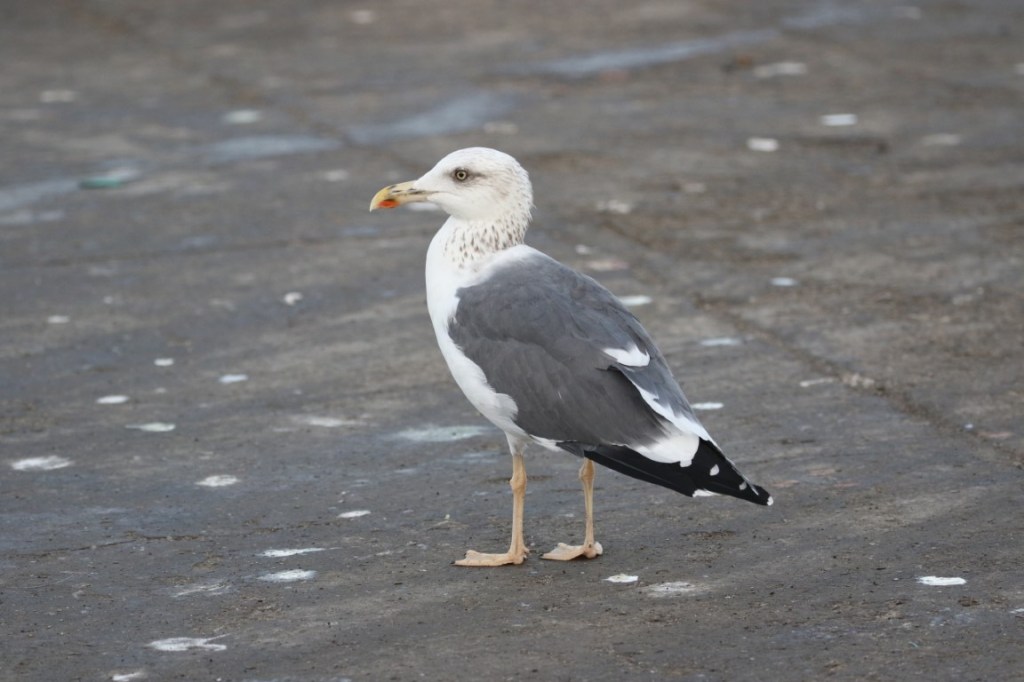
Adult Heuglin’s Gulls in breeding plumage have a dark gray mantle and wings, which can appear almost black in certain lights. This coloration is darker than that of the typical Lesser Black-backed Gull but lighter than the Great Black-backed Gull. The head and underparts are pure white, and the bill is yellow with a red gonys spot on the lower mandible. The legs are yellow, a key feature that helps distinguish it from the Lesser Black-backed Gull, which often has pinkish or yellowish legs. The eyes are pale yellow, surrounded by a red orbital ring.
In non-breeding plumage, adult Heuglin’s Gulls may show faint streaking or smudging on the head and neck, though this is less pronounced than in some other gull species. The mantle and wing color remain dark gray.
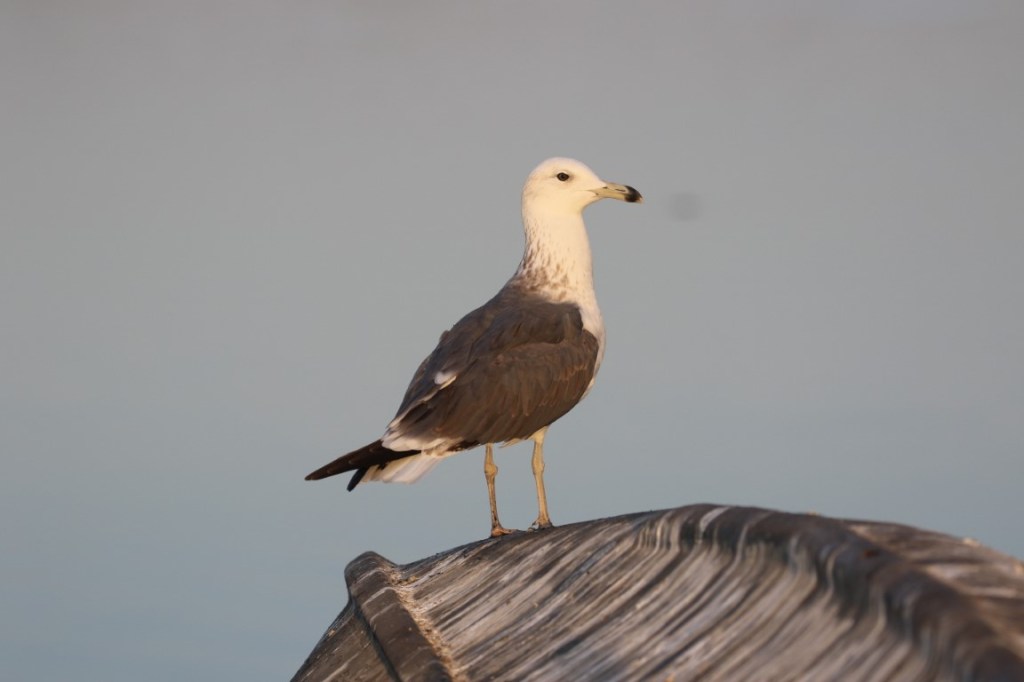
Juvenile Heuglin’s Gulls are heavily streaked and mottled with brown and white, giving them a scaly appearance. Their bill is dark, and their legs are pale pinkish or grayish. As they mature, they gradually develop more gray feathers on the mantle and wings, transitioning through several intermediate plumages before reaching adult plumage at around 3-4 years of age.
First-winter birds retain much of their juvenile plumage but start to show gray feathers on the mantle. Second-winter birds have a mix of juvenile and adult-like feathers, with a darker mantle and more defined wing patterns.
Flight Characteristics
In flight, Heuglin’s Gull displays long, broad wings with a dark gray upperwing and a white trailing edge. The underwings are pale with dark primary tips, creating a contrasting pattern. The tail is white with a black band near the tip, which is more pronounced in juveniles and gradually fades as they mature.
Voice
The call of Heuglin’s Gull is a deep, nasal “kyaa” or “kau,” similar to other large gull species but often with a slightly harsher tone.
Distinguishing Features
The dark gray mantle is a key feature of Heuglin’s Gull, intermediate in color between the Lesser Black-backed Gull and the Great Black-backed Gull. The yellow legs help distinguish it from the Lesser Black-backed Gull, which often has pinkish or yellowish legs. Additionally, the pale yellow eyes with a red orbital ring are distinctive.
Similar Species
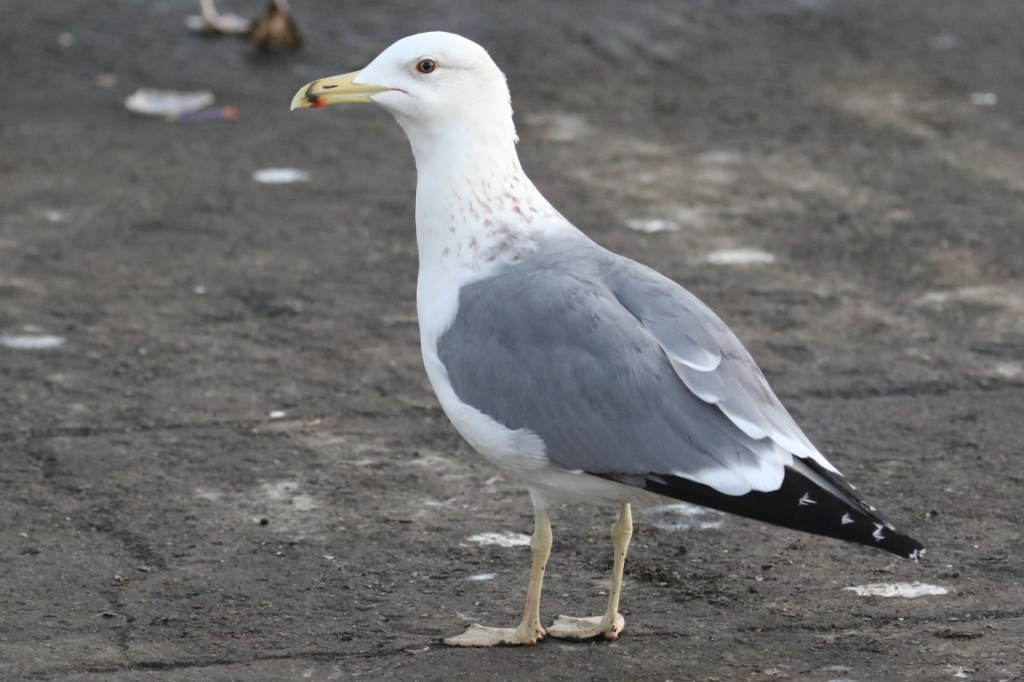
Heuglin’s Gull can be confused with several other gull species. The Lesser Black-backed Gull (Larus fuscus) has a lighter mantle and often has pinkish or yellowish legs. The Great Black-backed Gull (Larus marinus) is much larger, with a black mantle and pink legs. The Caspian Gull (Larus cachinnans) has a lighter mantle, longer legs, and a more slender bill. The Vega Gull (Larus vegae) is similar in size and structure but has a lighter mantle and more streaking in non-breeding plumage.
Habitat and Behavior
Heuglin’s Gull is often found in coastal areas, estuaries, and large inland water bodies. It is an opportunistic feeder, consuming fish, invertebrates, and human refuse. During the breeding season, it nests in colonies on tundra, coastal cliffs, or islands.
Distribution
Heuglin’s Gull breeds in northern Russia, particularly in the Arctic tundra regions of Siberia. During the winter, it migrates to South Asia, the Middle East, and East Africa. It follows a southward migration route through Central Asia and the Middle East.
Conservation Status
Heuglin’s Gull is not considered globally threatened, but its populations may be affected by habitat degradation and human disturbance in its breeding and wintering areas.
When identifying Heuglin’s Gull, careful attention to mantle color, leg color, eye color, and structural features is essential to distinguish it from similar species. Observing its behavior and habitat preferences can also aid in accurate identification.




 Andrew Chick Ecology
Leave a comment