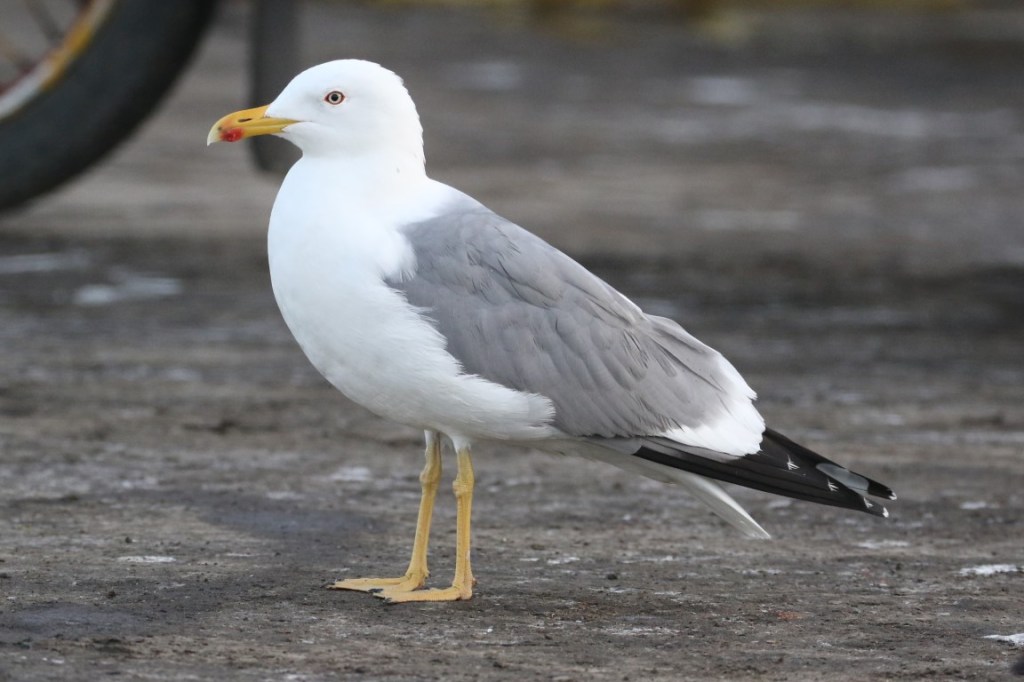
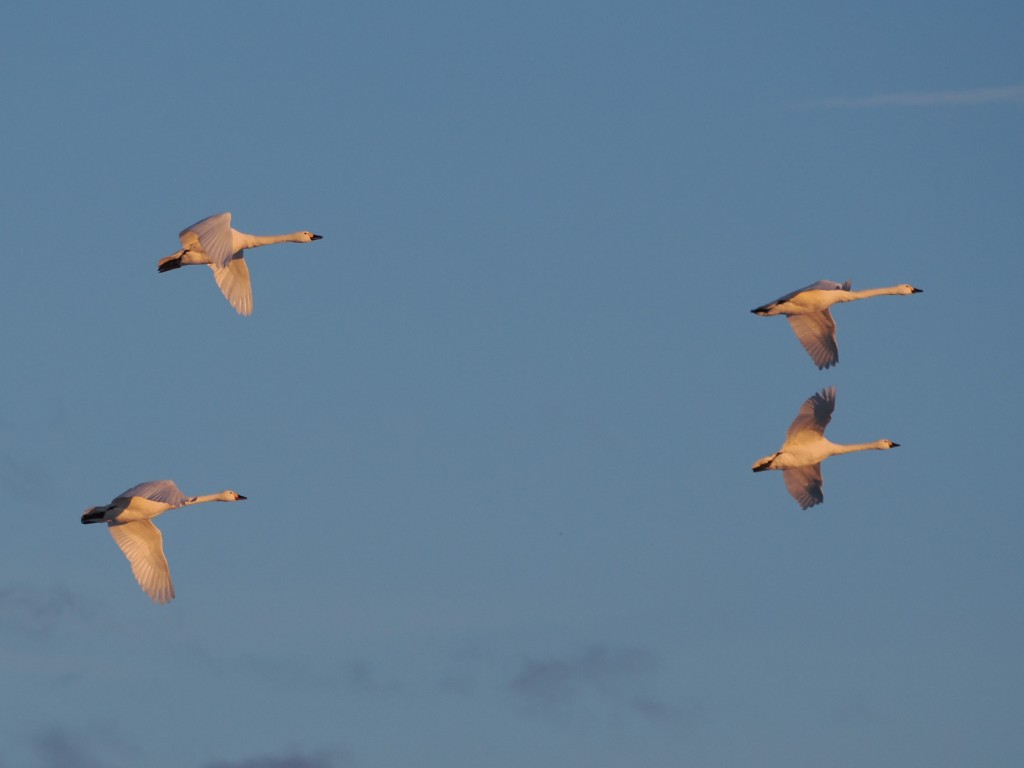
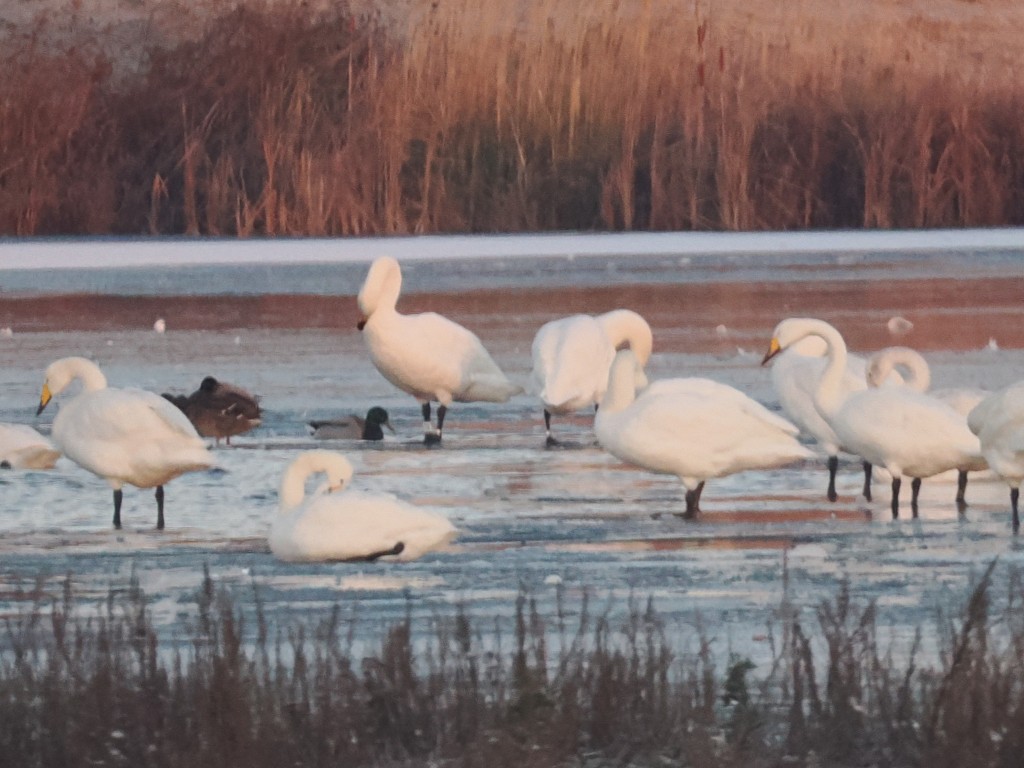
All photoraphs (c) Andrew P. Chick from Gujaret January 2025
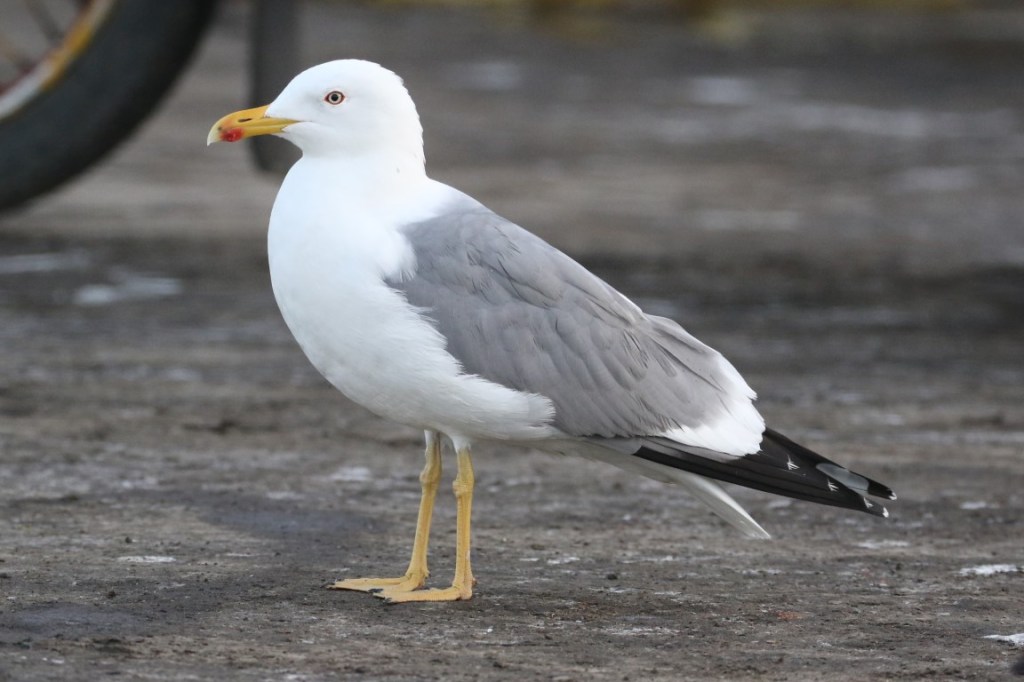
The Steppe Gull (Larus (cachinnans) barabensis) is a subspecies of gull belonging to the larger Caspian Gull complex. It is primarily found in Central Asia and is closely related to other gull species such as the Caspian Gull (Larus cachinnans) and the Herring Gull (Larus argentatus). Below is an overview of its identification and distribution.
Identification
The Steppe Gull is a medium-sized gull, slightly smaller than the Herring Gull but larger than the Black-headed Gull. It has a slender, elongated body with long wings and legs, giving it a graceful appearance in flight.
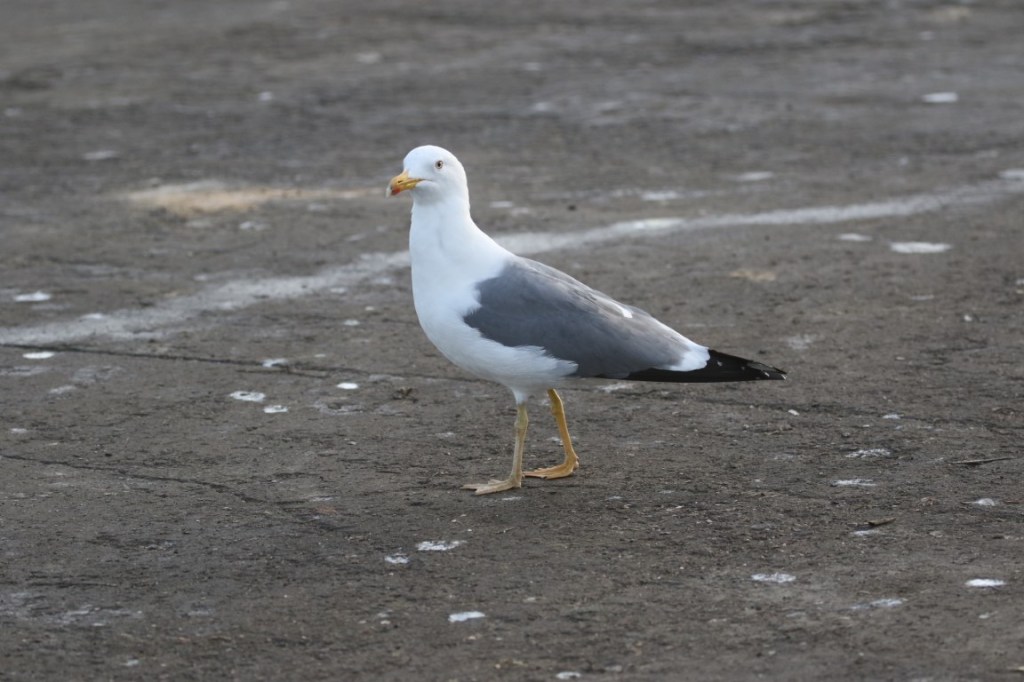
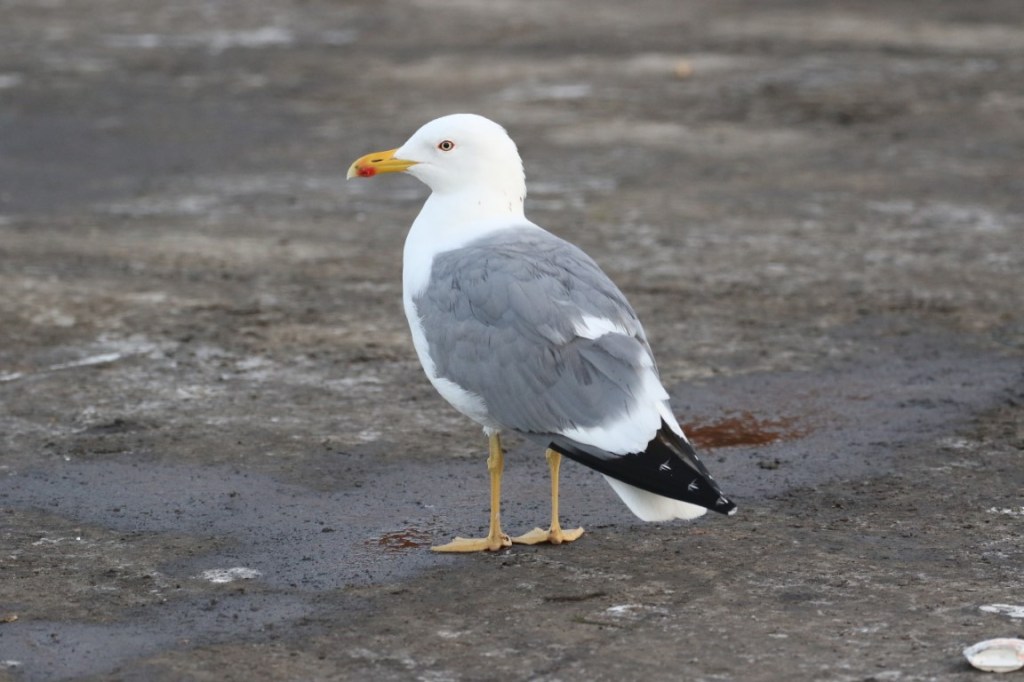
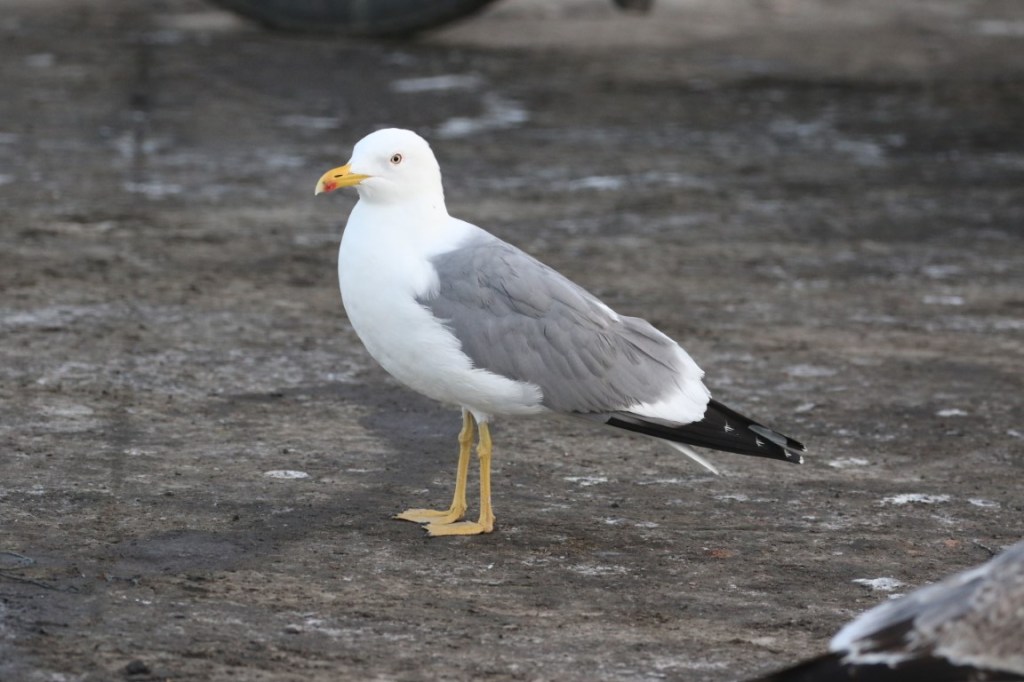
In terms of plumage, adult Steppe Gulls have a pale gray mantle and wings, with a white head and underparts that often show faint streaking in non-breeding plumage. They have yellow legs and a yellow bill with a red gonys spot on the lower mandible. Their dark eyes are a key feature that helps distinguish them from the Caspian Gull, which typically has pale eyes. Juvenile Steppe Gulls are brownish overall with scaly patterning on the upperparts. They gradually develop adult plumage over several years, with intermediate stages showing a mix of brown and gray feathers.
In flight, the Steppe Gull displays long, pointed wings with a distinctive pattern. The underwings appear pale with minimal markings, and the primary feathers show a black-and-white pattern. Their call is a deep, nasal “kyaa” or “kau,” similar to other large gull species but often with a distinct tone.
Distribution
The Steppe Gull breeds in the steppe and semi-desert regions of Central Asia, particularly in Kazakhstan, southern Russia, and parts of Mongolia. It nests near freshwater lakes, rivers, and wetlands, often in colonies. During the winter, it migrates to South Asia, the Middle East, and the Indian subcontinent. Common wintering sites include the coasts of the Arabian Sea, the Persian Gulf, and inland water bodies in India and Pakistan.
The Steppe Gull follows a southward migration route in autumn, passing through Central Asia and the Middle East to reach its wintering grounds. It is often observed in mixed flocks with other gull species during migration. Occasionally, Steppe Gulls are recorded as vagrants in Europe, particularly in countries bordering the Mediterranean and Black Seas.
Habitat and Behavior
The Steppe Gull is highly adaptable and can be found in a variety of habitats, including coastal areas, inland lakes, rivers, and even urban environments. It is an opportunistic feeder, consuming fish, invertebrates, small mammals, and human refuse. During the breeding season, it is territorial and nests on the ground, often in loose colonies.
Conservation Status
The Steppe Gull is not currently considered globally threatened, but its populations may be affected by habitat loss, pollution, and human disturbance in its breeding and wintering areas. Monitoring and conservation efforts are important to ensure the stability of its populations.
If you are observing gulls in the field, careful attention to plumage details, leg color, eye color, and structural features is essential to distinguish the Steppe Gull from similar species like the Caspian Gull or Herring Gull.



 Andrew Chick Ecology
Leave a comment