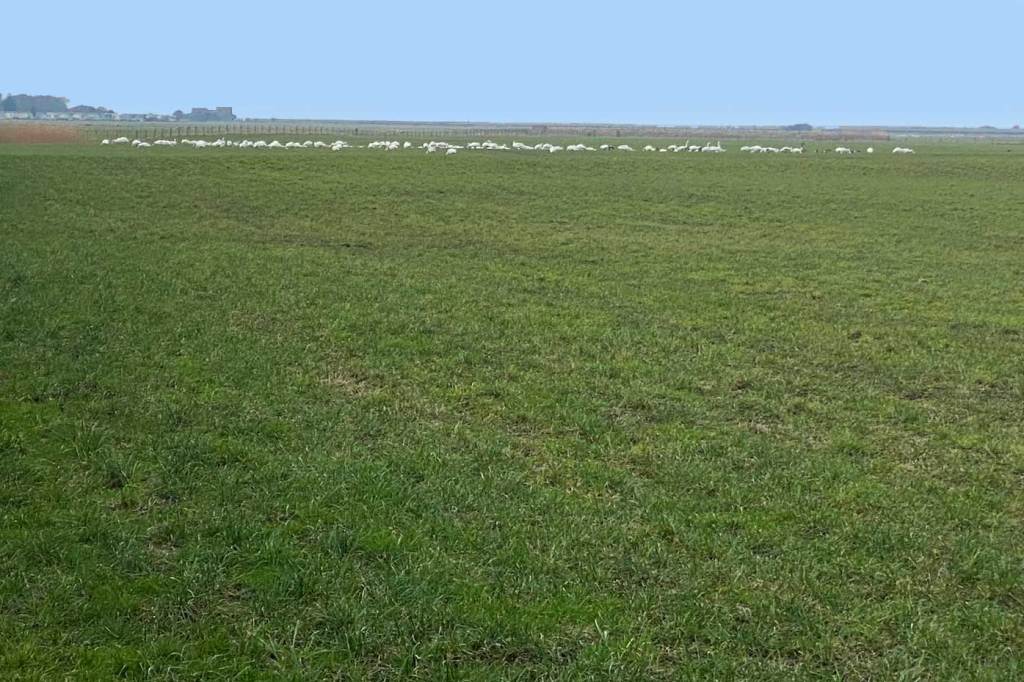
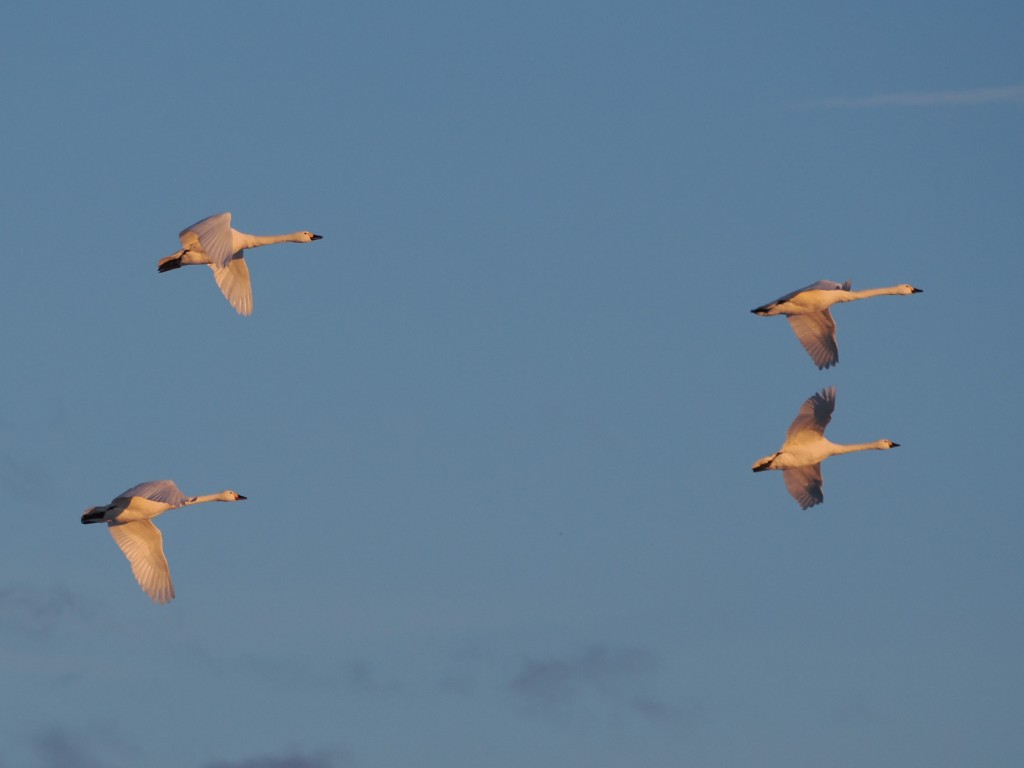
The picture shows a flock of c60 Whooper Swans with the two long staying Bewick Swan’s located near Lancaster (Feb 2025).
The Bewick’s Swan, a graceful and iconic winter visitor to the UK, has seen a concerning decline in numbers over recent decades. These elegant birds, named after the 18th-century engraver Thomas Bewick, migrate from their breeding grounds in the Russian Arctic to spend the winter in the milder climates of the UK. Historically, the UK hosted thousands of Bewick’s Swans each winter, with key sites such as the Slimbridge Wetland Centre in Gloucestershire providing vital refuge. However, since the mid-1990s, their populations have plummeted, raising alarm among conservationists and bird enthusiasts alike.
Several factors are believed to contribute to this decline. Climate change is a significant driver, as milder winters in Europe have reduced the need for swans to migrate as far as the UK. Many now choose to winter in countries like Germany and the Netherlands, where historically harsher conditions have softened. Habitat loss and degradation in both their breeding and wintering grounds further exacerbate the problem. Wetland drainage, agricultural intensification, and urban development have reduced the availability of suitable feeding and roosting sites. Additionally, illegal hunting and collisions with power lines pose direct threats to their survival.
Conservation efforts have been underway to address these challenges. Organizations such as the Wildfowl & Wetlands Trust (WWT) have been monitoring Bewick’s Swan populations and advocating for the protection of wetlands. International cooperation is also crucial, as the swans’ migratory journey spans multiple countries. Despite these efforts, the decline continues, highlighting the need for more robust and coordinated action.
The dwindling numbers of Bewick’s Swans in the UK are not just a loss for biodiversity but also a cultural blow. These swans have long been a symbol of winter’s arrival, their haunting calls and striking presence enriching the British landscape. Their decline serves as a poignant reminder of the interconnectedness of global ecosystems and the urgent need to address environmental challenges. Without concerted efforts to protect their habitats and mitigate the impacts of climate change, the sight of Bewick’s Swans gracing UK wetlands may become a relic of the past.

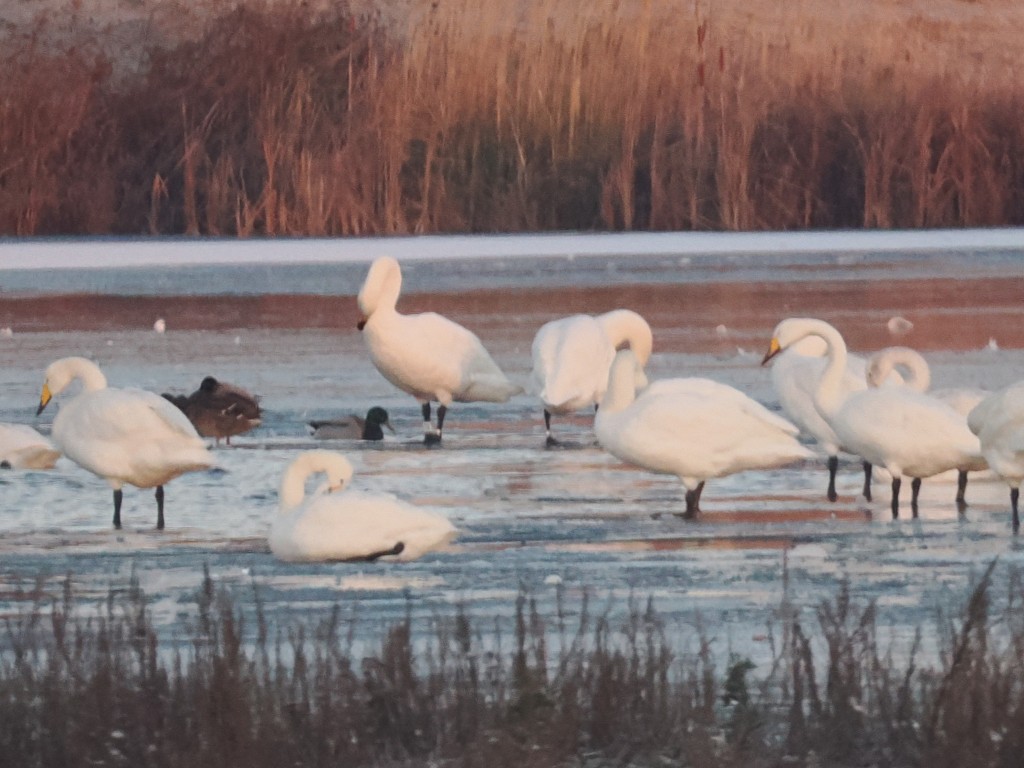
Whooper Swan in Lancashire (February 2025).

Whooper Swans with Pink-footed Geese in the background.

 Andrew Chick Ecology
Leave a comment