
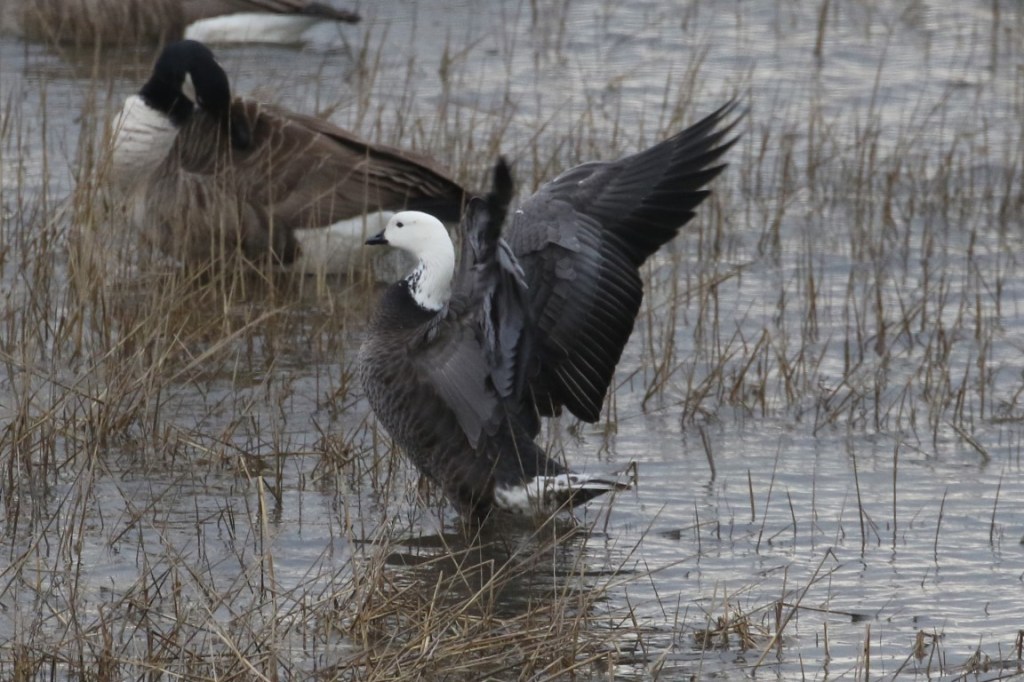
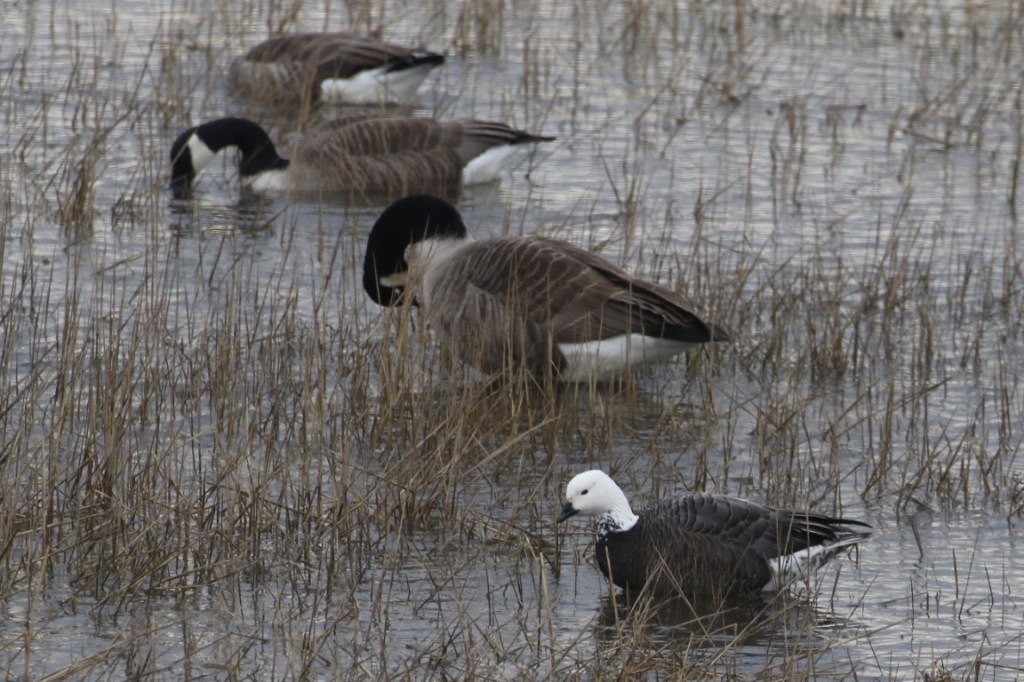
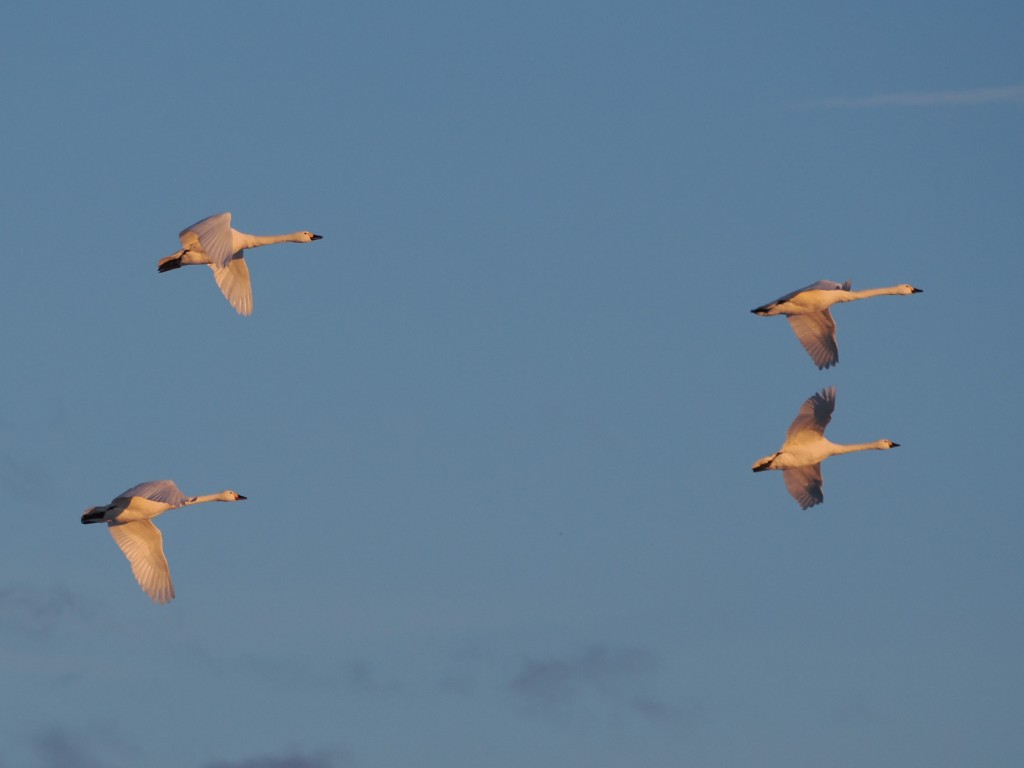
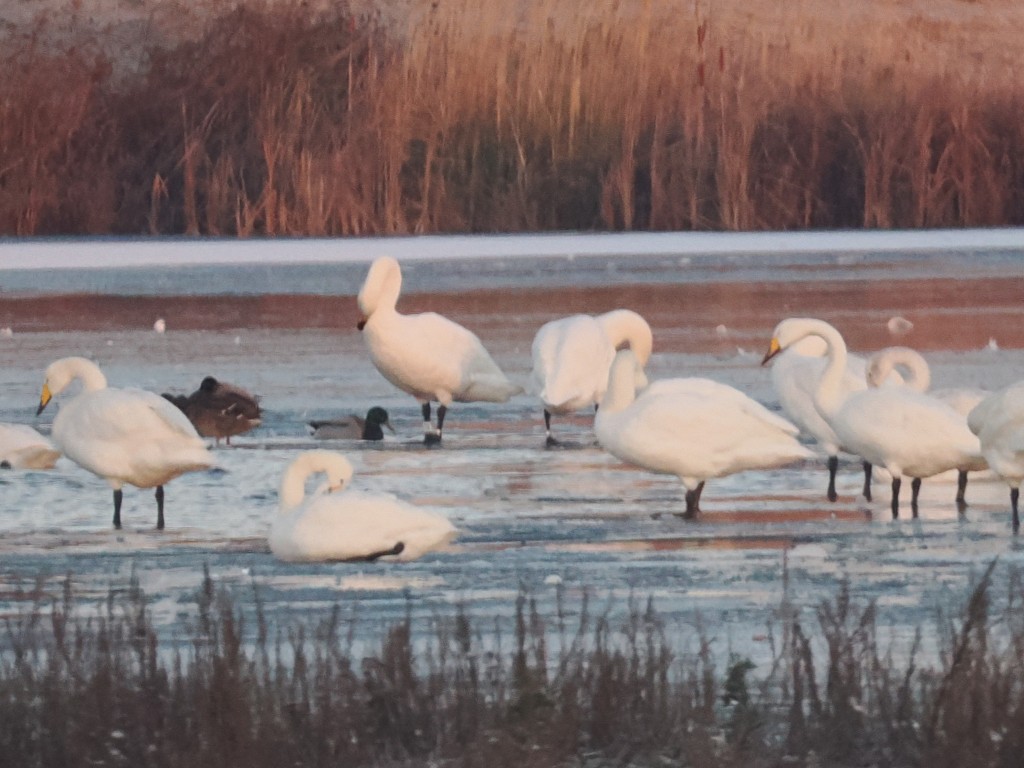
All photographs at Barrow-in-Furnace, Cumbria 10th Feb 2025 (c) Andrew Chick
Hybridization between Emperor Geese (Anser canagicus) and Barnacle Geese (Branta leucopsis) is an exceptionally rare phenomenon, and there is limited documented evidence of such hybrids in the wild or in captivity. Both species belong to different genera—Emperor Geese to Anser and Barnacle Geese to Branta—which typically reduces the likelihood of interbreeding due to differences in behavior, habitat preferences, and breeding biology. However, in rare cases where their ranges overlap or in controlled environments like aviaries, hybridization can occur.
Emperor Geese are native to the coastal regions of Alaska and eastern Siberia, while Barnacle Geese breed in the Arctic regions of Greenland, Svalbard, and Russia, wintering in northwestern Europe. Their natural ranges do not significantly overlap, which further limits opportunities for hybridization. However, in captivity, where species are often housed together, hybrid geese have occasionally been reported. These hybrids typically exhibit intermediate physical characteristics, such as a mix of plumage patterns and coloration from both parent species. For example, they might display the dark body and white face patch of an Emperor Goose combined with the black-and-white barred plumage of a Barnacle Goose.
The status of Emperor/Barnacle Goose hybrids remains poorly studied, and there is no established population of such hybrids in the wild. Hybridization in waterfowl, while fascinating, is often a concern for conservationists because it can dilute the genetic integrity of parent species, particularly if one or both species are threatened or endangered. Emperor Geese, for instance, have faced population declines in the past due to hunting and habitat loss, though conservation efforts have helped their numbers recover in recent decades. Barnacle Geese, on the other hand, have seen population increases in many areas, but they remain sensitive to changes in their Arctic breeding grounds due to climate change.
In summary, Emperor/Barnacle Goose hybrids are extremely rare and primarily observed in captivity rather than in the wild. Their existence highlights the potential for hybridization between distantly related waterfowl species, but their ecological and conservation significance remains minimal due to their rarity. Continued monitoring of both parent species and their habitats is essential to ensure their long-term survival and to better understand the dynamics of hybridization in waterfowl.


 Andrew Chick Ecology
Leave a comment