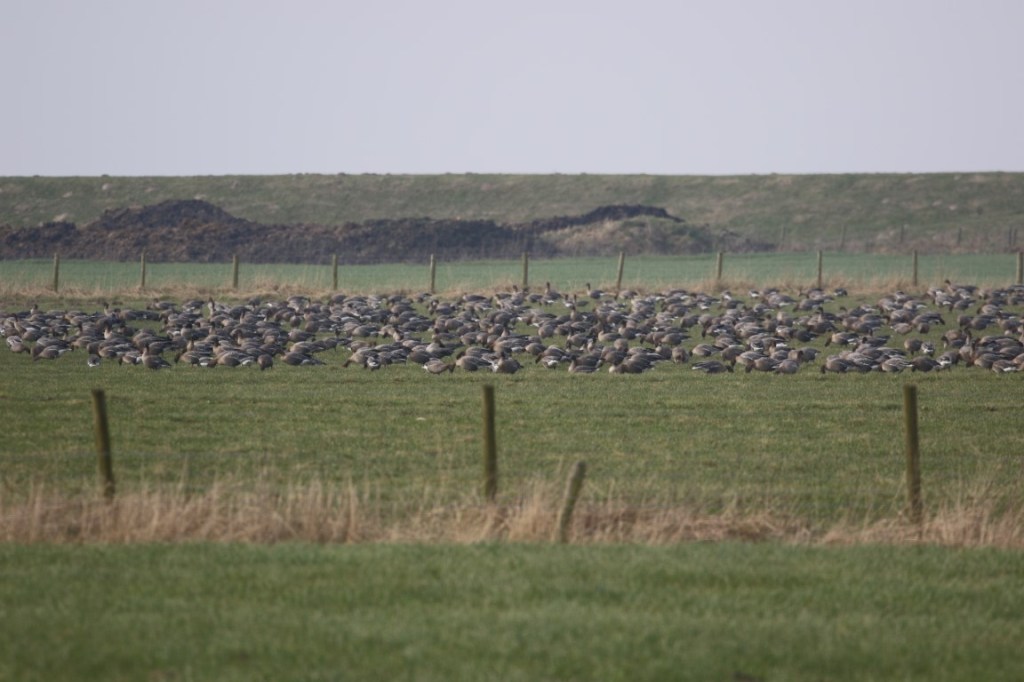
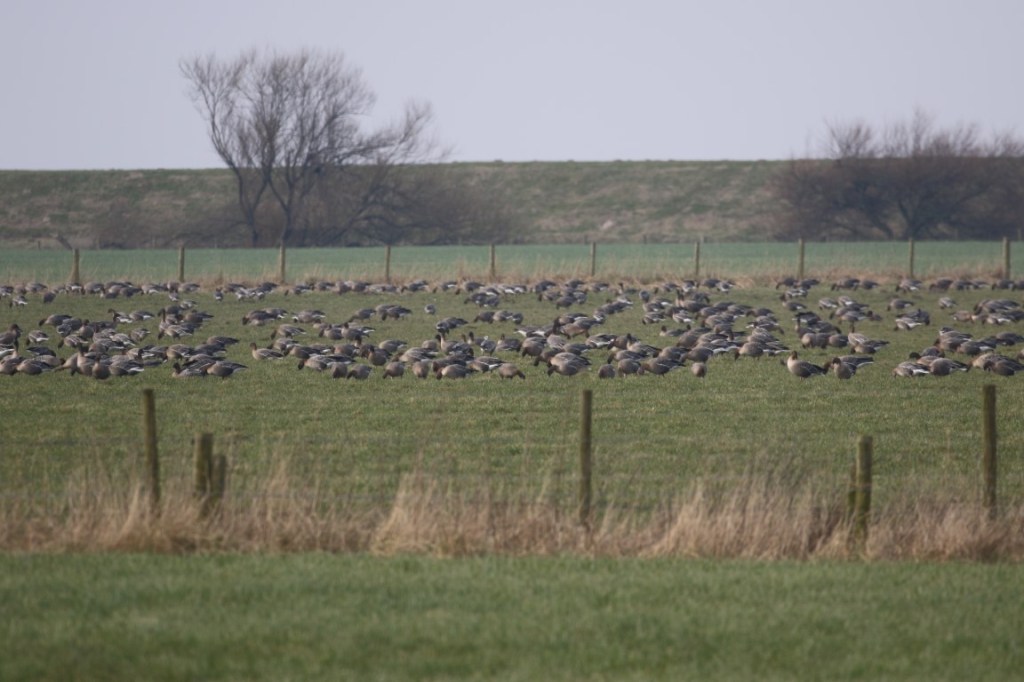
Photo: Part of c.2000 Pink-footed Geese foraging at “Braides” Lancashire on 18th February 2025 (c) Andrew P. Chick
Lancashire plays a crucial role in supporting the survival of pink-footed geese during the winter months, serving as a vital haven for these migratory birds. Each year, thousands of pink-footed geese make the long journey from their breeding grounds in Iceland and Greenland to the milder climates of the UK, with Lancashire being one of their most important destinations. The county’s wetlands, farmland, and coastal areas provide the geese with abundant food resources, such as leftover root crops and grasses, which are essential for building up their energy reserves before their return migration in spring. Among these areas, Morecambe Bay stands out as a particularly significant site, offering a rich mosaic of habitats that sustain large numbers of geese.
Morecambe Bay, designated as a Special Protection Area (SPA) under the European Union’s Birds Directive, is a cornerstone of conservation efforts for pink-footed geese. SPAs are legally protected sites that aim to safeguard habitats for rare and vulnerable bird species. Morecambe Bay SPA encompasses a vast intertidal area, saltmarshes, and adjacent farmland, creating a diverse landscape that supports not only pink-footed geese but also a wide range of other bird species. The bay’s intertidal mudflats are particularly important, providing feeding grounds for geese and other waterbirds, while the surrounding farmland offers additional foraging opportunities.
The concept of functionally linked land is central to understanding the importance of areas beyond the immediate boundaries of the SPA. Functionally linked land refers to areas that, while not part of the designated SPA, are essential for the survival and well-being of the species it protects. For pink-footed geese, this includes nearby agricultural fields where they feed on leftover potatoes, carrots, and other crops. These fields are integral to the geese’s survival, as they rely on them to supplement their natural diet. Protecting these functionally linked lands is therefore critical to ensuring the long-term conservation of pink-footed geese and maintaining the ecological integrity of Morecambe Bay SPA.
Lancashire’s role in supporting pink-footed geese highlights the importance of a landscape-scale approach to conservation. By safeguarding not only the core habitats within Morecambe Bay SPA but also the surrounding farmland and wetlands, conservationists can ensure that these iconic birds continue to thrive. The decline of such habitats or the loss of functionally linked land could have severe consequences for the geese, disrupting their feeding patterns and reducing their chances of survival. Lancashire’s wetlands and farmland are not just a winter refuge for pink-footed geese; they are a testament to the interconnectedness of nature and the need for holistic conservation efforts that protect both species and the landscapes they depend on.

 Andrew Chick Ecology
Leave a comment