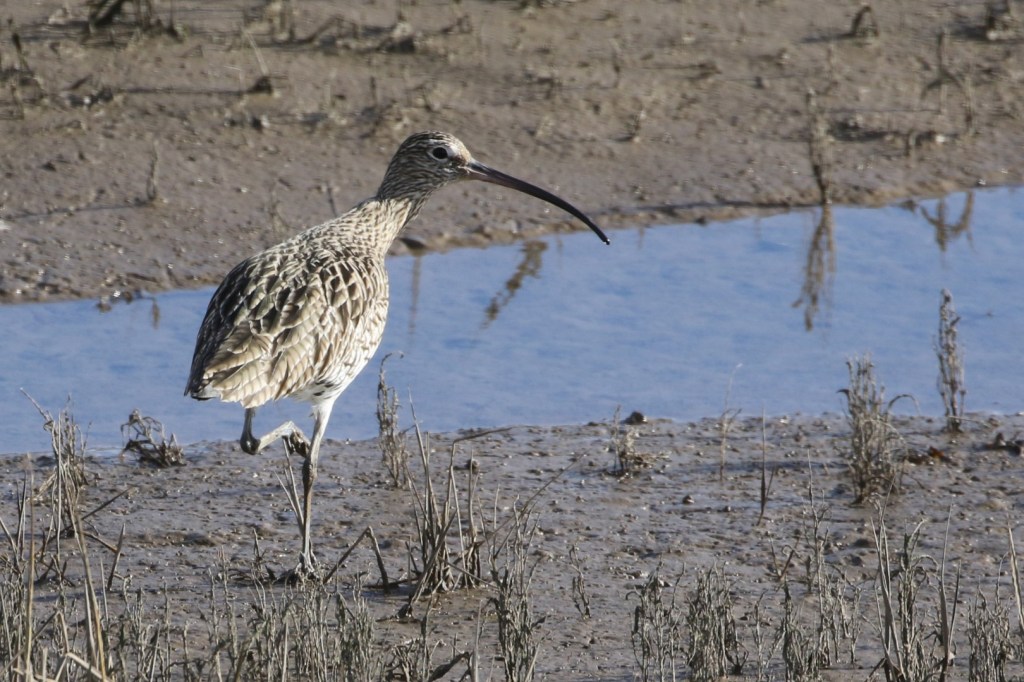
Morecambe Bay is one of the most important wintering sites for the Eurasian curlew (Numenius arquata) in the UK. As Europe’s largest wading bird, the curlew is instantly recognisable by its long, downcurved bill and haunting, bubbling call. However, despite its iconic status, curlew populations have declined significantly in recent decades, making the protection of key wintering habitats like Morecambe Bay more crucial than ever.
Each autumn, curlews migrate from their breeding grounds—predominantly in upland moors, wet meadows, and coastal marshes—seeking the milder climate and abundant feeding grounds of estuaries and mudflats. Morecambe Bay, with its vast intertidal zones, provides the ideal habitat. At low tide, curlews forage along the mudflats, using their specialised bills to probe for marine worms, shellfish, and other invertebrates hidden beneath the surface. Their reliance on these rich feeding grounds makes them highly sensitive to habitat degradation and human disturbance.
During high tide, curlews gather in large roosting flocks on undisturbed saltmarshes, sandbanks, and coastal fields. The availability of safe roosting sites is just as critical as feeding areas, as disturbance can lead to increased energy expenditure and reduced survival rates. In recent years, conservation efforts have focused on protecting these key habitats, with Morecambe Bay designated as a Special Protection Area (SPA) due to its significance for wintering waders and wildfowl.
The declining curlew population highlights the need for ongoing conservation work. Habitat loss, changes in agricultural practices, and climate change all pose threats to this species. Morecambe Bay remains a stronghold, but continued efforts are needed to safeguard roosting and feeding areas, manage human activity, and ensure that curlews can continue to return each winter in healthy numbers.
For birdwatchers and conservationists alike, the sight and sound of curlews in Morecambe Bay remain a powerful symbol of Britain’s coastal wilderness—a reminder of the delicate balance needed to protect our wetlands and the species that depend on them.

 Andrew Chick Ecology
Leave a comment