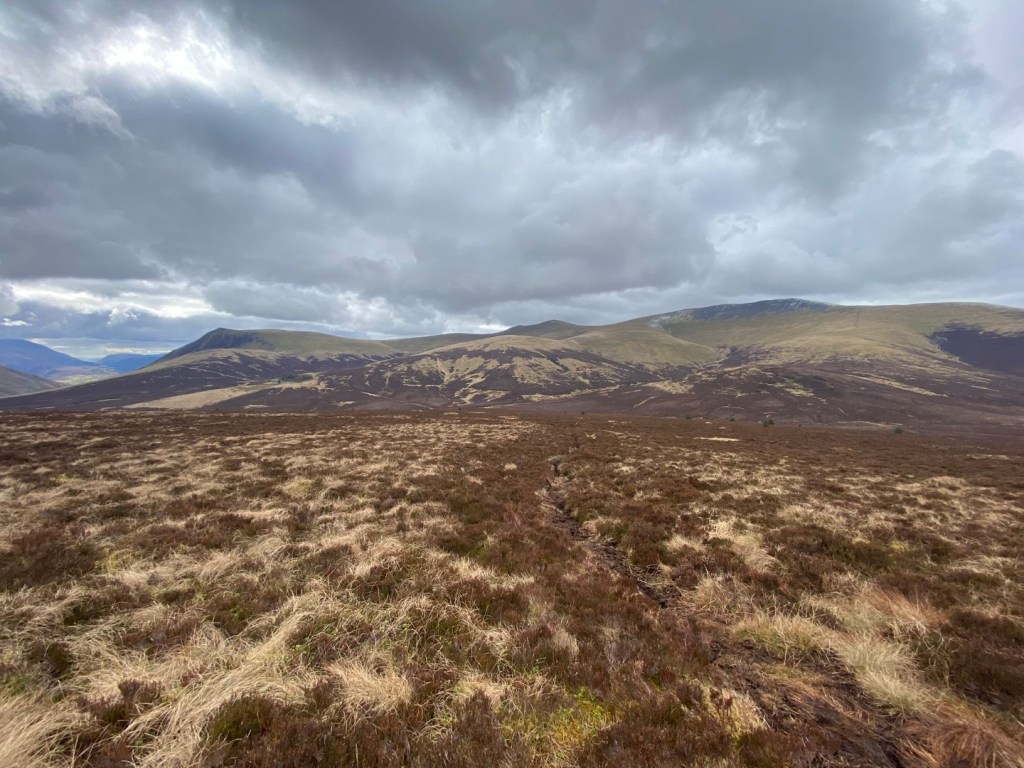
Photo: Lonscale Fell, Little Man and Skiddaw from Great Calva (March 2025)
Rising to 690 metres (2,264 feet), Great Calva stands as a striking northern sentinel over Skiddaw Forest, an expanse of remote wilderness nestled between some of the Lake District’s highest fells. While often overshadowed by the towering Skiddaw and Blencathra, Great Calva exerts its own quiet dominance over this rugged landscape, offering a sense of solitude and unspoiled beauty that few other peaks provide.
A Remote and Wild Landscape
Skiddaw Forest, despite its name, is not a dense woodland but rather a vast, open moorland drained by the winding River Caldew. This area, crisscrossed by old shepherds’ paths and rarely disturbed by crowds, feels truly wild. Great Calva rises at its heart, marking the northern boundary of this expanse and acting as a natural waypoint for those journeying deeper into the Lakeland fells.
The mountain’s slopes, clad in heather and rough grass, are exposed to the full force of the elements, making ascents feel raw and untamed. From its summit, a commanding view unfolds—southward to the heights of Skiddaw and Lonscale Fell, eastward toward the vast emptiness of the Cumbrian fells, and northward where the land dips away towards the rolling countryside beyond the national park.
The Role of Great Calva in the Landscape
Great Calva’s strategic position makes it a key feature of the northern Lake District. It serves as a gateway for fell walkers venturing into Skiddaw Forest, offering an alternative route to the higher peaks. The summit cairn, often windswept and exposed, provides a perfect vantage point to appreciate the remoteness of this part of the Lakes—a stark contrast to the busier trails found further south.
The mountain also plays an important ecological role. Its heather-covered slopes provide nesting grounds for upland birds such as red grouse and meadow pipits, while the wetter flushes are frequented by wading birds like snipe and curlew. The River Caldew, born from the high ground around Skiddaw Forest, winds its way north, sustaining a delicate web of life.
A Climber’s Ascent
Despite its relatively modest height, Great Calva offers a rewarding challenge. Most ascents begin from the north, near Mosedale, following a well-worn track before branching off onto the open fellside. Another popular approach is from Skiddaw House, a remote former shepherd’s lodge turned hostel, where an atmospheric route leads through Skiddaw Forest before a steep push to the summit.
Unlike the more manicured paths of Scafell or Helvellyn, the way up Great Calva is rough and unrefined, with no formal trail in parts—just the heather, the wind, and the occasional glimpse of a distant red deer moving through the landscape.
A Mountain of Quiet Dominance
Though Great Calva does not boast the height or fame of its grander neighbours, its position and presence over Skiddaw Forest make it an unforgettable part of the northern fells. It is a mountain of quiet dominance, offering solitude, sweeping views, and a connection to the untamed heart of the Lake District. For those who seek an escape into wilder country, Great Calva stands waiting, ever watchful over the vast moorland below.

 Andrew Chick Ecology
Leave a comment