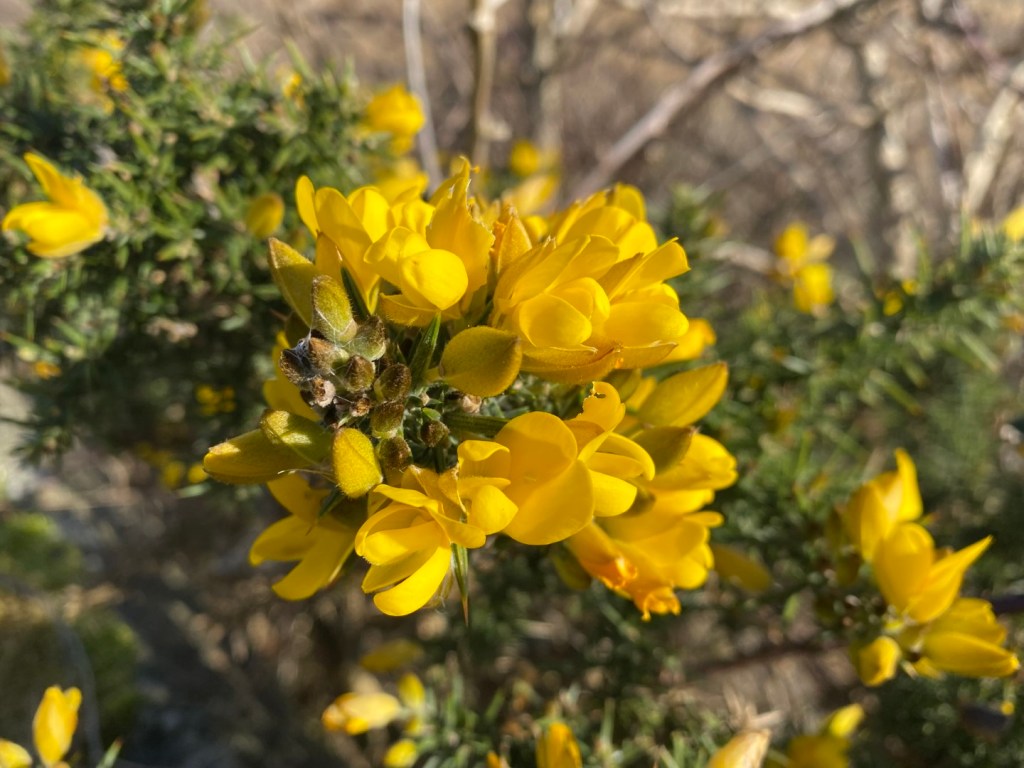
Gorse, with its golden-yellow flowers and coconut scent, is one of the most valuable early and late-season nectar sources for pollinators. Found across moorlands, coastal cliffs, and roadside verges, this hardy shrub is an ecological powerhouse, supporting a diverse range of insects throughout much of the year.
Unlike many other flowering plants, gorse blooms almost continuously, with peak flowering in spring and a secondary flush in autumn. This extended flowering period makes it a lifeline for pollinators when few other nectar sources are available. Bumblebees, solitary bees, and honeybees are frequent visitors, relying on gorse flowers for both pollen and nectar.
The structure of gorse flowers also plays a crucial role in pollination. Insects must exert pressure to access the pollen, a mechanism that ensures efficient transfer between blooms. This benefits not only bees but also beetles and butterflies that take advantage of the shrub’s abundant resources.
Beyond its direct support for pollinators, gorse also provides valuable habitat. Its dense, spiny growth offers shelter for birds and insects, creating a microclimate where wildlife can thrive. The combination of nectar-rich flowers and protective cover makes gorse a cornerstone species in many wild landscapes.
With its resilience and ecological importance, gorse is a reminder of nature’s ability to sustain life even in harsh conditions. Its role in supporting pollinators highlights the interconnectedness of species and the value of preserving wild habitats where plants like gorse can flourish.

 Andrew Chick Ecology
Leave a comment