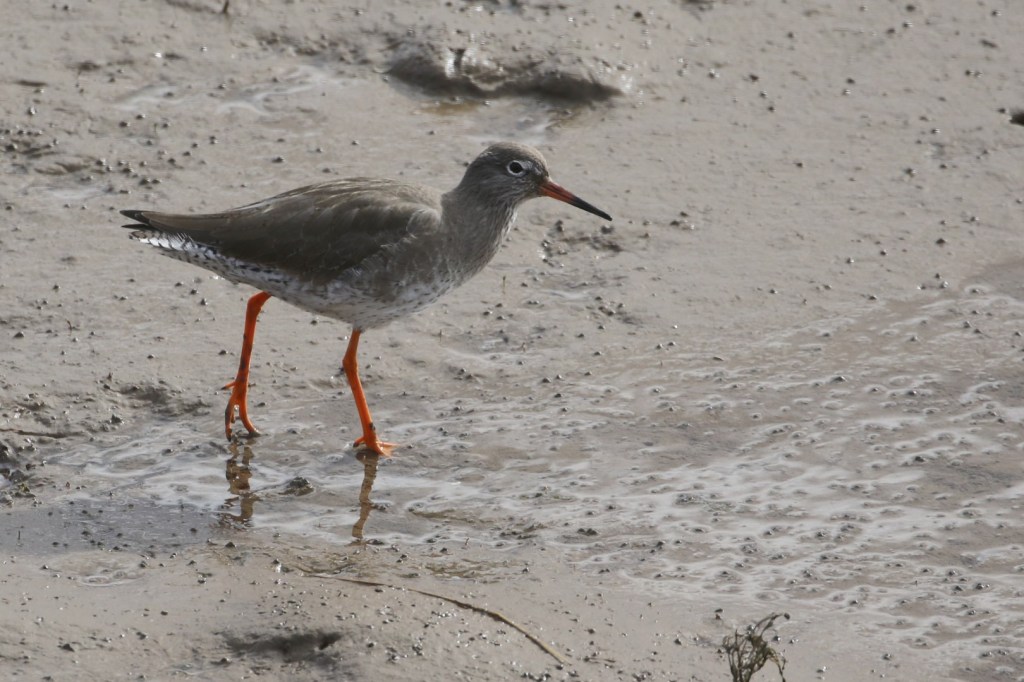
The common redshank is a familiar sight along the estuaries, saltmarshes, and coastal wetlands of South Cumbria. Recognisable by its striking red legs and piercing call, this wader plays a key role in the region’s wetland ecosystems. However, like many other shorebirds, redshank populations face increasing pressures, making their conservation status a growing concern.
Wintering and Breeding Populations
South Cumbria supports both breeding and wintering redshank populations. During the breeding season, redshank nest in coastal saltmarshes and wet grasslands, particularly around Morecambe Bay and the Duddon Estuary. These habitats provide the damp, grassy conditions needed for nesting and abundant invertebrate food for their chicks. However, breeding numbers have declined in recent decades due to habitat loss, changes in agricultural practices, and increased predation.
In winter, South Cumbria sees an influx of redshank from northern Europe and Iceland, swelling local populations as birds take advantage of the region’s extensive intertidal feeding grounds. Estuaries such as those at Morecambe Bay, the Kent Estuary, and Walney Island are particularly important, providing essential mudflat habitats where redshank feed on small invertebrates like worms, molluscs, and crustaceans.
Threats and Conservation Efforts
Despite their adaptability, redshank populations in South Cumbria face several challenges. Habitat degradation, due to coastal development and land reclamation, threatens both breeding and wintering sites. Climate change and rising sea levels also pose risks, potentially altering the availability of key feeding and roosting areas. Disturbance from human activity, including dog walkers and recreational water users, can force redshank away from prime feeding grounds, impacting their ability to build up vital energy reserves.
Conservation efforts are in place to protect South Cumbria’s redshank populations. Morecambe Bay and the Duddon Estuary are designated as Special Protection Areas (SPA), helping safeguard vital habitats. Land management initiatives, such as creating wet grassland reserves and reducing disturbance in key areas, also play a role in supporting breeding birds.
A Future for Redshank in South Cumbria
While redshank remain a regular feature of South Cumbria’s coastal landscape, their long-term prospects depend on continued conservation efforts. Protecting and restoring wetlands, managing human activity, and addressing broader environmental changes will be key to ensuring that both breeding and wintering redshank continue to thrive in the region.
For birdwatchers and conservationists, the sight of redshank foraging on the mudflats or calling from the saltmarsh remains a defining feature of South Cumbria’s coastal habitats—a reminder of the need to preserve these vital ecosystems for future generations.

 Andrew Chick Ecology
Leave a comment