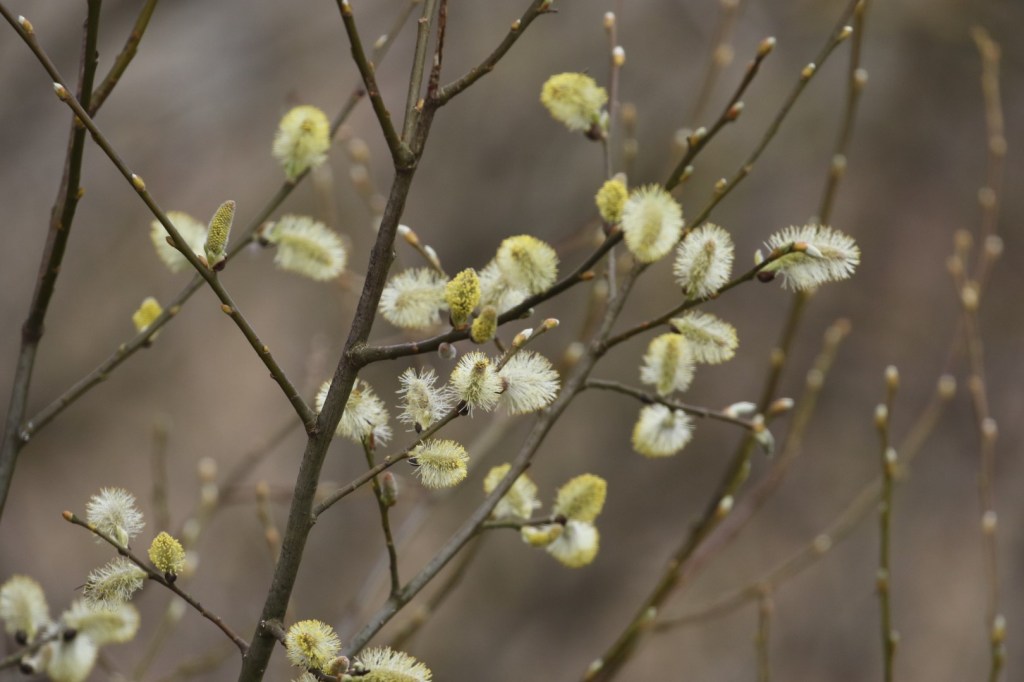
With 17 species and 20 hybrids, Cumbria boasts a remarkable diversity of willow. Among the most recognisable are those adorned with soft, paw-like catkins, earning species such as goat and grey willow the familiar name ‘pussy willow.’ As spring unfolds, these furry catkins burst open to reveal golden pollen-laden male flowers or nectar-rich female blooms, providing an essential early food source for wildlife.
Certain solitary bees, including the northern mining bee and Clarke’s mining bee, rely exclusively on willow pollen, timing their emergence to coincide with its flowering season. Meanwhile, one of nature’s most fascinating mimics—the large bearfly—flits through ancient woodlands, resembling a bumblebee as it visits spring blossoms, including willow, or lays its eggs in decaying tree roots and heart-rot cavities of mature trees.
The large bearfly is just one of 320 species of day-flying pollinators known as saproxylic species, all of which depend on dead wood to complete their life cycles. These insects play a crucial role in woodland ecosystems, highlighting the importance of preserving mature trees and their natural decay processes.
Would you like any further refinements or additions?

 Andrew Chick Ecology
Leave a comment