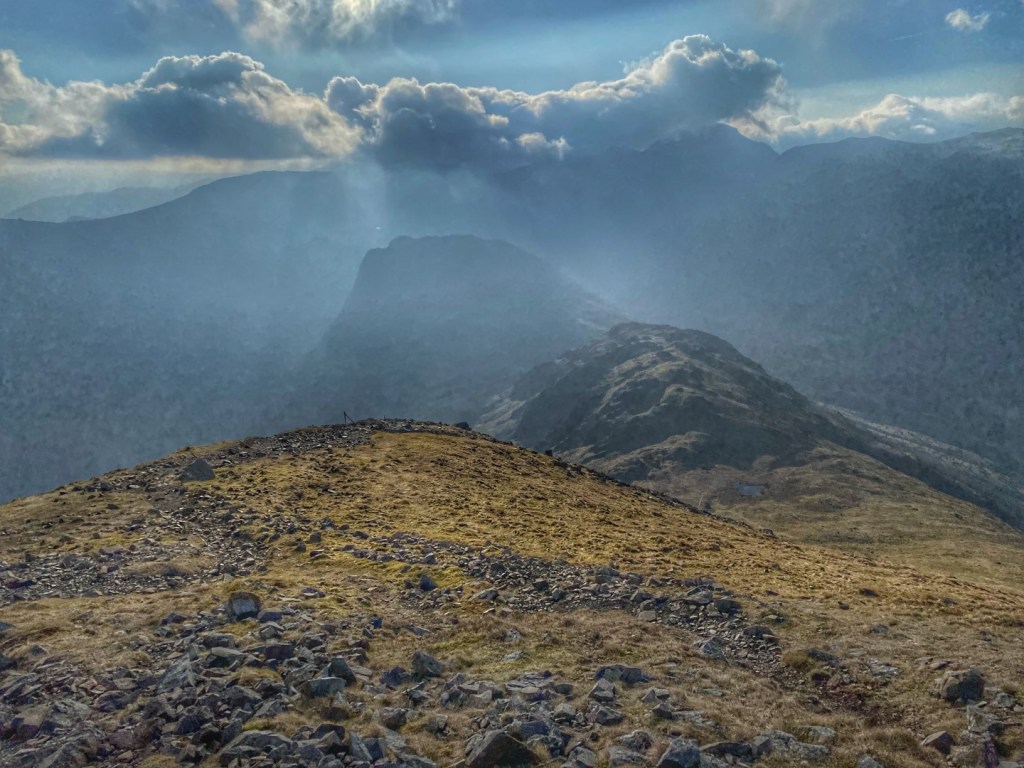
Photo: Haystacks at sunrise 18th March 2025 (c) Andrew P. Chick
Haystacks, a modest yet iconic fell in the Lake District, holds a special place in the hearts of walkers, nature lovers, and admirers of the English landscape. Located near the village of Buttermere, this rugged and beautifully varied mountain stands at just 597 meters (1,958 feet) high, making it one of the smaller fells in the region. Despite its relatively low elevation, Haystacks has become one of the most beloved and iconic peaks in the Lake District, and here’s why:
Haystacks is perhaps most famously associated with Alfred Wainwright, the legendary fell walker and author of the iconic Pictorial Guides to the Lakeland Fells. Wainwright had a deep personal connection to Haystacks, describing it as his favorite fell. He found its rugged beauty, tarns, and rocky outcrops endlessly captivating. In his writings, he even expressed a wish for his ashes to be scattered at Innominate Tarn, a serene pool near the summit. This emotional connection has cemented Haystacks’ status as a place of pilgrimage for Wainwright enthusiasts.
Despite its modest height, Haystacks offers some of the most dramatic and varied scenery in the Lake District. Its summit is a rocky plateau adorned with tarns, crags, and heather-clad slopes. Innominate Tarn, with its tranquil waters and reflective beauty, is a highlight, while Blackbeck Tarn and other smaller pools add to the fell’s charm. The views from the top are breathtaking, encompassing Buttermere, Crummock Water, Ennerdale, and the surrounding fells, including Great Gable and Fleetwith Pike.
Haystacks is accessible to walkers of varying abilities, making it a popular choice for those seeking a rewarding but manageable hike. The most common route starts from Gatesgarth Farm near Buttermere, offering a steady climb with plenty of interest along the way. While it’s not the highest or most challenging fell, its rocky terrain and occasional scrambles add a sense of adventure, making the ascent feel more significant than its height might suggest.
Despite its popularity, Haystacks retains a sense of solitude and wildness. Unlike some of the more crowded peaks in the Lake District, such as Scafell Pike or Helvellyn, Haystacks often feels quieter and more intimate. This makes it an ideal destination for those seeking a peaceful connection with nature.
Haystacks is also geologically fascinating, with its rugged terrain shaped by ancient volcanic activity and glacial erosion. The fell is ecologically rich, with its tarns, bogs, and heathland supporting a variety of plant and animal life. Birdwatchers, in particular, may spot species such as ravens, peregrine falcons, and ring ouzels.
Haystacks embodies the essence of the Lake District—rugged, beautiful, and full of character. Its combination of accessibility, stunning views, and emotional resonance makes it a microcosm of what makes the region so special. For many, reaching the summit of Haystacks feels like a personal achievement and a deep connection to the landscape.
In summary, Haystacks is iconic not because of its size, but because of its soul. It represents the heart and spirit of the Lake District, offering walkers a chance to experience its beauty, history, and tranquility in a way that few other fells can match. Whether you’re a seasoned hiker or a casual walker, Haystacks is a must-visit destination that leaves a lasting impression.


 Andrew Chick Ecology
Leave a comment