
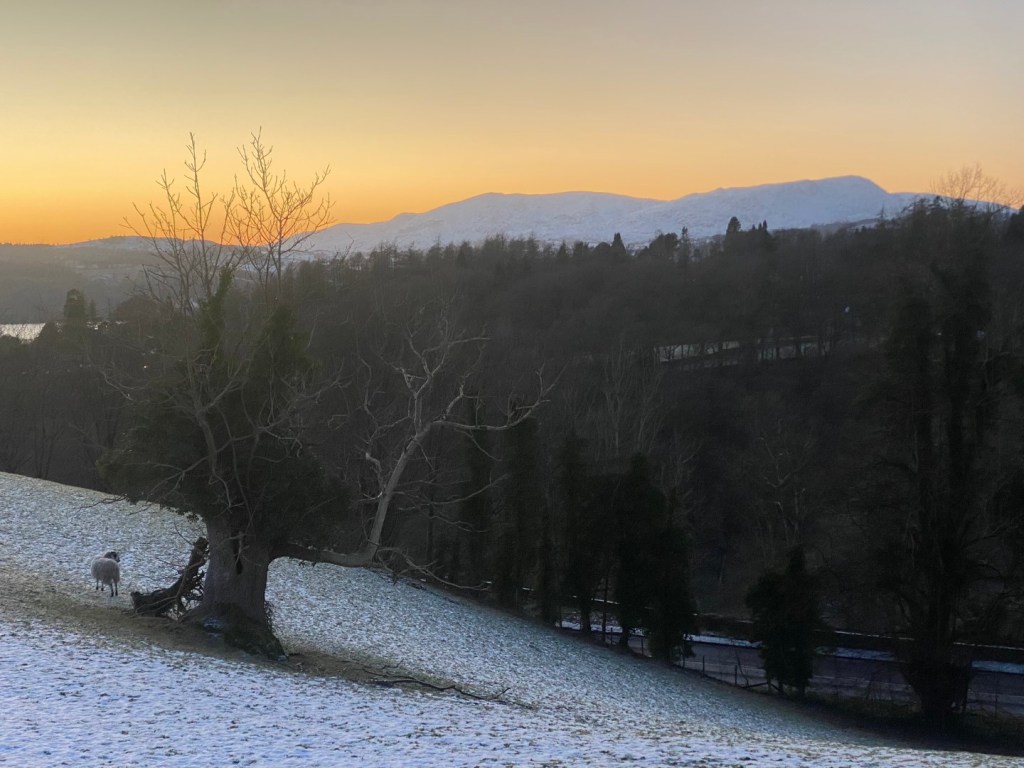
Photo: The Old Man & Wetherlam with Windermere in the foreground.
The Likely Biggest Impacts of Climate Change on Lake Windermere
Lake Windermere, England’s largest natural lake, is increasingly affected by climate change. Rising temperatures, changing rainfall patterns, and ecological disruptions are altering the lake’s environment, with significant consequences for its water quality, biodiversity, and overall health. The key impacts include:
1. Rising Water Temperatures
Warmer water temperatures affect the lake’s ecosystem by:
- Altering fish populations – Cold-water species like Arctic charr may decline as warmer-adapted species, such as carp and roach, become more dominant.
- Reducing oxygen levels – Warmer water holds less oxygen, which can stress aquatic life, particularly fish and invertebrates.
- Encouraging algal blooms – Higher temperatures promote the growth of harmful algae, which can reduce water quality and threaten wildlife.
2. Increased Algal Blooms and Water Quality Decline
- Higher temperatures and nutrient runoff from agriculture and urban areas contribute to more frequent and severe cyanobacterial (blue-green algae) blooms.
- These blooms can produce toxins harmful to fish, birds, and humans, limiting recreational use of the lake.
3. Changes in Rainfall and Flooding Patterns
- Heavier rainfall and flooding increase nutrient and sediment runoff into the lake, further fueling algal blooms.
- Drier summers could lead to lower water levels, concentrating pollutants and reducing habitat availability for aquatic species.
4. Impact on Wildlife and Ecosystem Balance
- Non-native and warm-water species may thrive, outcompeting native species.
- Changes in food availability, such as declines in zooplankton due to predation by invasive fish, could disrupt the lake’s food web.
- Birds and other wildlife dependent on the lake for food and breeding could be affected by declining fish stocks and habitat changes.
5. Increased Human Pressures
- Climate change may extend the tourist season, increasing pollution, water demand, and disturbance to wildlife.
- Recreational activities, including boating and fishing, may be impacted by reduced water quality and changing fish populations.
Conclusion
Climate change poses significant risks to Lake Windermere, with warming temperatures, water quality decline, and ecological imbalances being major concerns. Without effective conservation efforts and sustainable management, these changes could have lasting consequences for the lake’s biodiversity, local economy, and recreational value.
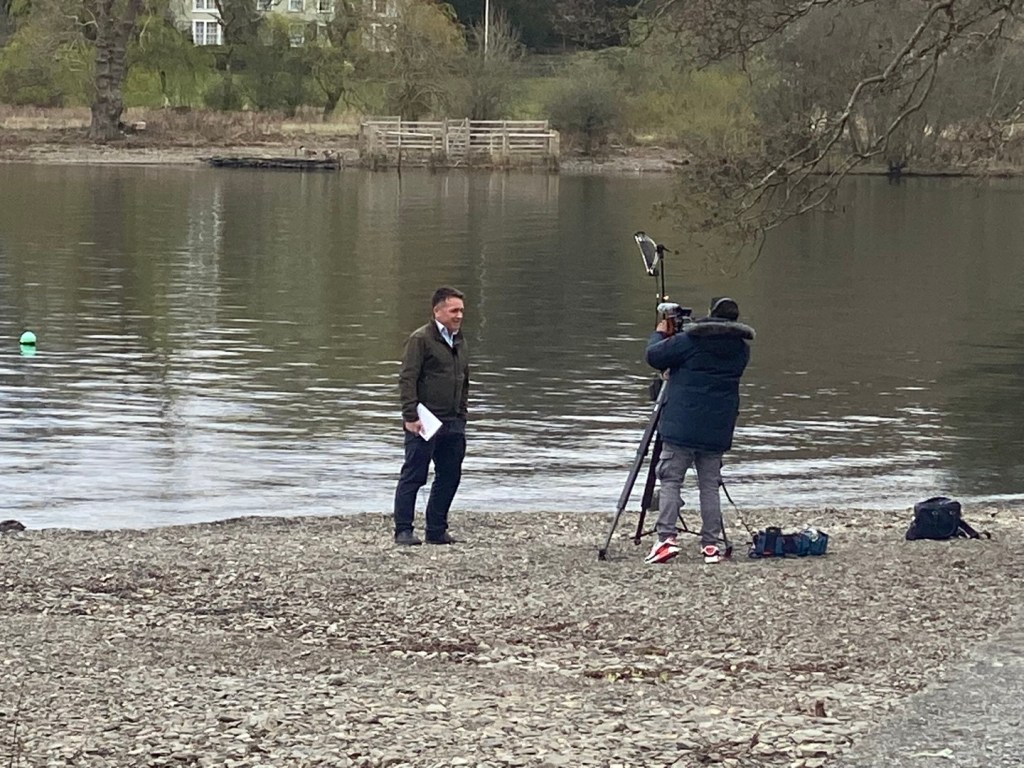
Windermere in the News – a TV Crew reporting from the Jetty Museum on the State of Windermere (March 31, 2025)
Climate Change and the impact on the LDNP
According to the Lake District National Park Authority, climate change has multiple and significant impacts on the region. Species loss is a major concern, as plants and animals at the edge of their range, such as the mountain ringlet butterfly and the Arctic charr, could become locally extinct. Habitats are also migrating upwards, compressing upland landscapes into smaller areas and making them more vulnerable. Additionally, the spread of non-native species, including invasive plants like pygmy weed, Himalayan balsam, and Japanese knotweed, threatens native flora and fauna. A further concern is Bluetongue disease, a cattle disease spread by midges first seen in Britain in 2007, which could severely affect farmers. Climate change is also altering lakes, with falling summer water levels, increased siltation from erosion, and a higher risk of toxic blue-green algae blooms, potentially affecting recreation. Woodlands face greater storm damage, drought stress, and shifts in species composition, while peatlands, which store vast amounts of carbon, risk drying out and releasing carbon into the atmosphere, exacerbated by footpath erosion from high visitor numbers. The frequency and severity of extreme weather events, such as storms, high winds, flooding, drought, and forest fires, are also expected to rise, with past storms like Desmond in 2015 and Arwen in 2021 causing significant damage. Finally, heavy winter rainfall is worsening footpath erosion, with extreme weather events in 2009 and 2015 washing away many trails and footbridges.

 Andrew Chick Ecology
Leave a comment