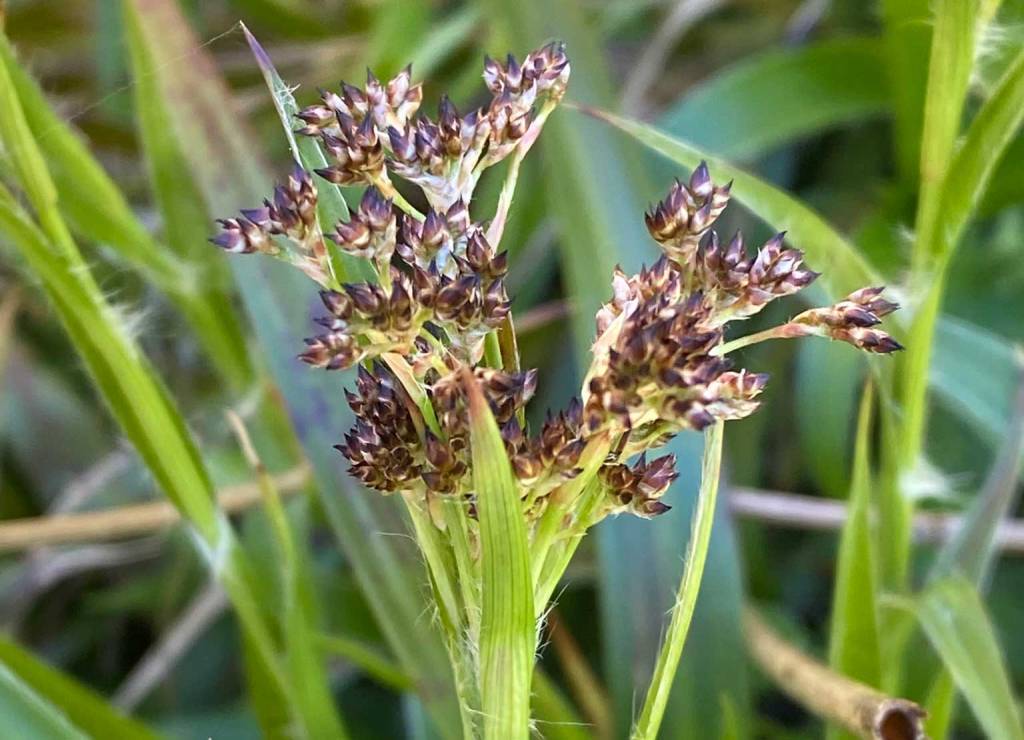
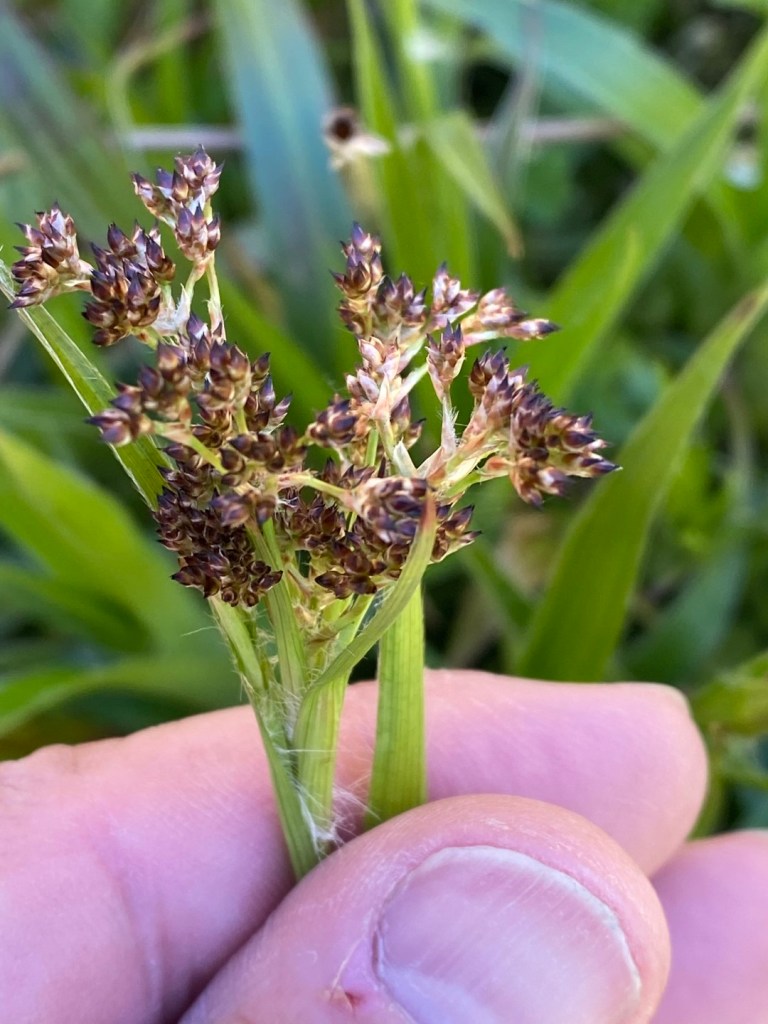
Great Wood-rush (Luzula sylvatica) is a robust, grass-like perennial plant commonly found in the damp, shaded woodlands of the UK and other parts of Europe. Its ability to thrive in nutrient-poor, acidic soils makes it a characteristic species of upland forests, riverbanks, and moorland edges.
This plant is easily identified by its long, lance-shaped, bright green leaves, which form dense tufts or mats. The leaf edges are softly hairy, distinguishing it from grasses. During its flowering season, which lasts from April to July, it produces small, brownish or reddish flowers in loose, open clusters. Growing up to one meter tall, Great Wood-rush is one of the largest species within the Luzula genus. Its spreading growth habit, facilitated by rhizomes, allows it to form extensive carpets that help stabilize the soil and suppress competing vegetation.
It thrives in damp, shaded woodlands, particularly in oak and birch forests, and is also commonly found in upland areas with acidic soils, including regions such as the Lake District, Scotland, and Wales. Additionally, it grows along riverbanks and shaded moorlands, where its presence plays a role in reducing erosion.
Ecologically, Great Wood-rush provides cover for insects and small mammals and helps to stabilize soil on slopes and riverbanks. It is often considered an indicator species for ancient woodlands, offering clues about the history and stability of a given habitat.
Historically, this plant had practical uses, such as for thatching, bedding, and weaving. In modern times, it is occasionally used in shade gardens as ground cover due to its resilience and low-maintenance nature.
Although Great Wood-rush is not currently threatened, habitat loss due to deforestation and changes in land use could impact its populations in some regions. Its adaptability ensures that it remains a familiar sight in many woodland environments, continuing to play a crucial role in the ecosystems where it thrives.



 Andrew Chick Ecology
Leave a comment