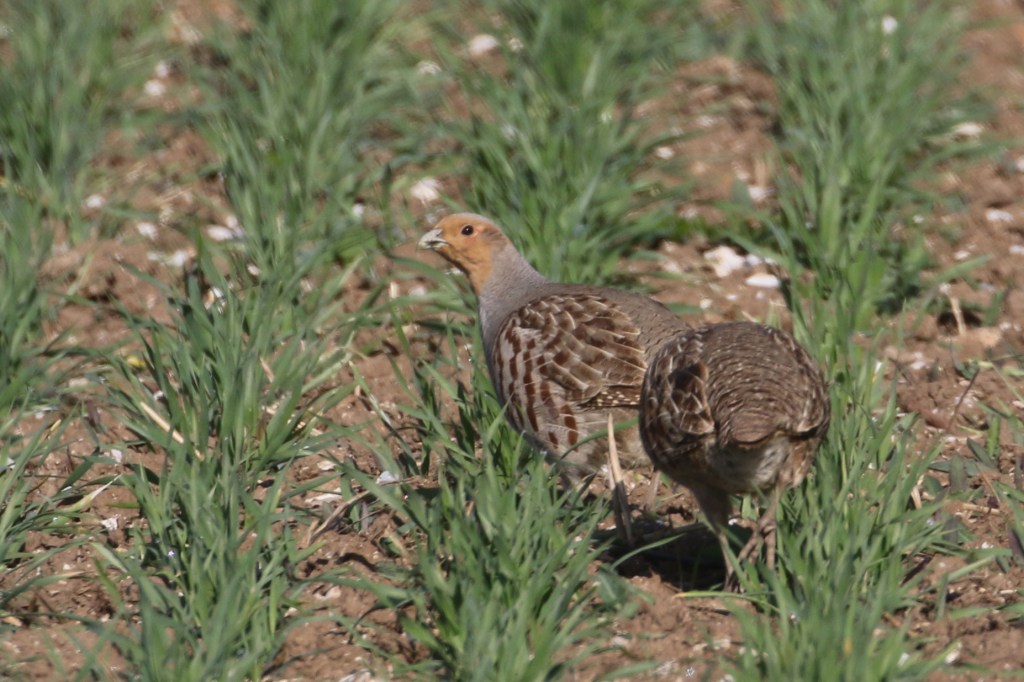
Grey Partridges are not common across the whole of the UK and have experienced significant declines over the past few decades. Once widespread in farmland throughout the country, their numbers have dropped sharply due to changes in agricultural practices, habitat loss, and the increased use of pesticides that reduce their food sources. Today, they are more often found in lowland areas of eastern and southern England, where some conservation efforts and habitat management have helped sustain local populations. They are much scarcer in Wales, Scotland, and Northern Ireland.
Breeding typically begins in late spring, around April or May. The female lays a large clutch of eggs—often between 10 and 20, sometimes even more—in a well-hidden nest on the ground, usually in tall grass or crop margins. Chicks hatch after about three to four weeks and are precocial, meaning they can leave the nest and feed themselves almost immediately, although they remain under the care of both parents.
Grey Partridges are indeed a conservation concern in the UK and are listed as a species of high conservation priority on the Red List due to their dramatic population declines. Their survival now depends heavily on targeted conservation efforts, such as creating suitable habitats, reducing pesticide use, and promoting wildlife-friendly farming practices.

 Andrew Chick Ecology
Leave a comment