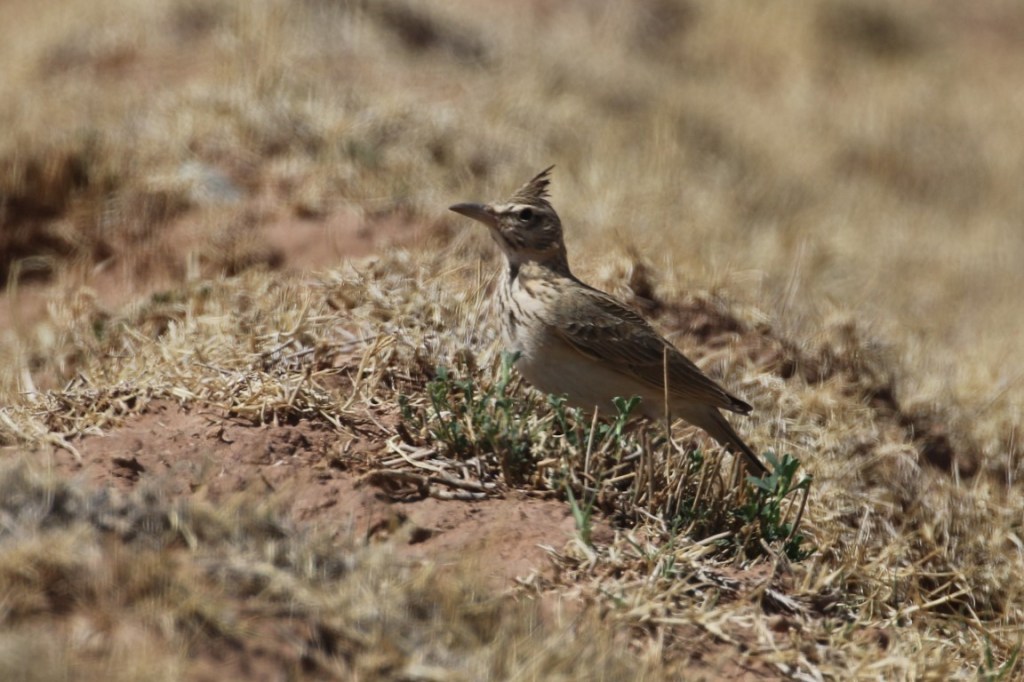
The Maghreb Lark (Galerida macrorhyncha) is a relatively recently recognized species of lark endemic to the arid and semi-arid regions of North Africa, particularly in countries like Morocco, Algeria, and Tunisia. Once considered a subspecies of the more widespread Crested Lark (Galerida cristata), the Maghreb Lark was elevated to full species status following a combination of genetic, morphological, and vocal analyses that revealed consistent and significant differences between the two.
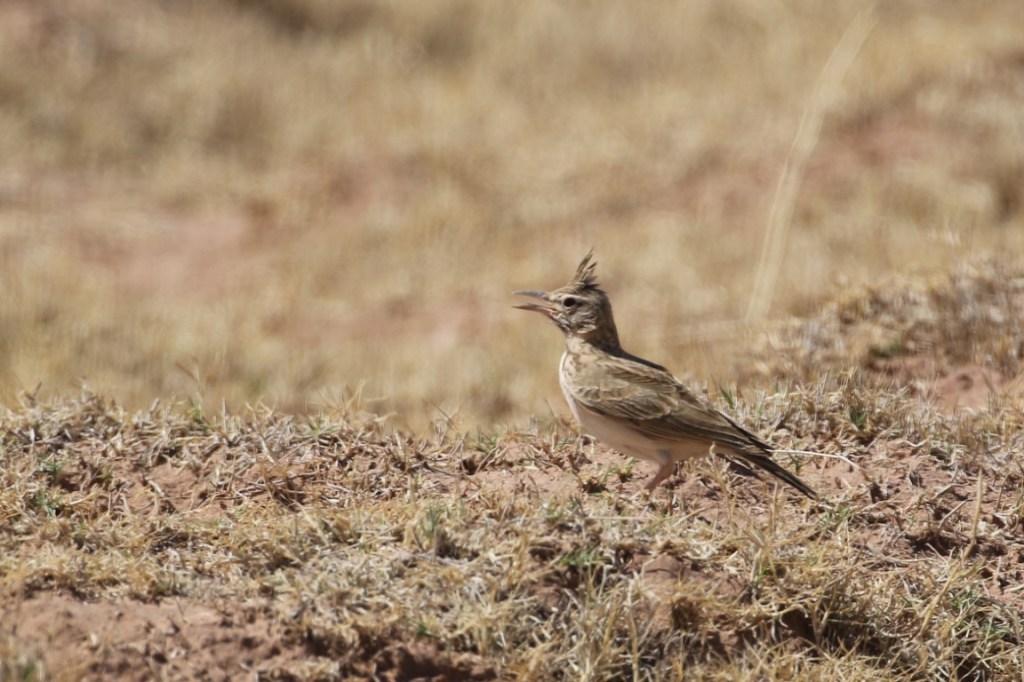
This bird is best identified by its notably long bill, which is more curved and extended than that of the Crested Lark, aiding in its foraging behavior in dry, sandy soils. Its plumage is generally pale, sandy-brown with streaks that provide effective camouflage against the North African terrain. It also sports a short crest, similar to that of its European counterpart, but is slightly more compact and often held flattened. Vocalizations of the Maghreb Lark also differ subtly from those of the Crested Lark, a factor that contributed to its reclassification.
The formal recognition of the Maghreb Lark as a distinct species occurred in the early 2000s, with a key turning point in 2009 when a detailed molecular phylogenetic study confirmed its genetic divergence. This research showed that the North African populations had been reproductively isolated from European Crested Larks for a significant period of evolutionary time. The decision to split the species was supported by the IOC World Bird List and subsequently by other global ornithological authorities.
In terms of habitat, the Maghreb Lark is highly adapted to life in open, dry environments such as steppes, desert margins, and semi-arid plains, often avoiding more vegetated or cultivated areas. It is a ground-dwelling bird, feeding mainly on seeds and insects, and builds its nest on the ground, often in a shallow scrape lined with plant material.
The recognition of the Maghreb Lark as a separate species highlights the importance of detailed regional studies in ornithology and underscores North Africa’s unique avian diversity. It also points to the evolutionary dynamics of species that have adapted to the challenging conditions of the Saharan and sub-Saharan landscapes. Continued research into the region’s birds is likely to reveal more cryptic species and contribute to a better understanding of Africa’s biodiversity.


 Andrew Chick Ecology
Leave a comment