
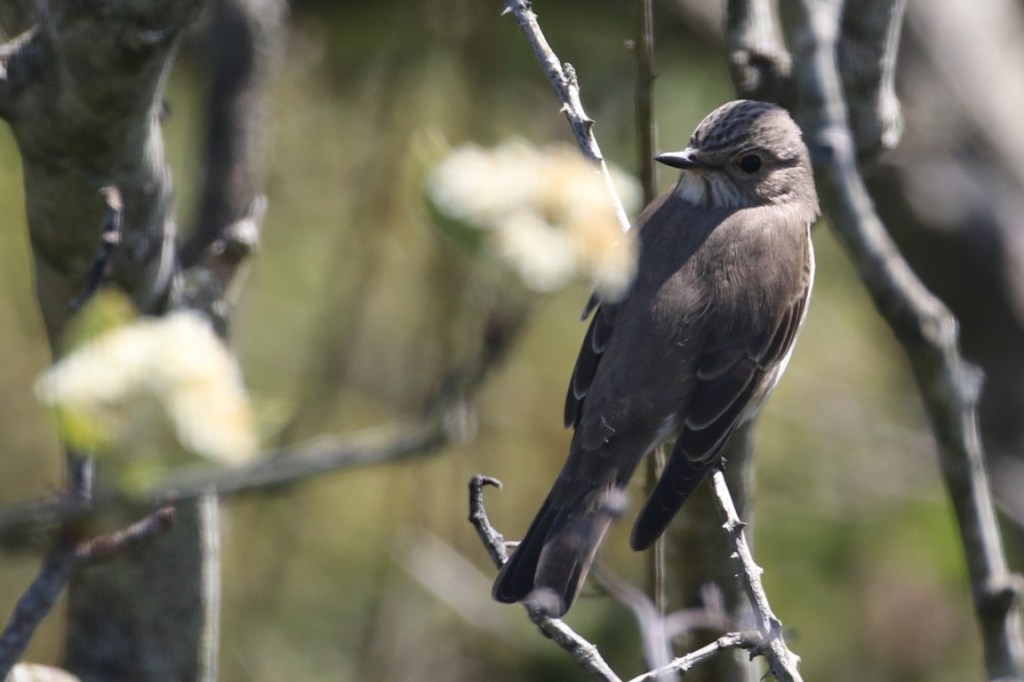
A few migrants around Barrow this morning made for a productive outing, including a Spotted Flycatcher—remarkably, I didn’t see a single one in Cumbria last year, and this is my second this month. Also present were a good number of common Whitethroats and a Lesser Whitethroat.
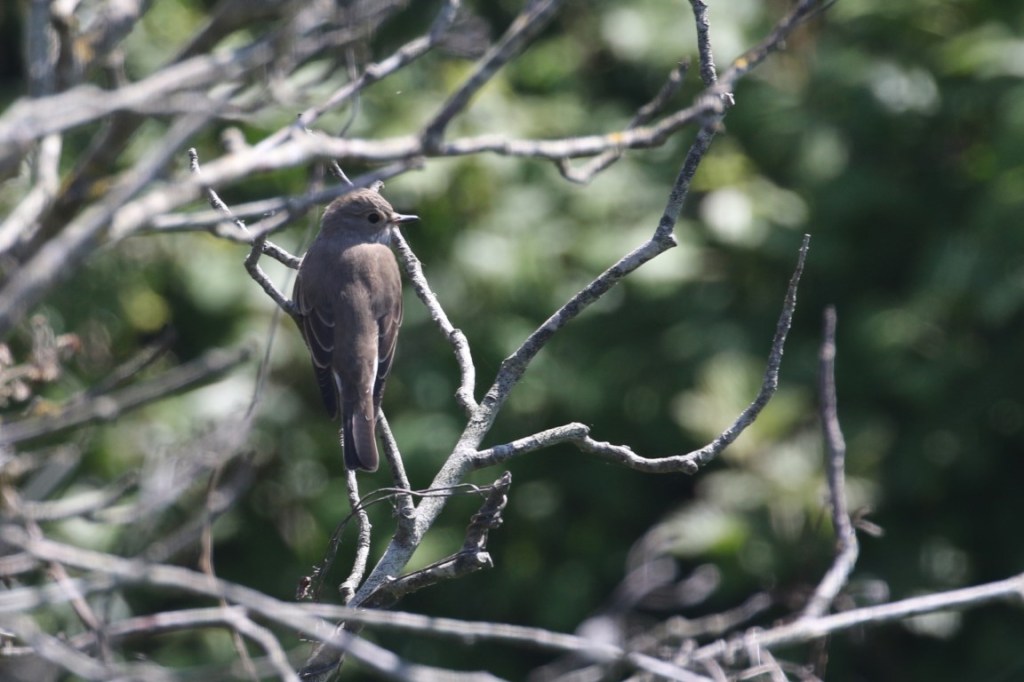
The Spotted Flycatcher has seen a marked decline in Cumbria, mirroring its national trend across the UK. Once a common summer visitor to the county, it is now a much scarcer breeding bird, with numbers having dropped significantly over recent decades. It remains present in low densities, primarily in habitats such as woodland edges, mature gardens, parkland, and upland valleys. However, sightings are increasingly limited to well-monitored migration sites or a few long-established breeding territories.
This species is now red-listed in the UK due to a severe population decline of over 80% since the 1960s. The decline is thought to be driven by a combination of factors, including a reduction in insect prey linked to pesticide use and habitat degradation, the loss of traditional nesting sites such as old trees and farm buildings, and pressures along their migratory routes and wintering grounds in sub-Saharan Africa.
Despite their dwindling numbers, Spotted Flycatchers continue to be recorded through structured surveys like the Breeding Bird Survey, though in very low numbers. As such, any sightings in Cumbria, particularly during the breeding season, are considered significant and noteworthy.

 Andrew Chick Ecology
Leave a comment