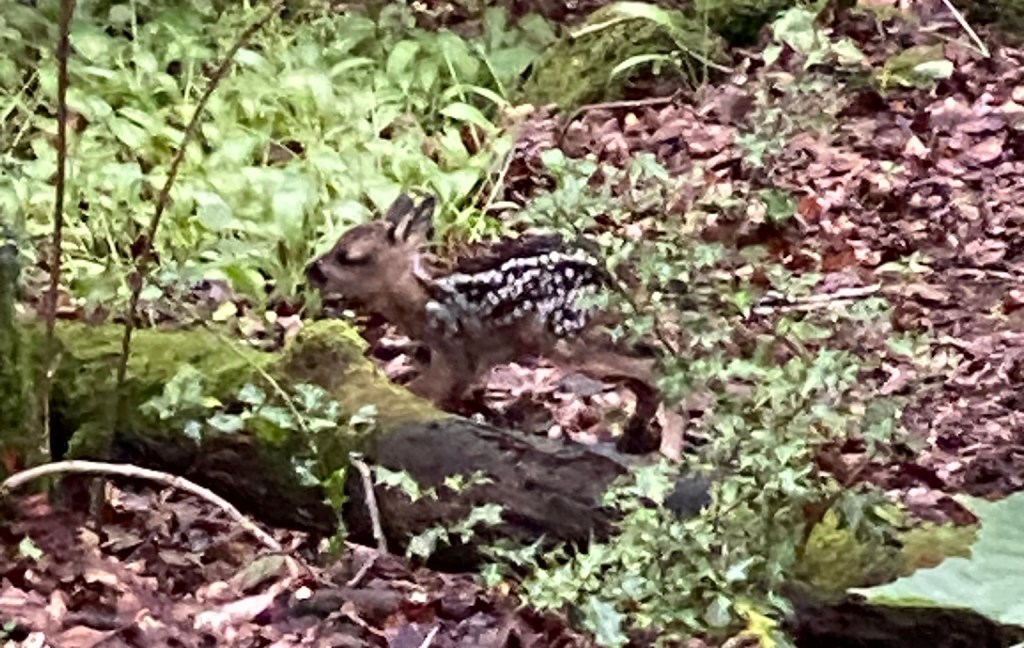
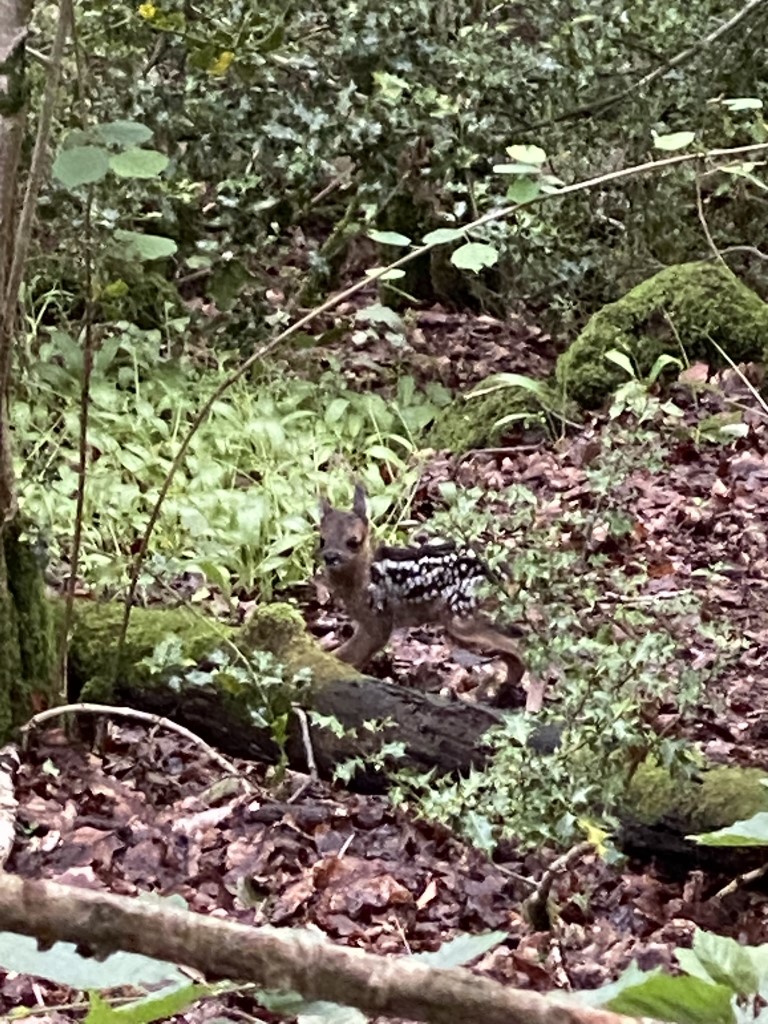
A lucky encounter near Windermere…
Roe deer are one of the most widespread and familiar deer species across the UK and much of Europe. Their breeding season, also known as the rut, typically takes place during July and August. During this time, males (bucks) become highly territorial and are often seen chasing does in circular patterns through woodland glades and open fields.
However, unlike many other mammals, roe deer exhibit a remarkable reproductive strategy called delayed implantation. After mating in the summer, the fertilised egg remains dormant in the uterus until late December or early January. Only then does it implant and begin to develop, allowing the fawns to be born in late May or early June, a time of year when food is plentiful and the weather is more favourable.
At birth, roe deer fawns are small, weighing just 1 to 2 kilograms, and have a reddish-brown coat speckled with white spots, which provides excellent camouflage among dappled sunlight and undergrowth. These spots typically fade by the time the fawns are around 6 to 8 weeks old.
Fawns lie hidden and motionless for much of the first few weeks of life, with the mother returning regularly to nurse. By the age of 1 to 2 months, they begin to follow their mother more actively. Young roe deer usually remain with the doe through the summer and autumn, gradually becoming more independent over the winter. By early spring, the bond between mother and offspring weakens, and the fawn is typically fully independent by the time the next breeding season approaches.

 Andrew Chick Ecology
Leave a comment