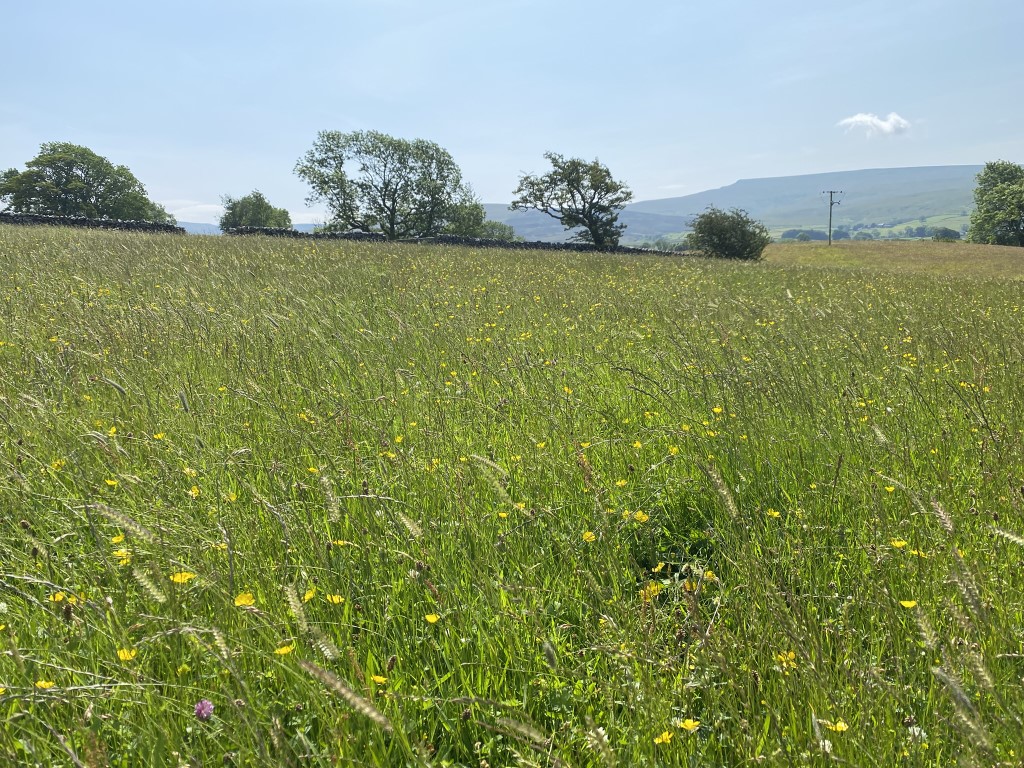
Upland hay meadows are a rare and species-rich grassland habitat, typically found on neutral to mildly acidic soils in upland regions of the UK. These meadows are usually managed through traditional practices involving a single annual hay cut followed by aftermath grazing. The floristic composition of these meadows reflects this low-intensity management, and they are most commonly associated with the National Vegetation Classification (NVC) community MG3 (Anthoxanthum odoratum – Geranium sylvaticum), with some overlap into MG5 (Cynosurus cristatus – Centaurea nigra grassland) on less acidic soils.
A number of plant species act as indicators of habitat quality within these upland hay meadows. Chief among these is wood crane’s-bill (Geranium sylvaticum), a key characteristic of the MG3 community and a classic indicator of traditional upland management. Sweet vernal-grass (Anthoxanthum odoratum) is another constant species, contributing to the meadow’s distinctive scent and early-season growth. Other common species include common sorrel (Rumex acetosa), meadow buttercup (Ranunculus acris), and yellow rattle (Rhinanthus minor), the latter being particularly valuable due to its semi-parasitic nature which reduces grass dominance and allows a greater diversity of wildflowers to thrive.
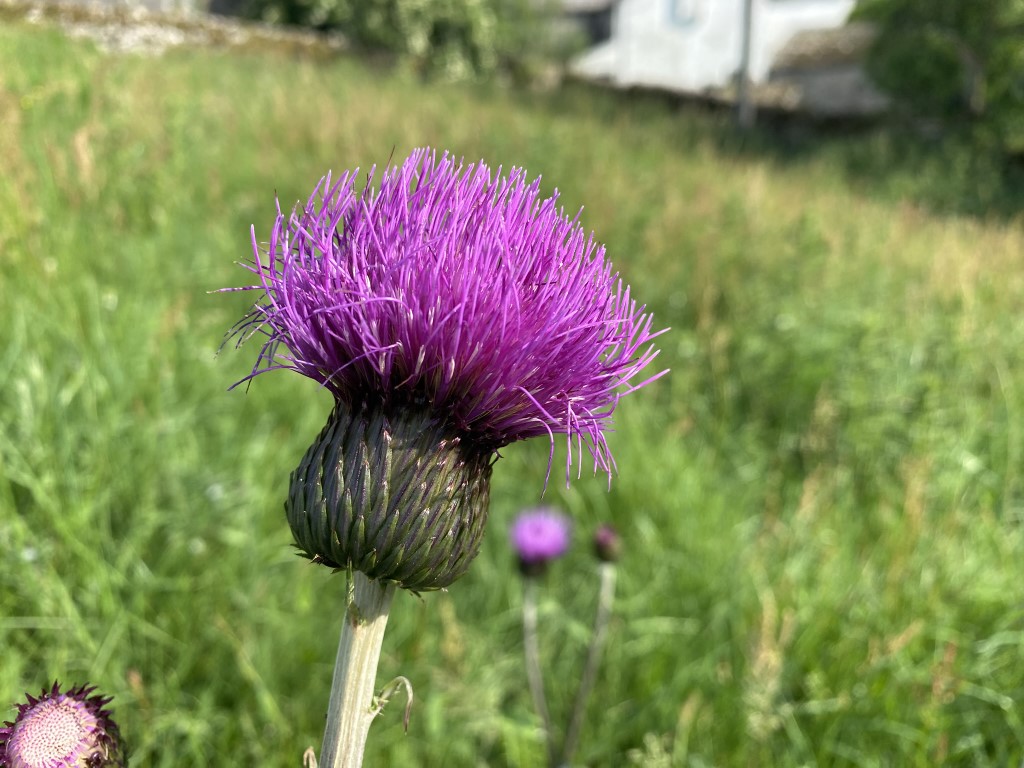
Additional species with strong indicator value include globe flower (Trollius europaeus), a northern species often present in species-rich upland meadows, and great burnet (Sanguisorba officinalis), which can occur abundantly in high-quality sites. Melancholy thistle (Cirsium heterophyllum) and several upland lady’s mantle species (Alchemilla vulgaris agg.) also serve as good indicators of floristic quality, while alpine bistort (Persicaria vivipara) may be found at higher altitudes.
Grasses typical of these meadows include red fescue (Festuca rubra), common bent (Agrostis capillaris), Yorkshire fog (Holcus lanatus), and crested dog’s-tail (Cynosurus cristatus), all of which contribute to the meadow’s fine sward structure. Supporting forbs such as common cat’s-ear (Hypochaeris radicata), rough hawkbit (Leontodon hispidus), common knapweed (Centaurea nigra), oxeye daisy (Leucanthemum vulgare), meadow vetchling (Lathyrus pratensis), and devil’s-bit scabious (Succisa pratensis) add further to the botanical interest.
Upland hay meadows are now legally protected due to their rarity and ecological value. They are listed as a priority habitat under the UK Biodiversity Action Plan and continue to be a focus of agri-environment schemes aimed at maintaining or restoring traditional management. These meadows are concentrated in areas such as the Pennines, Cumbria, and parts of upland Scotland. The presence and abundance of indicator species provide a useful measure of habitat quality and management success in these sites.


 Andrew Chick Ecology
Leave a comment