Introduction
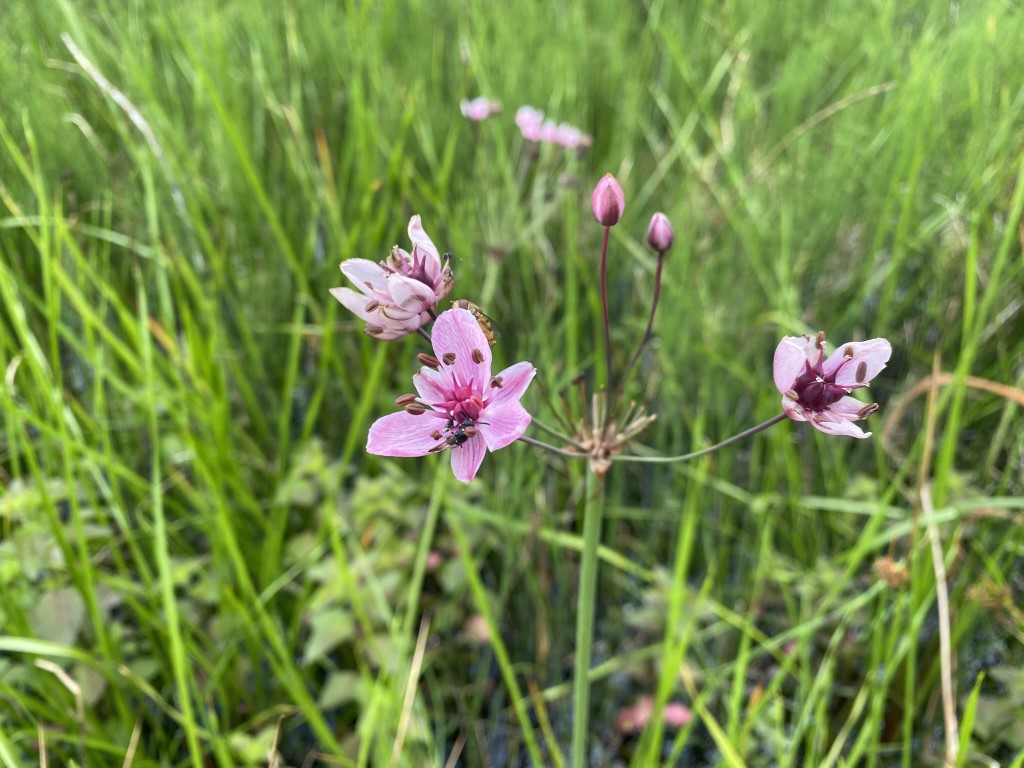
Flowering-rush (Butomus umbellatus) is a striking and delicate wetland plant native to parts of the UK and Europe. Known for its elegant pink flowers and sword-like leaves, it was once a familiar sight along lowland rivers, ponds, and ditches. Today, however, this once-common species is increasingly rare in the UK due to habitat loss, river modification, and pollution. While often considered invasive in other countries, particularly in North America, in Britain Butomus umbellatus is a plant of conservation interest.
Identification and Characteristics
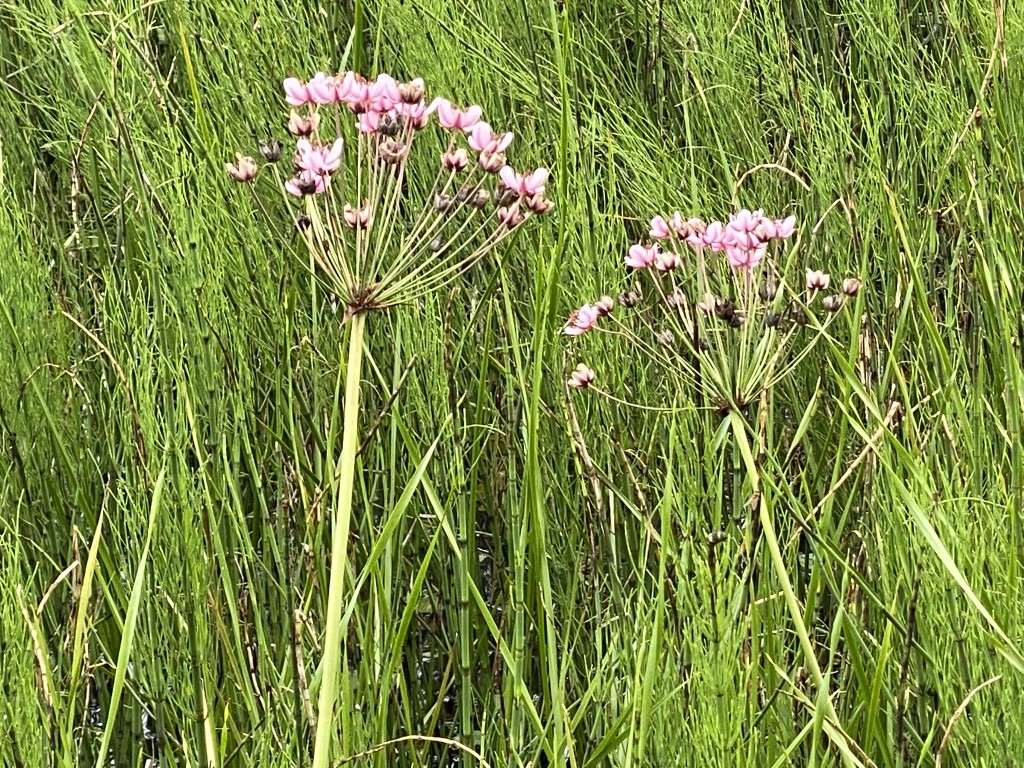
Flowering-rush is a perennial aquatic plant that can grow up to 1.5 metres tall. It has long, narrow, triangular leaves that rise from a thick rhizome and resemble those of true rushes, although the plant is not a true rush.
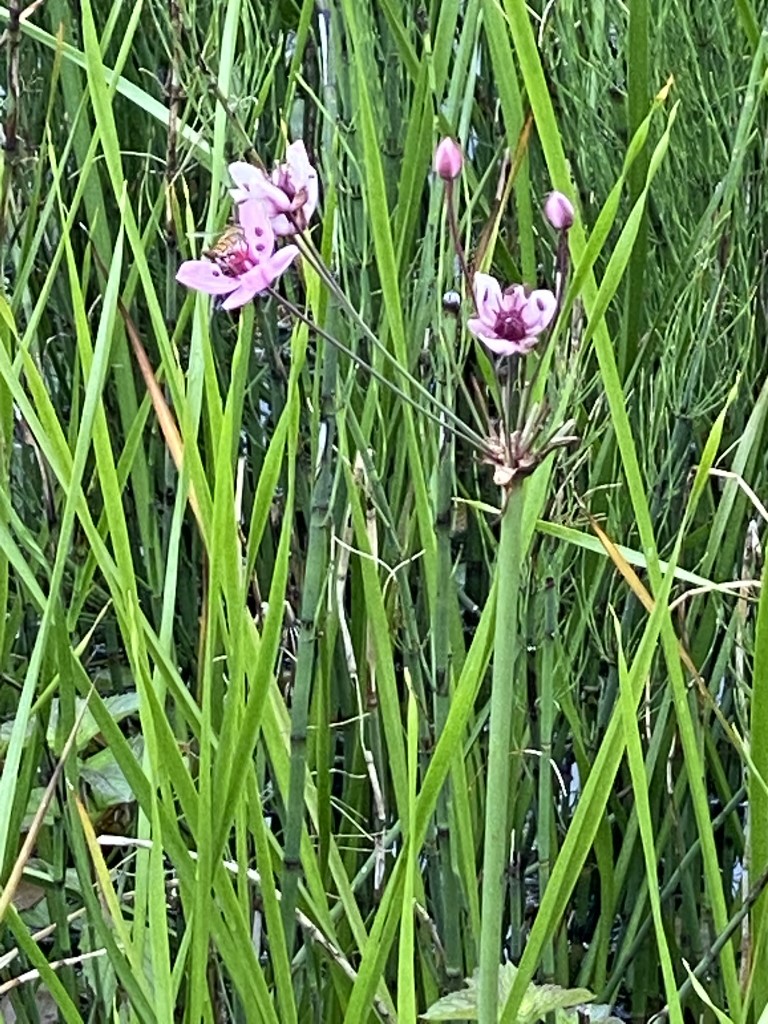
Its most distinctive feature is the showy umbel of pink to pale rose flowers, typically appearing from June to August. Each flower has six petals and is held well above the water on a tall stalk, making the plant highly visible and attractive to a range of pollinators, including bees and hoverflies.
Habitat in the UK
Historically, flowering-rush was widespread in the lowland waterways of England and parts of Wales, growing in shallow water at the margins of slow-flowing rivers, canals, fens, ditches, and ponds. It prefers nutrient-rich, muddy substrates and is generally found in calcareous or neutral conditions.
In the UK, its natural habitats have been severely affected by agricultural drainage, river canalisation, pollution, and dredging. As a result, many former sites no longer support viable populations, and flowering-rush is now absent from large parts of its previous range.
Current Status and Distribution
Although still present in scattered locations, Butomus umbellatus is now considered locally scarce in the UK and has declined significantly in recent decades. It is mainly found in parts of East Anglia, the Somerset Levels, the Thames catchment, and some Midland rivers, though even in these areas it can be rare or fragmented.
It is listed as a species of conservation concern in several local biodiversity action plans (BAPs), and in certain areas, such as the Norfolk Broads, it is actively monitored and protected.
In Cumbria https://www.cumbriabotany.co.uk/the-flora-of-cumbria-recording-group/flora-distribution-maps/#Butomus_umbellatus There appears to have been a marked decline in the frequency and distribution of this species in Cumbria, in contrast to trends elsewhere in northern England and Britain as a whole, as reported in Plant Atlas 2020. Nowhere is this decline more apparent than along the middle reaches of the River Eden, where it was once described in the Flora as ‘not uncommon’, but now seems to be almost entirely absent. Its disappearance from as many as six hectads since the Flora remains, for now, unexplained.
Conservation and Threats
The main threats to flowering-rush in the UK include:
- Drainage and land reclamation: Loss of traditional floodplains and fens has removed key habitat.
- River engineering: Dredging, straightening, and bank reinforcement often destroy marginal vegetation.
- Eutrophication: Nutrient pollution from agricultural runoff can encourage aggressive competitors, reducing flowering-rush populations.
- Lack of awareness: Its rarity and confusion with similar rush-like plants can lead to accidental removal or mismanagement.
Efforts to conserve flowering-rush include:
- Habitat restoration: Reconnecting rivers with their floodplains and creating shallow margins in managed wetlands.
- Surveying and monitoring: Understanding its remaining strongholds and population trends.
- Promoting awareness: Training land managers and conservation volunteers to recognise and protect the species.
In some cases, the plant has also been used in conservation-led reintroduction projects, where conditions allow.
A Global Perspective
Interestingly, while flowering-rush is rare and declining in its native UK range, it has become aggressively invasive in parts of North America, particularly around the Great Lakes. There, introduced as an ornamental, it escaped cultivation and now forms dense monocultures, displacing native vegetation and interfering with water systems.
This global contrast underlines the importance of context in conservation: the same species can be a valued native in one region and a harmful invasive in another.

 Andrew Chick Ecology
Leave a comment