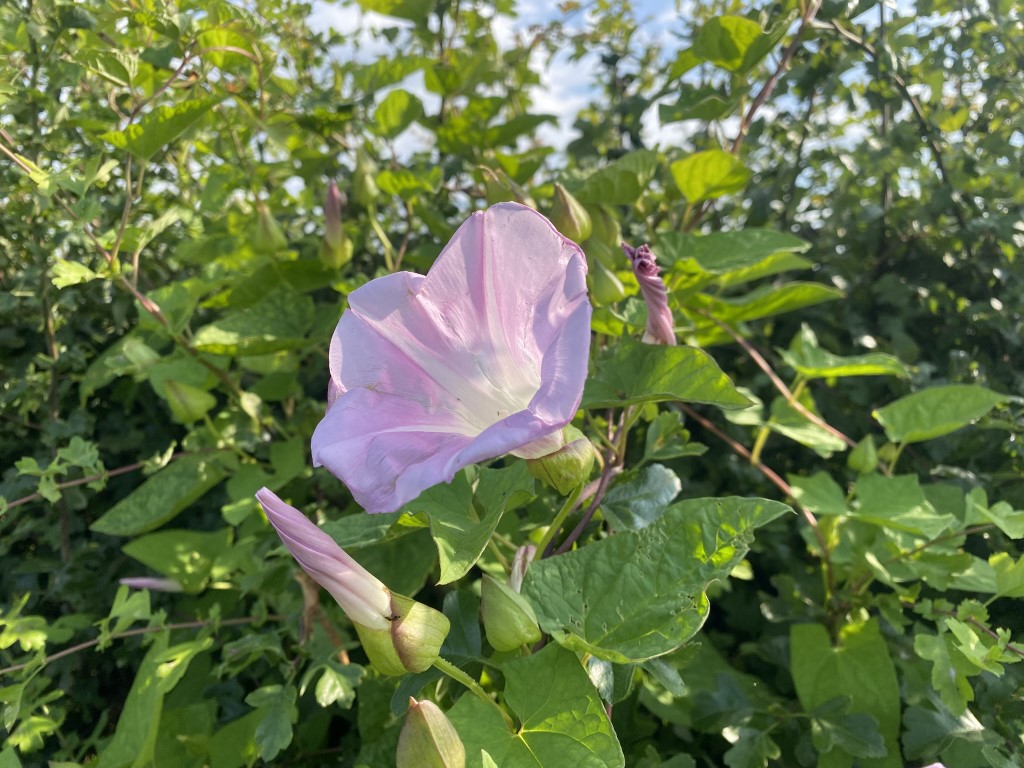
Hairy Bindweed (Calystegia pulchra) is an attractive yet often overlooked member of the bindweed family (Convolvulaceae). Known for its soft hairs and showy trumpet-shaped flowers, this perennial climber is less widespread than its more familiar relatives, but where it occurs, it brings a touch of ornamental charm to hedgerows, gardens, and woodland edges.
Identification and Appearance
Hairy Bindweed lives up to its name: the plant’s stems and leaves are noticeably hairy, distinguishing it from the smoother, more common bindweeds such as Calystegia sepium (Hedge Bindweed) or C. silvatica (Large Bindweed). The leaves are large, heart-shaped, and softly downy to the touch.
Its flowers are one of its most striking features—broad, trumpet-shaped blooms that range in colour from pale pink to lilac, often with white markings. These flowers closely resemble those of other Calystegia species, though they tend to be more ornamental and slightly larger.
Growth and Habitat
Like other bindweeds, C. pulchra is a vigorous climber that scrambles over nearby vegetation, walls, or fences. It grows from underground rhizomes and can reach several metres in length if given support. Although not considered aggressively invasive, it can still spread persistently in suitable conditions.
Hairy Bindweed prefers sunny or partially shaded environments and is often found in gardens, on waste ground, or along the margins of hedgerows and woodlands. Its ability to thrive in disturbed habitats makes it a plant of interest to both botanists and gardeners.
Distribution
Native to south-eastern Europe and parts of western Asia, Calystegia pulchra is only occasionally found in Britain, typically in gardens or as a garden escape. It is much less widespread than its relatives and is unlikely to be encountered in the wild without intentional or accidental introduction.
Similar Species
Hairy Bindweed is often confused with:
- Hedge Bindweed (C. sepium) – widespread, usually hairless, with white or pale pink flowers.
- Large Bindweed (C. silvatica) – larger leaves and flowers, also typically hairless and more vigorous.
Hairy Bindweed’s softly hairy foliage and attractive flowers are the best clues for correct identification.

 Andrew Chick Ecology
Leave a comment