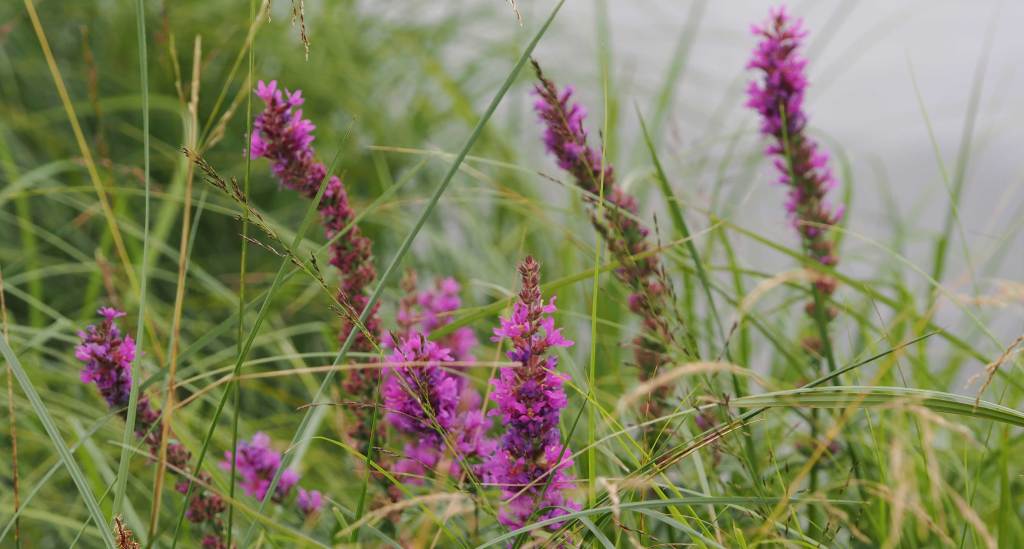
Purple loosestrife (Lythrum salicaria) is one of Britain’s most beautiful and recognisable wetland plants. Standing tall with its striking spikes of vivid magenta-purple flowers, this perennial herb is a prominent feature of damp habitats during the summer months. Flowering typically from July to September, its long-lasting blooms are not only visually stunning but also rich in nectar, supporting a variety of insect pollinators, particularly bees and butterflies.
Botanical Characteristics
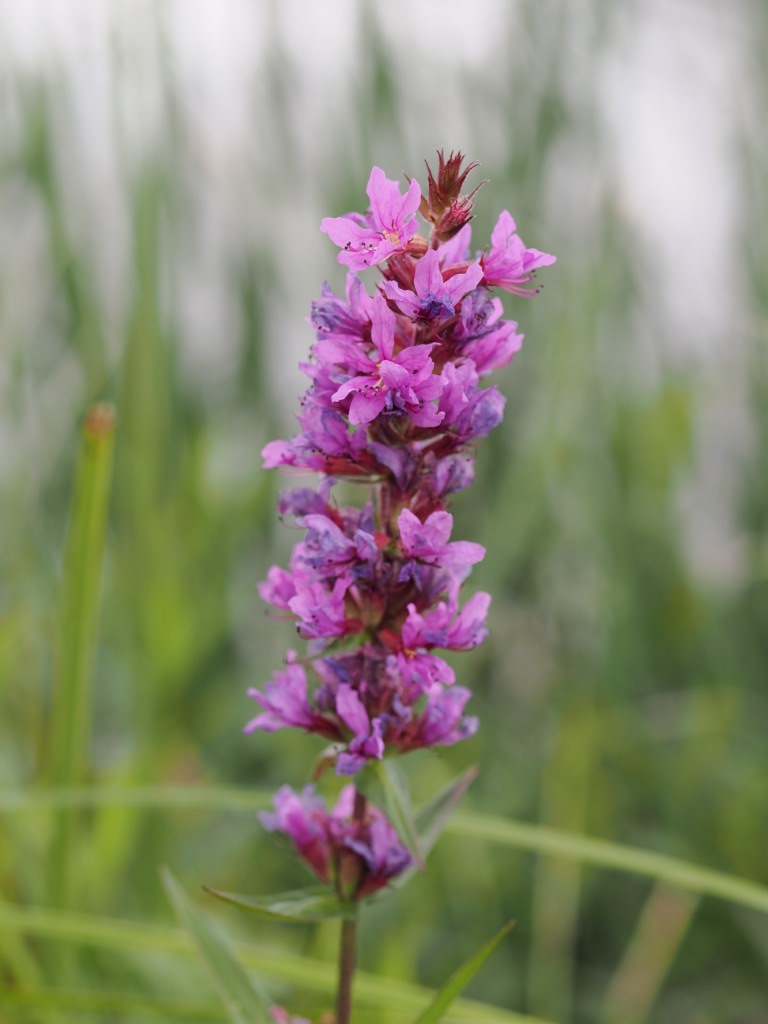
Belonging to the loosestrife family (Lythraceae), Lythrum salicaria can grow up to 1.5 metres tall. It has a square stem that is often tinged red and covered in fine hairs. The leaves are narrow, lanceolate and arranged in opposite or whorled pairs. Its flowers, which cluster densely on terminal spikes, have six petals and are generally pollinated by long-tongued insects. Although native to Eurasia, the plant has spread to other parts of the world where it is sometimes considered invasive.
Habitat and Distribution in Cumbria
In Cumbria, purple loosestrife is a frequent and prominent component of the tall-herb communities found on ungrazed riversides and lakesides, marshes, fens and ditches. It thrives in these lowland wetland environments, where the absence of grazing pressure allows lush stands of herbaceous vegetation to flourish. In these habitats, purple loosestrife often grows alongside other tall wetland species such as meadowsweet (Filipendula ulmaria) and yellow loosestrife (Lysimachia vulgaris), forming visually rich and ecologically diverse plant assemblages.
Ecological Role
Despite its visual appeal, purple loosestrife has sometimes been viewed with suspicion due to its invasive behaviour in North America, where it was introduced in the 19th century and spread aggressively in wetland systems. However, in its native UK range, including Cumbria, it plays a balanced ecological role. It is not considered invasive here and instead contributes significantly to the biodiversity of wetland habitats. Its flowers support a range of invertebrates, including bees, hoverflies, and moths, while its dense growth can provide shelter for amphibians and invertebrates.
Folklore and Traditional Uses
Historically, purple loosestrife was attributed with a range of medicinal properties. In herbal medicine, it was used for treating diarrhoea, wounds, and even internal bleeding due to its astringent qualities. The plant also held a reputation for “stilling strife,” and in folklore, it was believed to bring peace when placed in the home, hence the name “loosestrife.”
Conservation Considerations
While not rare or threatened in Britain, the presence of purple loosestrife is often indicative of good-quality wetland habitat. Its dependence on undisturbed, ungrazed, and unshaded waterside locations means that it can be vulnerable to habitat loss, overgrazing, and changes in hydrology. In Cumbria, efforts to maintain or restore natural river processes and lowland fen systems can help ensure this vibrant plant continues to thrive as part of the county’s rich botanical tapestry.
From a wildlife perspective and for those seeking the quiet richness of Cumbria’s wetlands, purple loosestrife remains a star performer—both a symbol of undisturbed nature and a valuable member of the ecological community.

 Andrew Chick Ecology
Leave a comment