
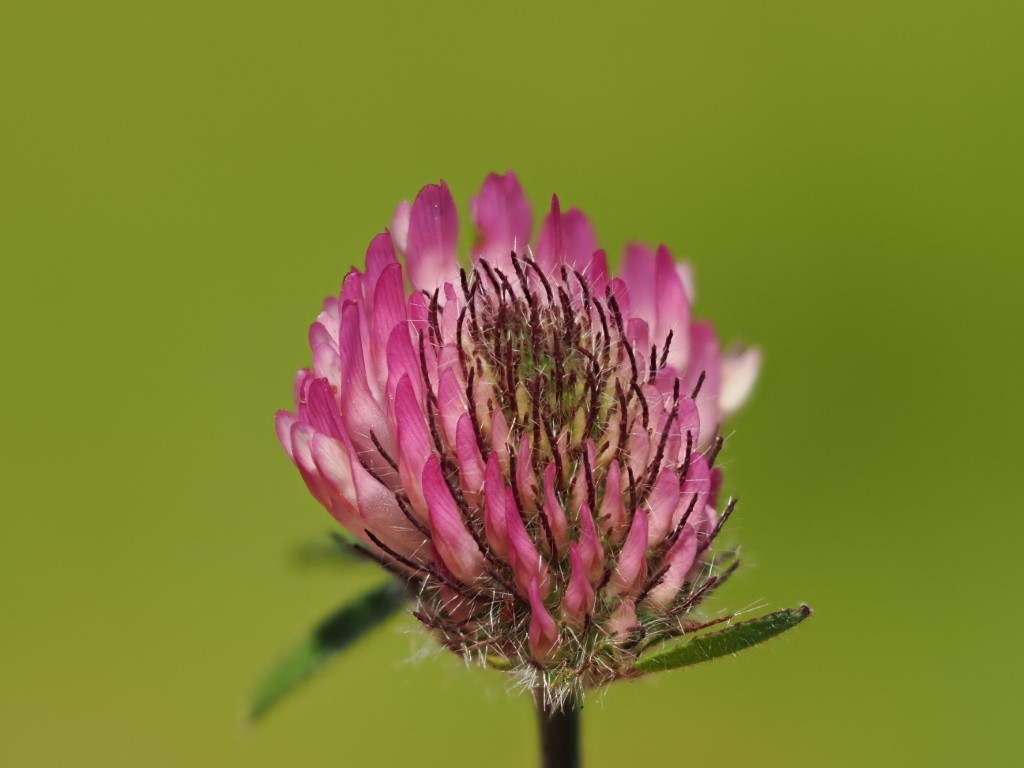
Red clover, Trifolium pratense, is a widespread wildflower and member of the legume family, commonly found across the UK and other temperate regions of the Northern Hemisphere. It is easily recognised by its rounded, pinkish-purple flower heads, which bloom from May through to September, and its distinctive trifoliate leaves, each leaflet marked with a pale crescent. The slightly hairy stems can either sprawl or stand upright depending on growing conditions.
This plant is most commonly seen in meadows, unimproved grasslands, road verges, and field edges, particularly where soils are well-drained and moderately fertile. It plays an important ecological role, providing an abundant nectar source for bees, especially bumblebees and honeybees, as well as butterflies. Like other legumes, red clover improves soil health by fixing nitrogen through nodules on its roots, making it a valuable addition to crop rotations and green manure schemes in organic farming.
In agriculture, red clover is widely used as a forage crop due to its high protein content, often being grazed or cut for silage. It has a long history in herbal medicine, traditionally used for treating skin conditions, coughs, and symptoms associated with menopause, although modern use is more cautious and evidence-based. In folklore, red clover has been associated with luck and protection, and it often appears in Celtic traditions. It is sometimes confused with white clover, Trifolium repens, but is distinguishable by its flower colour and more upright growth habit.

 Andrew Chick Ecology
Leave a comment