Wild carrot, also known as Queen Anne’s Lace, is a widespread and familiar perennial plant of grasslands and coastlines, particularly those growing on chalk soils. It is also frequently found in dry, open, or disturbed ground such as sand-pits, quarries, and waste areas, where it thrives in the well-drained conditions.
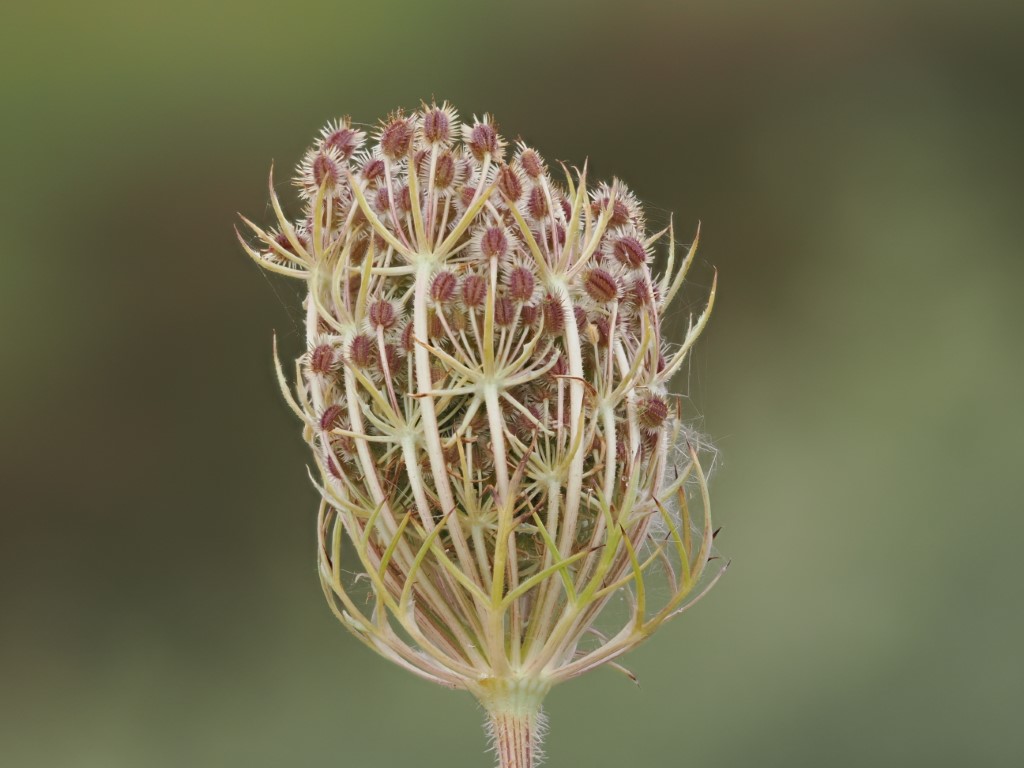
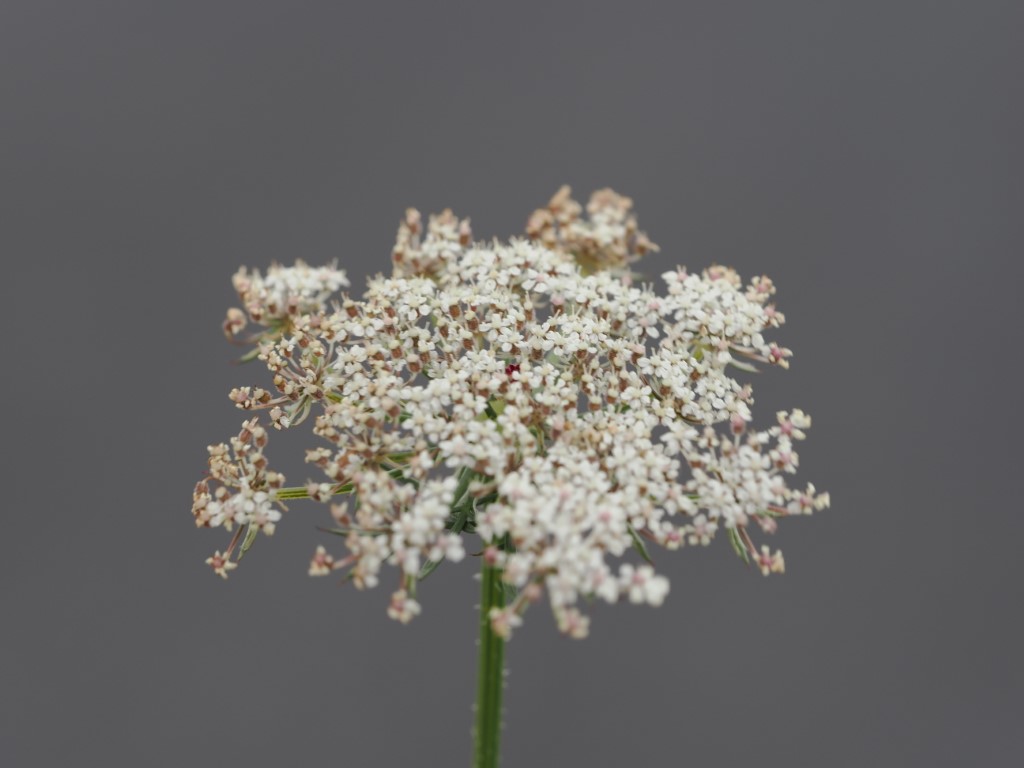
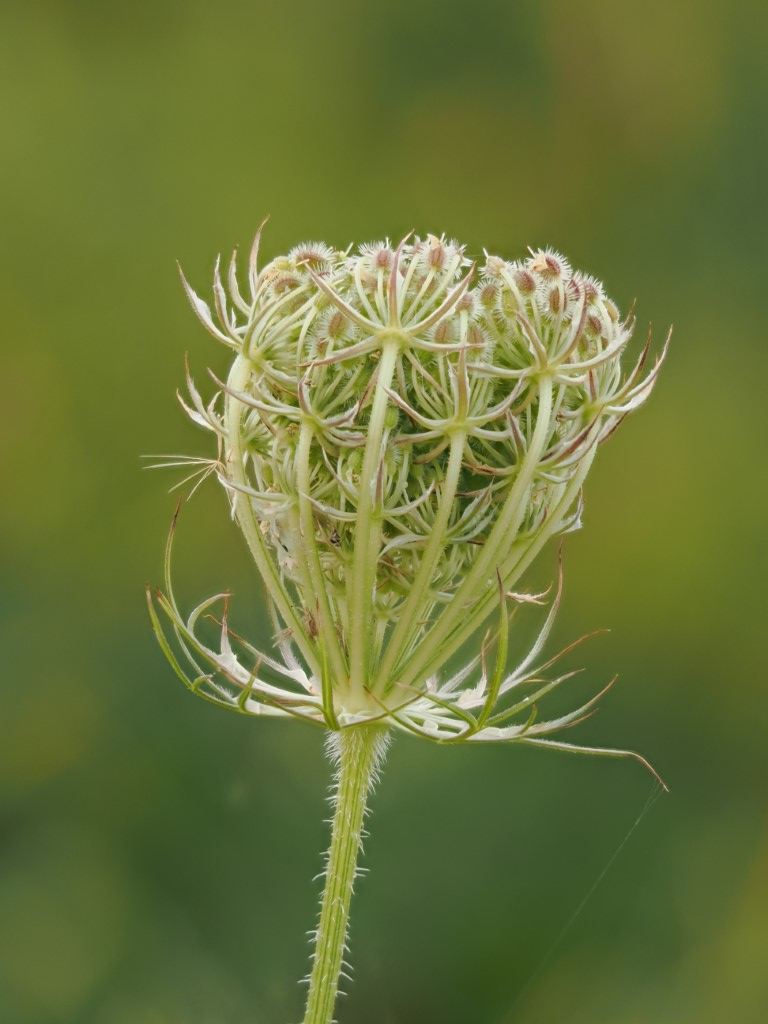
In bud, the dense umbels of flowers have a reddish tinge, but as they open from June through September they form delicate white clusters resembling lace. These umbrella-like heads sometimes feature a single deep red or purple flower in the center, a detail that adds to the plant’s distinctive charm. As the flowering season progresses, the umbels fold inward, creating concave, bird’s-nest-like seed heads that help protect and disperse the developing seeds.
The leaves of wild carrot are finely divided and feathery, giving off a carrot-like scent when crushed. Its roots are pale, slender taproots, quite unlike the thick orange roots of cultivated carrots, which were selectively bred from this wild ancestor.
Seed dispersal is aided by the plant’s spiny fruits, which catch on the fur of passing animals or are carried by the wind, allowing wild carrot to spread across new habitats. This resilience contributes to its wide distribution across Britain and beyond.
Although attractive, wild carrot should not be confused with the highly poisonous hemlock. A useful distinction lies in the stems: wild carrot has fine hairs and no purple blotches, while poison hemlock is hairless with spotted stems.
Wild carrot is more than just a wildflower. In the past, its seeds were valued in folk medicine and used to produce a strong green dye. Today, it is considered ecologically important, attracting a wide range of pollinating insects and providing food for beneficial parasitic wasps that help control garden pests.
As a biennial plant, wild carrot completes its life cycle over two years—producing leaves in the first year and flowering in the second. Its combination of delicate beauty, historical significance, and ecological value makes it one of the most remarkable plants of our countryside.


 Andrew Chick Ecology
Leave a comment