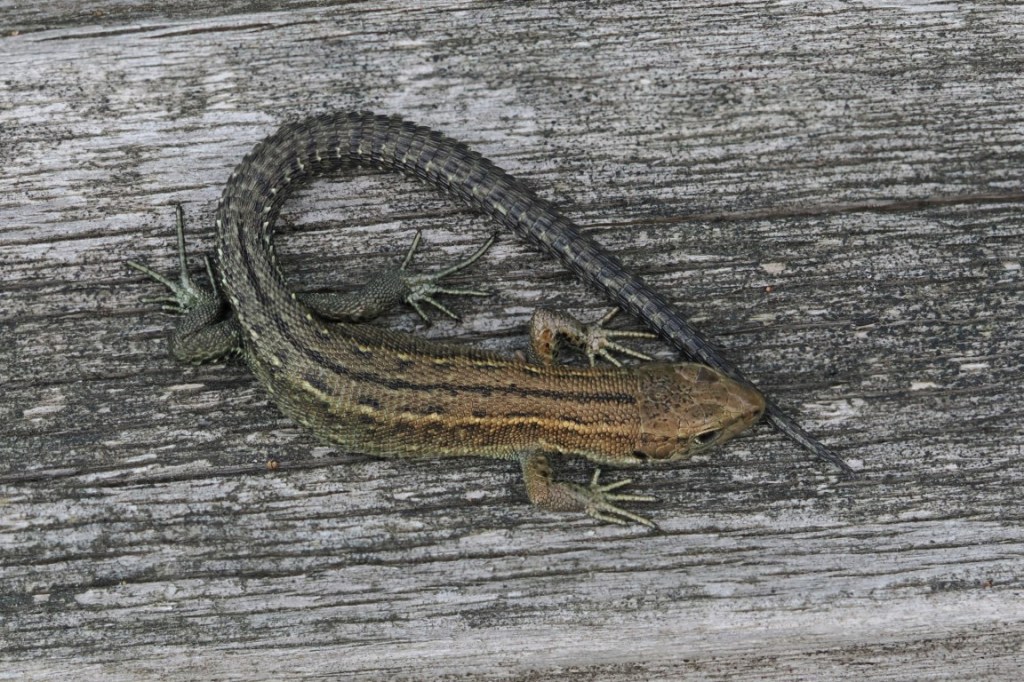
The Common Lizard, also known as the viviparous lizard, is Britain’s most widespread reptile and one of its most fascinating. Unlike most reptiles, which lay eggs, the Common Lizard incubates its eggs inside the body and gives birth to live young, an adaptation well-suited to cooler climates. Adults emerge from hibernation in spring, mate in April and May, and by July produce between three and eleven young. Individuals can live up to 10–12 years, although in the wild many do not reach such an age due to predation.
As autumn approaches, these small reptiles slow down and seek out frost-free refuges in which to hibernate, remaining dormant throughout the winter months until the following spring.
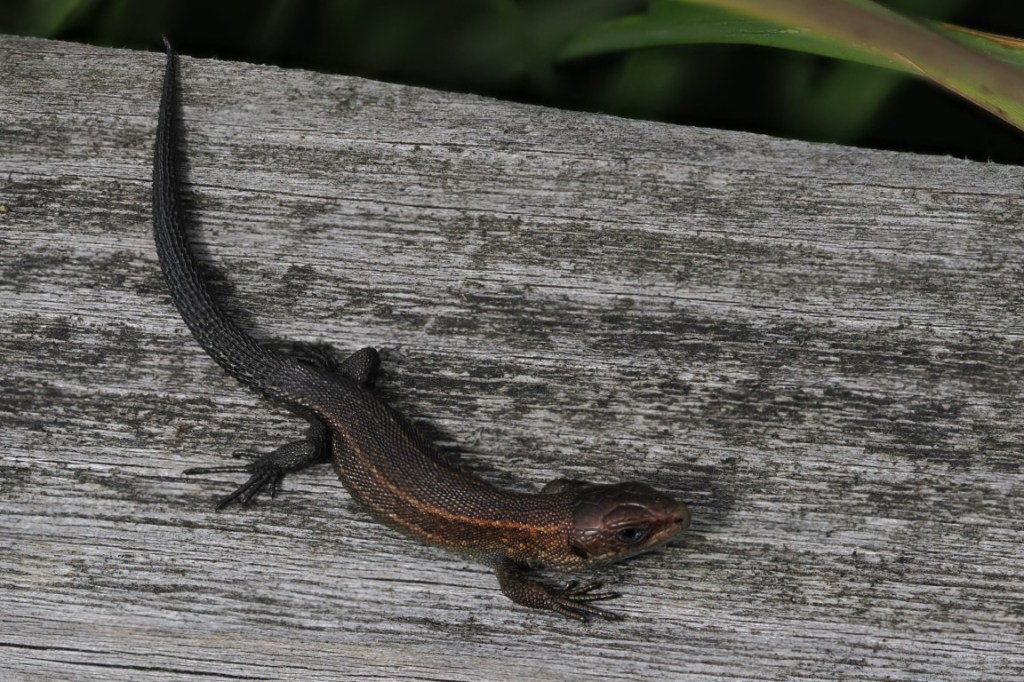
Common Lizards are highly adaptable and make use of a wide range of habitats, from heathlands, lowland mires, brownfield sites, allotments, coastal sand dunes and limestone pavement, to sheltered woodland clearings, rough grasslands, open fellsides up to 600 metres, and even man-made habitats.
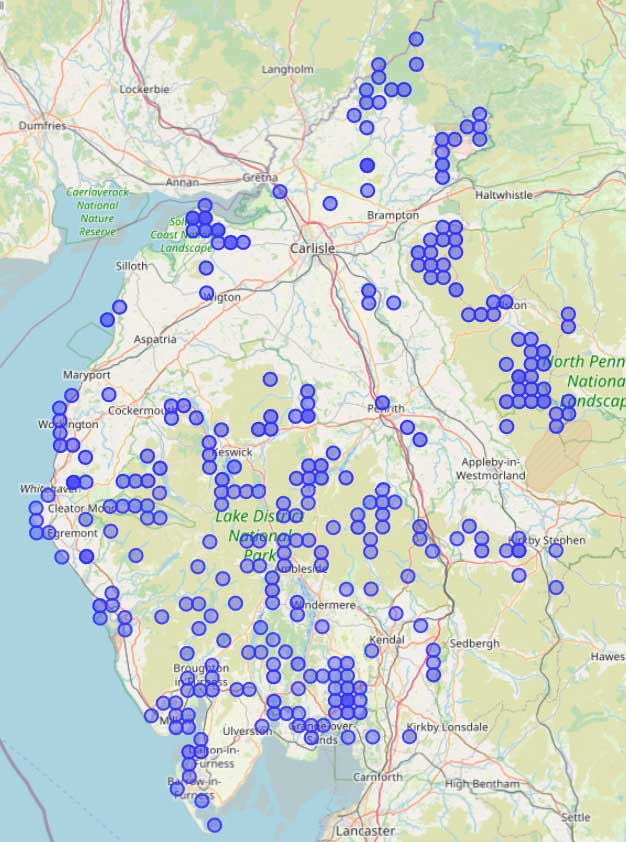
In terms of distribution, the Common Lizard is found throughout much of the UK, although it becomes increasingly scarce in parts of southern and eastern England. In northern England, it remains more widespread, with populations recorded across uplands, moorland edges, and coastal dunes, particularly where rough grassland and heathland provide suitable cover and basking sites.
The distribution map for Cumbria is shown below (from iRecord Aug 2025).
The species is legally protected in the UK under the Wildlife and Countryside Act, 1981, making it an offence to intentionally kill, injure or sell them. It is also recognised as a Priority Species under the UK Post-2010 Biodiversity Framework due to population declines in some areas.
Small, secretive, and quick to vanish into cover, the Common Lizard is nonetheless a rewarding sight for patient observers, often seen basking in the morning sun on stones, logs or walls, soaking up warmth before darting off to hunt for insects and spiders.
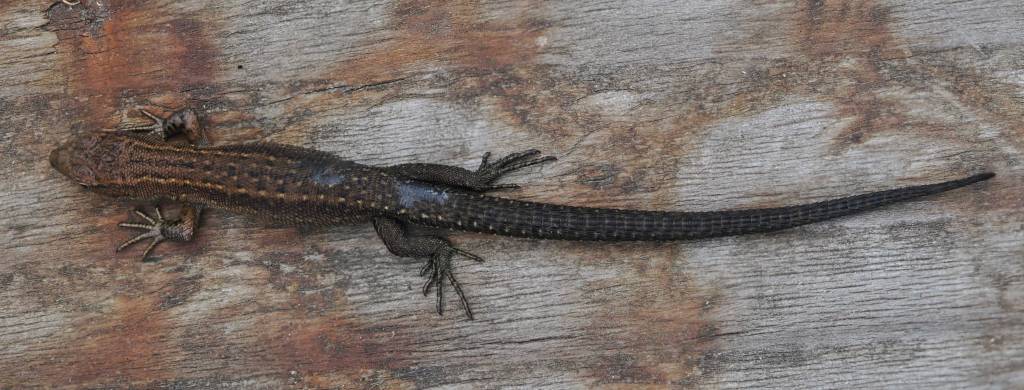
All Common Lizard images taken in Cumbria (c) Andrew P. Chick

 Andrew Chick Ecology
Leave a comment