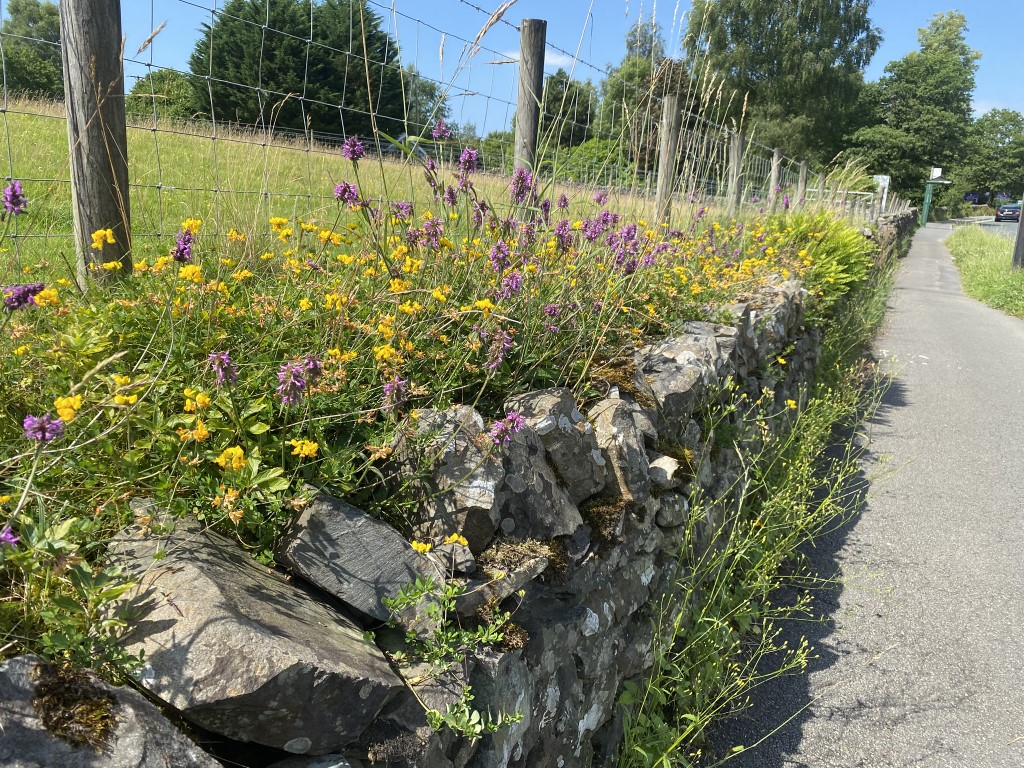
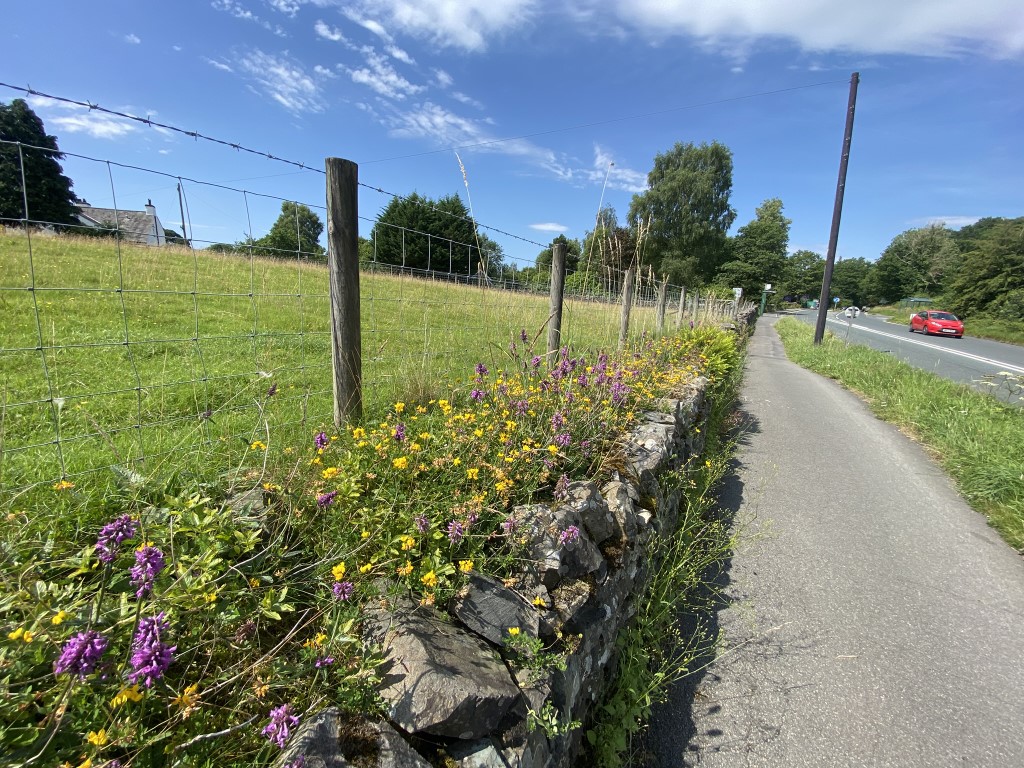
At first glance, the scene is an ordinary roadside wall, a strip of stone edging the tarmac footpath, with a fence and pasture beyond. Yet the top of this wall tells a richer, more hopeful story. Here, safe from the jaws of grazing stock, a miniature meadow has taken root: fine grasses (Agrostis spp.) mingle with Betony (Stachys officinalis), Bird’s-foot Trefoil (Lotus corniculatus), Hawkweeds (Hieracium spp.), Hawkbits (Leontodon spp.), Harebells (Campanula rotundifolia) and Buttercups (Ranunculus spp.), bringing colour and nectar through the summer months. Between the stones, ferns cling on – Polypody (Polypodium vulgare), Maidenhair Spleenwort (Asplenium trichomanes) and Rustyback (Asplenium ceterach) – each one a fragment of an older, wilder flora.
It is a striking contrast. On one side, the cropped green uniformity of heavily grazed, improved pasture; on the other, the sealed surface of the road. In between runs a narrow ribbon of diversity, a living seam of plants that would once have been common across the wider countryside. The wall is not just stonework, it is habitat, refuge and corridor, carrying species that cannot thrive in either field or verge.
In landscapes where intensive agriculture and transport infrastructure dominate, such fragments can appear insignificant. Yet they remind us of resilience, that life will flourish wherever it is given the smallest chance. The wall-top wildflowers and ferns are more than decoration: they are testimony to the value of edges, boundaries and overlooked places, where biodiversity hangs on against the odds.
In the squeeze between pasture and road, a ribbon of colour and life persists, a reminder that conservation sometimes begins not with vast reserves, but with noticing and cherishing the narrow margins.

 Andrew Chick Ecology
Leave a comment