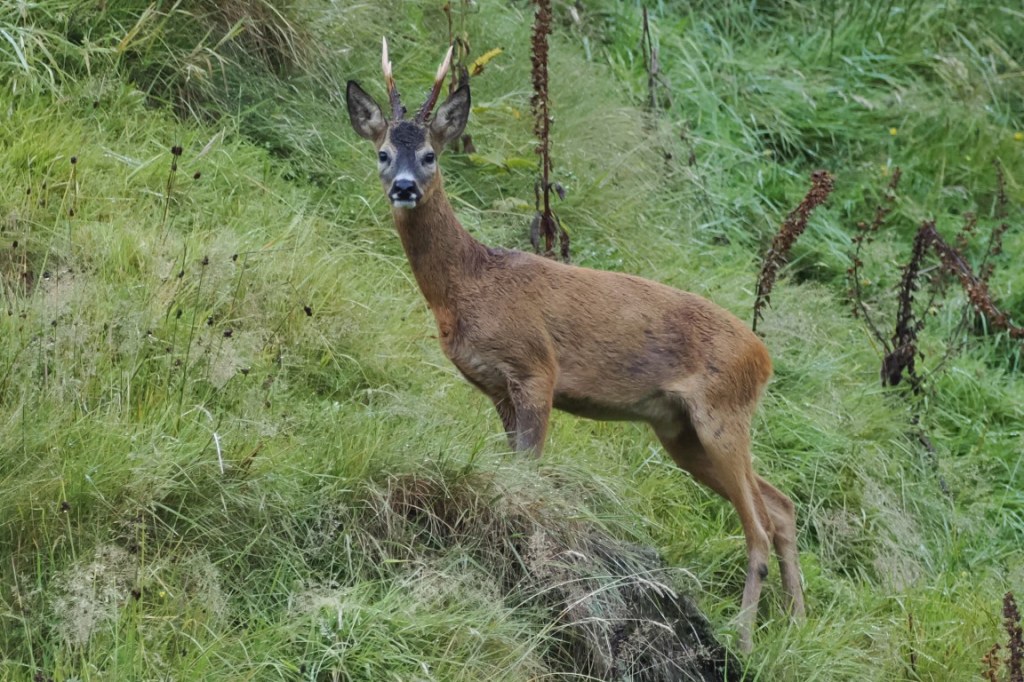
The Roe Deer (Capreolus capreolus) is one of Britain’s two truly native deer, a graceful and familiar sight in woodland edges, farmland and gardens. Smaller and more delicate than Red Deer, the Roe stands just under a metre at the shoulder, with a reddish-brown summer coat that turns grey-brown in winter. Adults show a distinctive pale rump patch, and males (bucks) grow short, straight antlers that are typically three-pointed by the time they reach maturity.
Roe are solitary for much of the year, with does raising a single kid or twins hidden in long vegetation. In late July and August, however, the rut begins, bucks chase does in tight circles, sometimes leaving visible ‘roe rings’ in the grass. Unlike many mammals, Roe Deer delay development of the fertilised egg until winter, ensuring that kids are born the following spring when food is plentiful.
Though widespread and often seen in rural landscapes, Roe thrive at the edge of human activity – sheltering in woods, venturing into fields and gardens at dawn or dusk. They are both a symbol of wildness and a reminder that nature persists, often quietly, alongside us.
Photo taken 27/08/25 early morning from our Lake District Garden (c) Andrew P. Chick

 Andrew Chick Ecology
Leave a comment