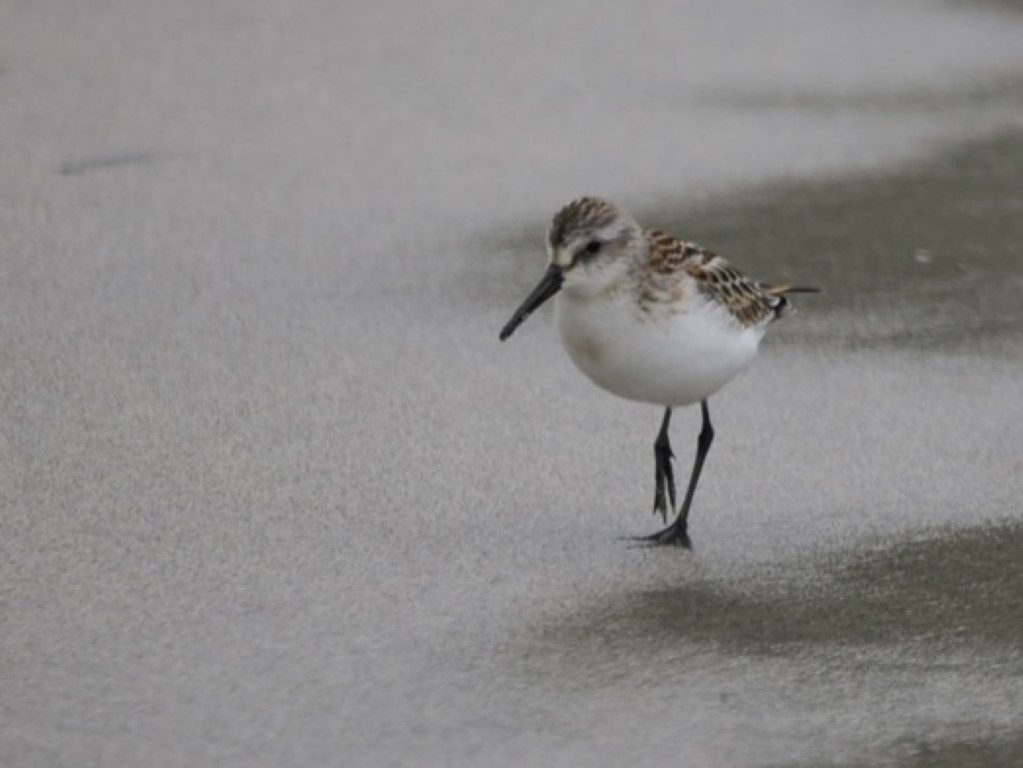
Among the many small waders that pass through Britain each autumn, few are as challenging or as rewarding to identify as the Western Sandpiper (Calidris mauri). For most birders, it is a species known best from field guides and American checklists, a bird of Alaskan tundra and Pacific beaches rather than North Sea estuaries. Yet every so often, a sharp-eyed observer picks out one among the flocks of Dunlin and stints, and the excitement that follows reflects both the bird’s rarity and the skill required to separate it from its close relatives. Identifying a Western Sandpiper is not straightforward, but once understood, the combination of subtle clues — structure, plumage, and behaviour — forms a distinctive pattern that can’t easily be mistaken.
The Western Sandpiper breeds across coastal western Alaska and winters from the southern United States through Central America to northern South America. It is therefore a long-distance migrant, and only rarely does it make the transatlantic crossing to Europe. Those few individuals that do are usually young birds on their first southward migration, pushed off course by storms or strong westerly systems in late summer. When they appear in Britain, they are usually discovered among flocks of Dunlin, Little Stints, or occasionally Semipalmated Sandpipers, and it is the close resemblance to those species that makes their identification so demanding.

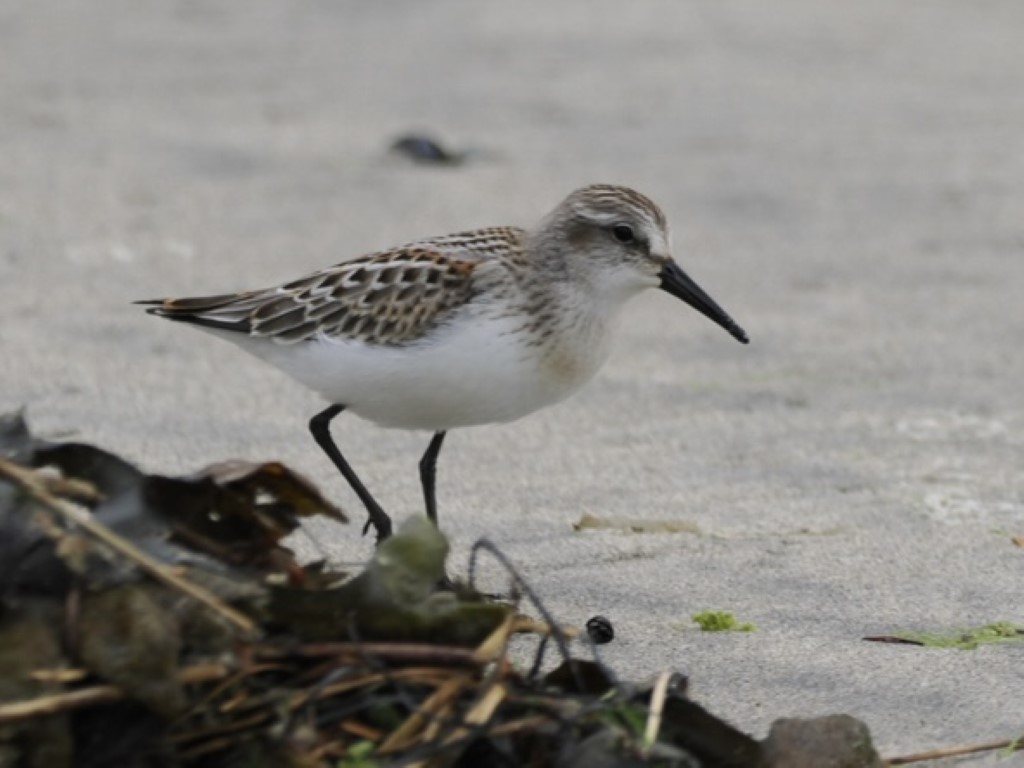
At first glance, a Western Sandpiper looks like a small, compact stint — slightly larger and longer-billed than a Little Stint, yet noticeably smaller and daintier than most Dunlin. The bill shape is one of the first clues: it is relatively long for a bird of its size, fine-tipped, and often with a slight droop near the end, giving a subtle “decurved” look. This is particularly useful when comparing with Semipalmated Sandpiper, whose bill is usually shorter, straighter, and blunter-tipped. In side view, the Western’s bill can appear delicate and attenuated, matching the bird’s overall slender, graceful build.
The next thing to note is the plumage, which changes markedly between juvenile and adult phases. Most British records involve juveniles, typically seen in August or September. In fresh plumage, a juvenile Western Sandpiper has strikingly bright upperparts, with rufous or chestnut tones on the scapulars and coverts — colours that are richer and more extensive than on Semipalmated or Little Stint. Each feather has a dark centre framed by a warm buff or chestnut edge, creating a scalloped effect that can appear surprisingly bold in good light. The head also shows warm tones, with a diffuse rufous crown and a pale supercilium that curves neatly over the eye. The breast sides are often washed buff or greyish, forming a partial band that stops short of the centre, leaving the underparts clean and white.
A useful structural clue lies in the wings. Western Sandpipers are long-winged, with primaries extending well beyond the tail when the bird is at rest, often producing a noticeably elongated, “pointed” look to the rear end. This differs from the more compact shape of a Little Stint. The legs are typically dark, and the stance is often low and crouched as the bird feeds, probing and picking delicately at the surface rather than making the short, hurried jabs of a Little Stint. In flight, the species shows a clean white wing-bar similar to other small sandpipers, but on landing, its slightly slower, more deliberate movements can stand out.
During winter or in worn plumage, the identification becomes even trickier. Adult non-breeding birds lose much of the rufous colour and appear plain grey above, closely resembling Dunlin or Semipalmated Sandpiper. Under such conditions, bill shape and structure remain the most reliable indicators, alongside subtle differences in behaviour. Western Sandpipers often feed in slightly deeper water than Little Stints, and their probing action is more reminiscent of a miniature Dunlin than a pecking stint. High-resolution photographs showing the bill shape and feather patterns are often necessary to confirm identification with confidence.
The rarity of the Western Sandpiper in Britain adds to the identification challenge. Each sighting demands careful comparison with similar species and often consultation among experienced observers. Even in North America, where it is common, separating it from the closely related Semipalmated Sandpiper can test the most skilled birders, especially outside the breeding season. For European birdwatchers, the stakes are higher still — mistakes can easily be made, and claims must be backed by detailed notes or photographs.

Yet despite these difficulties, the reward of seeing a confirmed Western Sandpiper on this side of the Atlantic is immense. It is a true wanderer, a bird that has crossed half the world by accident or instinct, surviving a journey that few of its kind attempt. Watching one among familiar waders, its neat proportions and warm plumage catching the light, is to witness both the fragility and resilience of migration. Every individual is a small marvel of endurance and chance, a reminder that even the tiniest wings can carry a story across oceans.
So when scanning autumn wader flocks, it pays to look carefully. Somewhere among the restless Dunlins, a small sandpiper with a long, delicate bill and a warm, rufous sheen might just be a visitor from Alaska — a Western Sandpiper resting briefly before vanishing back into the vast network of migration that ties continents together. For those who find one, it is not only a tick on a list but a glimpse into the extraordinary scale of avian travel and the unending surprise that keeps birdwatching alive.

 Andrew Chick Ecology
Leave a comment