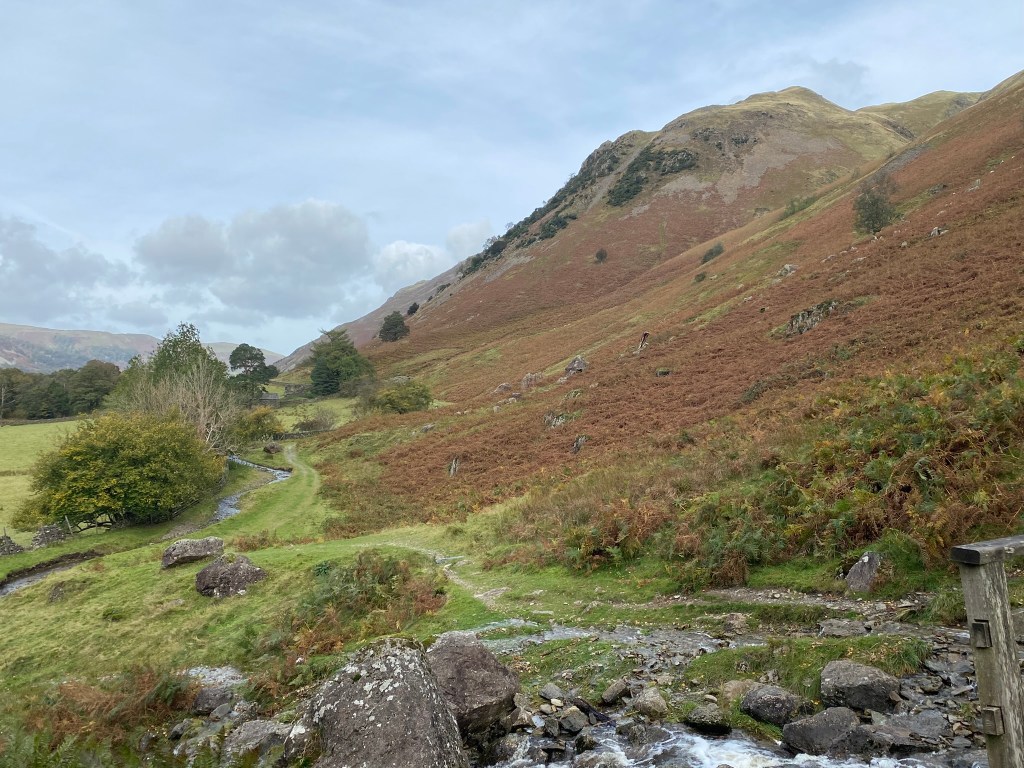
Walk through the British countryside in autumn and one of the most striking sights, especially on upland slopes and heathlands, is the deep burnished colour of bracken. Vast expanses of fern that were a vibrant green in summer slowly fade through gold and russet before glowing a rich, coppery red. It’s a transformation that can make hillsides appear aflame, and it’s one of the most distinctive features of the season. But what actually causes bracken to turn red, and why does it happen so vividly in the UK?
Bracken, Pteridium aquilinum, is one of the most widespread plants in Britain. It grows in almost every county, thriving in poor, acidic soils and often dominating areas where other vegetation struggles. Through spring and summer, its tall, triangular fronds form dense stands that can reach two metres high. These fronds are not leaves in the usual sense but rather large, divided fronds composed of many smaller leaflets called pinnae. They photosynthesise throughout the growing season, storing energy in the plant’s extensive underground rhizome system — a network that allows bracken to reappear year after year, even after cutting or grazing.
As autumn approaches, the balance of day and night begins to change, and this shift in light and temperature triggers a physiological response in many plants, including bracken. During summer, chlorophyll — the green pigment that drives photosynthesis — dominates the fronds and masks other pigments present in the tissues. When daylight hours shorten and temperatures drop, the plant begins to break down its chlorophyll and withdraw valuable nutrients back into the rhizomes for storage over winter. Once the green fades, other pigments that were always present but hidden become visible.
In most deciduous plants, the breakdown of chlorophyll reveals the yellows and oranges of carotenoids. In bracken, however, a combination of pigments gives rise to its distinctive copper-red tones. Anthocyanins — red and purple pigments that are produced in response to stress, light, and temperature — develop in the dying fronds. These pigments are thought to play a protective role, shielding the remaining plant tissues from light damage as nutrients are reabsorbed. In some bracken stands, especially those exposed to bright autumn sunshine and cool nights, anthocyanin levels rise sharply, intensifying the red colour. The result is that some hillsides appear almost rust-red while others, shaded or in milder areas, remain dull brown.
The timing and depth of colour vary across the UK. In the north and uplands, where temperatures fall earlier, bracken begins to colour by late September and can be a deep crimson by October. In southern counties, the change is often more gradual, with fronds turning amber or bronze before collapsing. Weather plays a significant part. A warm, dry autumn with plenty of sunshine after a cool night tends to produce the most vibrant red tones, whereas prolonged wet or mild conditions yield a more uniform brown decay. Soil type and exposure also matter; bracken growing in open, well-drained slopes often colours more vividly than that in shaded valleys.
Although beautiful, bracken’s autumn colour carries an ecological reminder of its dominance. It is a tough and invasive species, able to spread aggressively through its rhizomes and suppress other vegetation beneath its dense canopy. Its fronds die back completely in winter, leaving a thick litter that can smother ground flora. This annual die-back, though, is also important for some wildlife. The withered fronds provide shelter for invertebrates, small mammals, and ground-nesting birds, while the decaying material contributes organic matter to the soil.
For walkers and naturalists, the reddening of bracken marks one of the clearest visual transitions between seasons. From a distance, entire moorland slopes can take on the look of autumn fires, and against a backdrop of evergreens and heather, the effect can be stunning. The same pigment processes that bring scarlet to a maple leaf or gold to a birch are at work here, but in bracken they express themselves with a uniquely British richness — more copper than crimson, more burnished than bright. It’s a reminder that beauty in nature often comes from decay, as plants quietly recycle themselves for the year ahead.
In the end, bracken turns red not because of any single cause, but through a combination of biological strategy and environmental influence. As the green fades and the anthocyanins glow, the fern’s energy is safely stored beneath the soil, ready to re-emerge when spring light returns. What we see in autumn is not just a dying plant, but a glimpse of its resilience — a fiery farewell that signals rest, recovery, and the endless rhythm of the seasons.


 Andrew Chick Ecology
Leave a comment