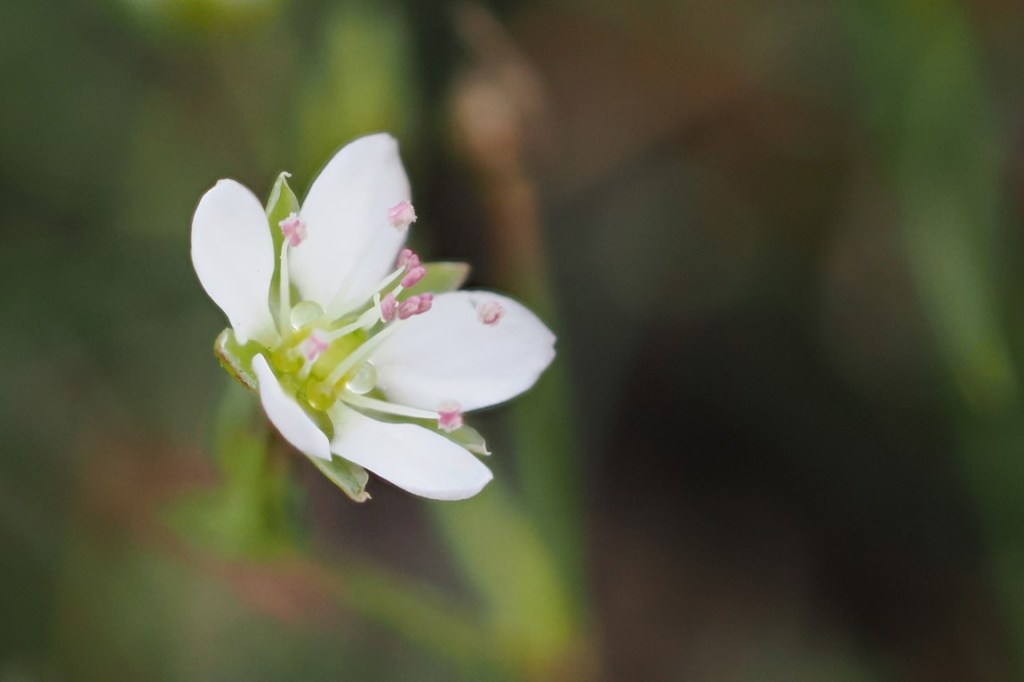
Sping Sandwort, Cumbria 6th November 2025
Among the delicate plants that quietly mark Britain’s industrial heritage, few are as evocative as Spring Sandwort (Sabulina verna), sometimes known as Leadwort. This unassuming, starry-flowered perennial may appear modest, but its presence on a hillside or spoil heap can tell a remarkable story, one of geology, metal, and human endeavour.
A Specialist of Harsh Soils
Spring Sandwort thrives where most other plants cannot: in metal-rich soils containing high levels of lead, zinc, or cadmium. These conditions are toxic to the majority of species, but Sabulina verna has evolved a remarkable tolerance to heavy metals, allowing it to colonise old mine spoil, calamine grassland, and other mineral-rich substrates.
This adaptation makes it one of the most characteristic plants of Britain’s calaminarian grasslands — a rare and ecologically important habitat type found on the waste tips and scars of historic mining areas.
An Indicator of Old Mine Workings
Because Sabulina verna is so closely tied to metalliferous soils, it often serves as a botanical indicator of old mine workings. Its presence can suggest that the ground has been disturbed or enriched by centuries of lead or zinc extraction — even where visible signs of mining have long since disappeared.
In regions such as the Pennines, North Wales, and parts of Scotland, colonies of Spring Sandwort can still be found clinging to spoil heaps or thin turf over mineralised bedrock, marking the legacy of human industry that dates back to Roman and medieval times.
Appearance and Identification
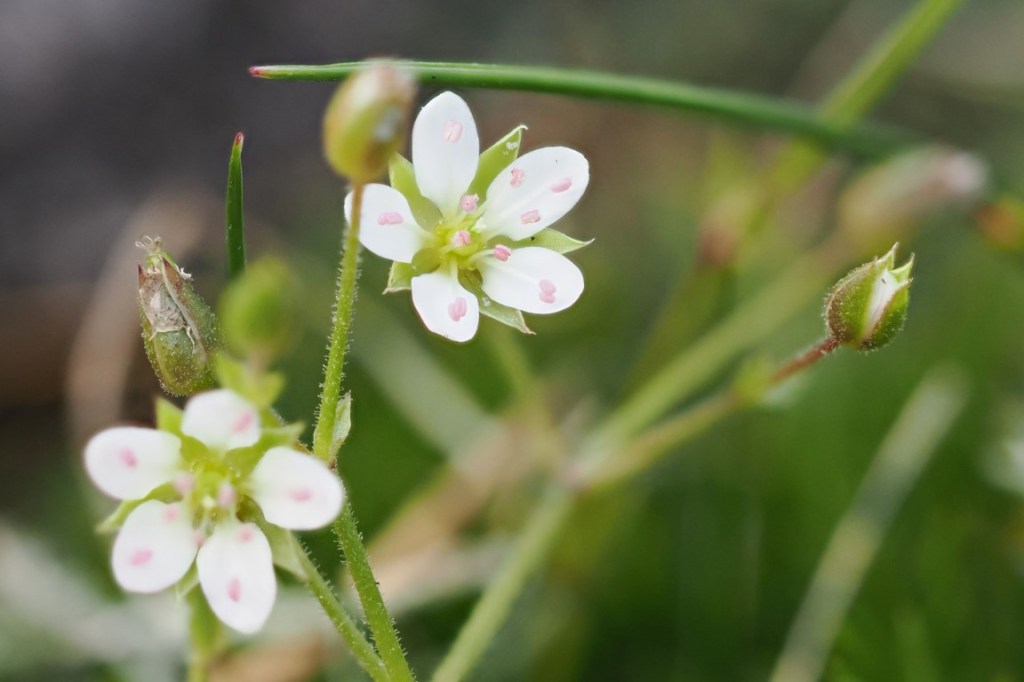
This small, mat-forming plant produces fine, linear leaves and clusters of tiny, white, star-shaped flowers in spring and early summer. The blooms are typically around 1 cm across, giving the plant its common name. It favours open, sunny slopes with little competition from taller vegetation — habitats created and maintained by the disturbance of mining and grazing.
Ecological Significance
Although it occupies a niche environment, Sabulina verna plays an important role in stabilising spoil heaps and providing early successional cover for invertebrates and other pioneer species. It often grows alongside other metallophyte specialists such as Alpine Penny-cress (Noccaea caerulescens), Thrift (Armeria maritima), and Sheep’s-fescue (Festuca ovina), forming distinctive plant communities of high conservation interest.
A Conservation Reminder
Today, Spring Sandwort is not only valued as a botanical curiosity but also as a heritage indicator. Its continued survival depends on the persistence of the open, metal-rich habitats that once formed the backbone of local mining economies. Many of these sites are now designated as Sites of Special Scientific Interest (SSSIs) due to their rarity and cultural importance.
Protecting Sabulina verna and its unique habitat helps preserve not just biodiversity, but also a living link to Britain’s geological and industrial past.
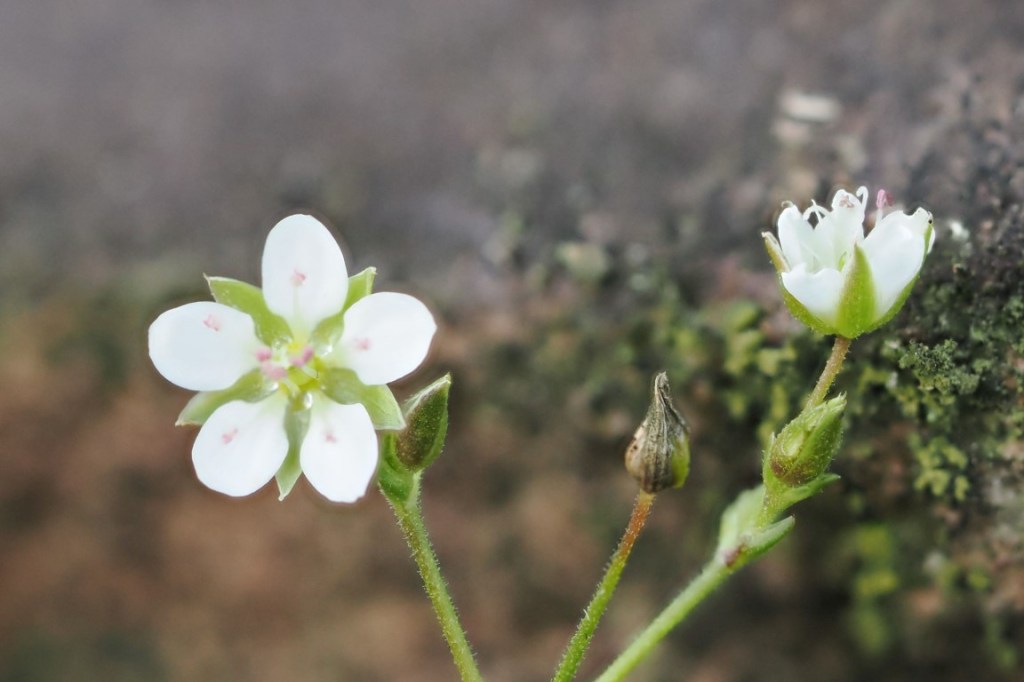
Cumbrian Flowering Spring Sandwort in November 2025 (c) Andrew Chick

Just the leaves; The leaves of Spring Sandwort (Sabulina verna) are small, narrow, and pointed, forming opposite pairs along slender stems. They are linear to lanceolate in shape, typically only a few millimetres wide, and have a smooth, slightly fleshy texture adapted to dry, mineral-rich soils. The foliage forms low, mat-like tufts that help the plant withstand exposure and poor nutrient conditions often found on old mine spoil and rocky ground.

Spring Sandwort with seed heads, November 2025 (c) Andrew Chick


 Andrew Chick Ecology
Leave a comment