
The ‘wild’ Snow Goose in flight showing black wing tips (c) Andrew Chick
Today I popped over to the Lincolnshire Wildlife Trust reserve at Deeping Lakes to see a white morph Snow Goose. A white morph Snow Goose is one of the two natural colour forms of the Snow Goose (Anser caerulescens), a species native to North America. The term “white morph” refers purely to plumage and is not related to age or sex.
White morph Snow Geese are almost entirely white, with contrasting black wing tips that are especially noticeable in flight. They have pink legs and feet, and a pink bill marked with a distinctive dark “grinning patch” along the cutting edge. Many individuals show rusty or orange staining on the head and neck, caused by feeding in iron-rich soils. In the UK, white morph Snow Geese are most often encountered as escaped or feral birds, with genuinely wild individuals being very rare. While they can occasionally be confused with other white waterfowl, their size, black wing tips, and distinctive bill pattern usually allow confident identification.
There isn’t a precise UK-wide count of feral Snow Geese, but most records suggest they are very small in number compared with other geese. Resident feral populations exist as a few small, established flocks rather than one large group. There has long been a small self-sustaining group in Argyll on the Inner Hebrides, originally from escapees, and other flocks exist in parts of England, such as Oxfordshire and Yorkshire. Some estimates suggest tens to around a hundred birds in these feral populations, perhaps up to about 100 pairs across Britain, though these are not official census figures. In contrast, true wild vagrant Snow Geese arriving from North America are usually quite scarce.
Interestingly, a Snow Goose was documented associating with Whooper Swans in Scotland in 2025. A white morph Snow Goose was reported in the company of Whooper Swans on Bressay in Shetland on 9 October 2025, before continuing its southward movement along the east coast. This Shetland record was highlighted in the BirdGuides “Review of the Week” series as a notable sighting, because Snow Geese often draw attention when they join Whooper Swan flocks, which can act as a “carrier” flock for the rarer geese.
Later in the season, a white morph Snow Goose was found in southern Lincolnshire, also in the company of Whooper Swans. Many birders think it’s quite plausible that this could be the same individual seen on Bressay in October. The Lincolnshire bird was discovered on Christmas Eve and remained through the New Year period. Observers noted that it appeared to have arrived with Whooper Swans and may have been present for some weeks, suggesting it was not a brand-new late migrant but part of a longer-distance autumn vagrant movement.
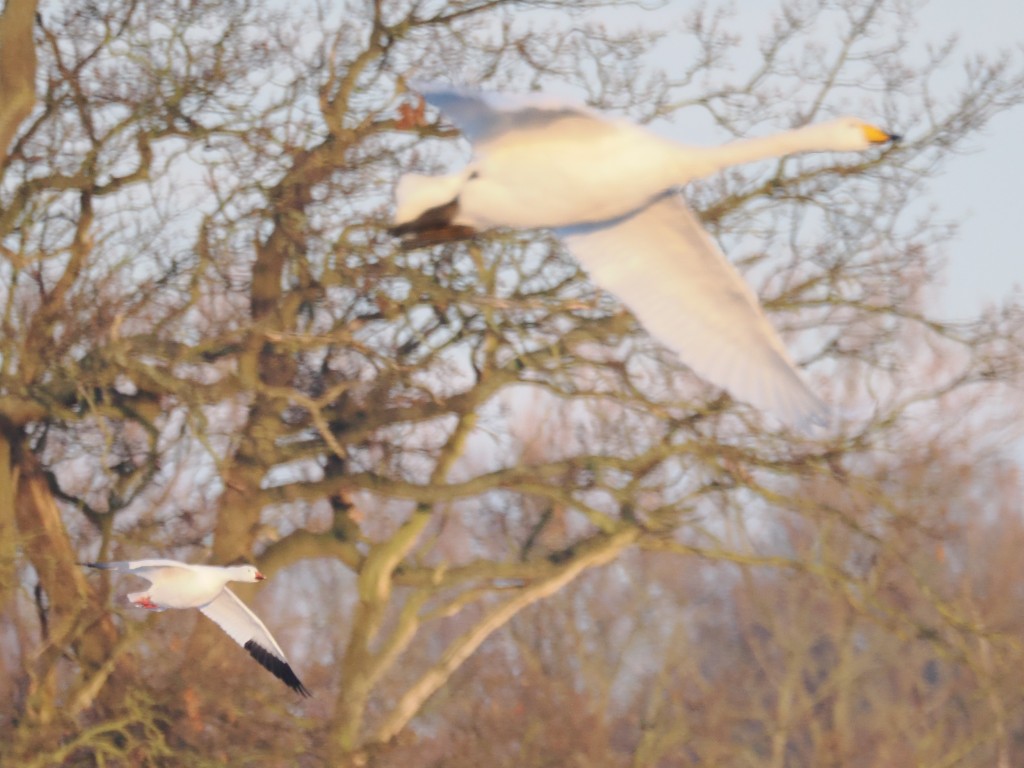
The Snow Goose in flight with a Whooper Swan (c) Andrew Chick
Snow Geese are relatively rare vagrants in the UK, and adults associating with Whooper Swans are even less common, so many consider it reasonable to hypothesise that the Shetland and Lincolnshire sightings represent the same bird moving south over the course of autumn and early winter. Without individual marking or ringing data, it cannot be proven with absolute certainty, but the pattern and timing make it a strong possibility.
Since I happened to be in Lincolnshire, I decided this was a perfect bird to go and see.

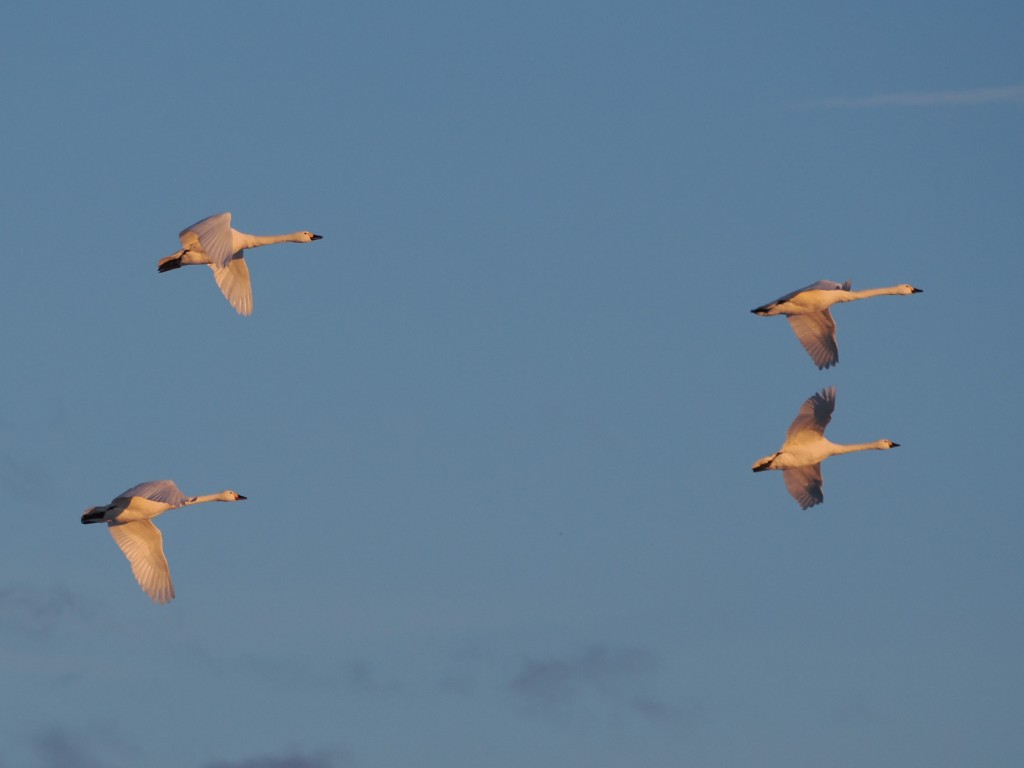
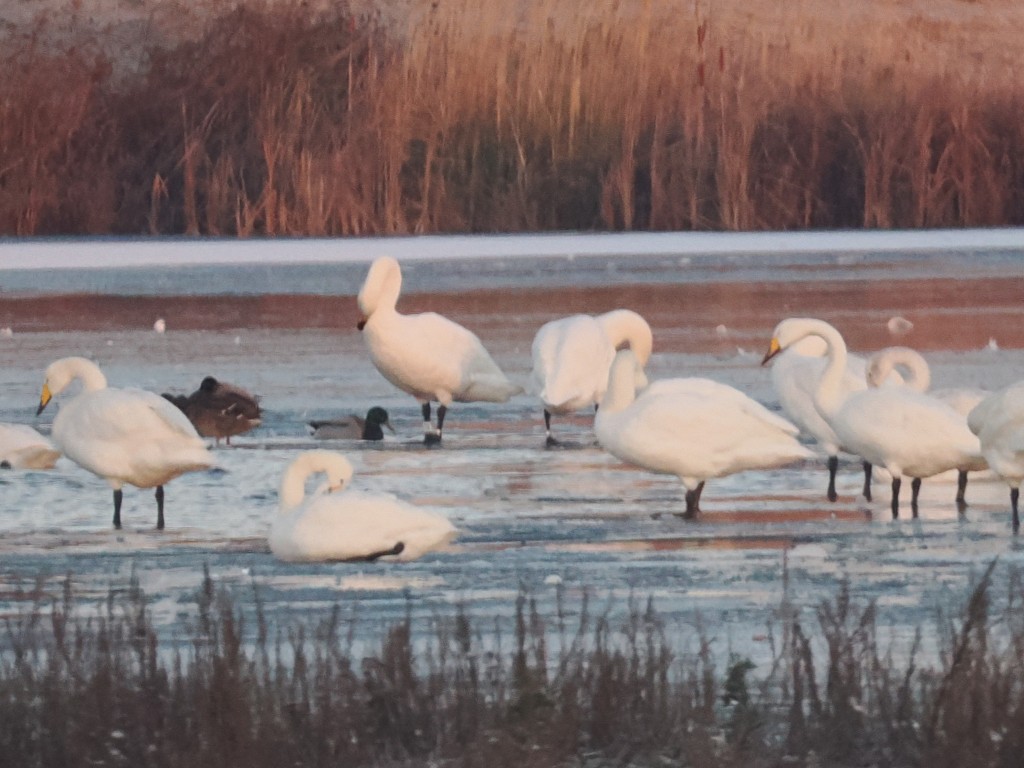
Four of the six Bewick Swans seen at Deeping Lakes LWT…

 Andrew Chick Ecology
Leave a comment