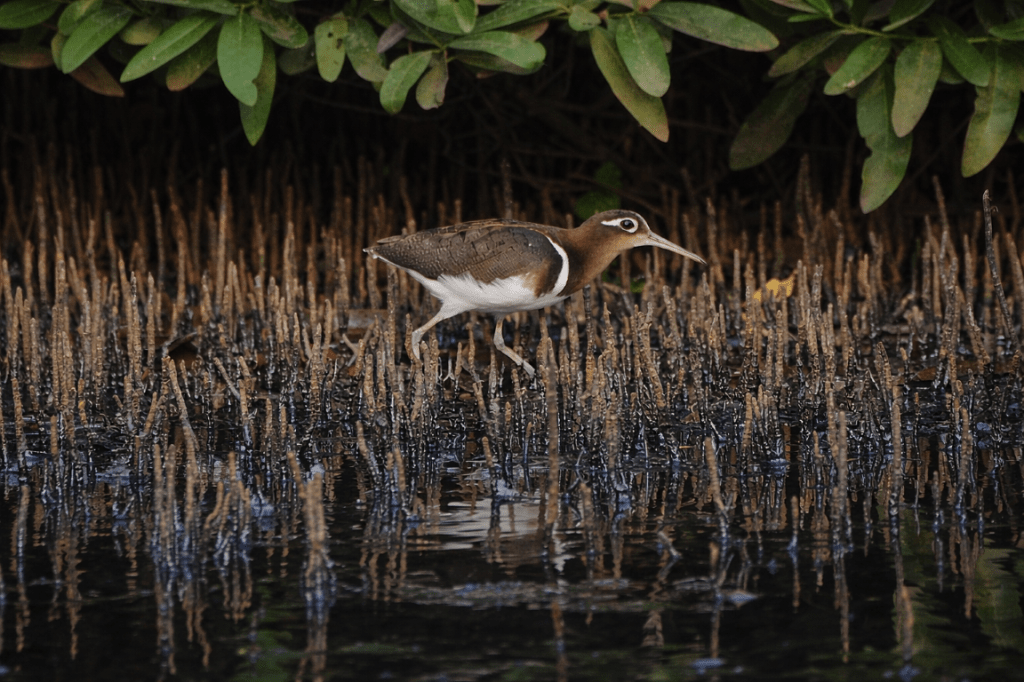
In the late 1980s I travelled to Thailand and abroad for the first time. As I leafed through the field guide before the trip, one species immediately caught my eye: the Greater Painted Snipe. It looked so different from the other waders, almost exotic, and I was determined to see one. Sadly, that first visit was all too brief and the painted snipe remained unseen.
The following year I travelled to East Africa for the first time. Once again, there it was in the guidebook, painted snipe. Once again, no luck.
What makes painted snipe particularly intriguing is their distribution. They occur across much of Africa, through central Asia, and right into Southeast Asia. It’s a bird that can be found in many countries, yet for some reason it always managed to elude me.
As my birding travels became more adventurous, I visited more and more places where painted snipe were possible, China, Thailand again, Malaysia, Sabah, Indonesia, Nepal, Hong Kong, Sri Lanka and India. Each time there was hope; each time the bird failed to appear.
On one trip to India we visited the birding mecca of Bharatpur. I spoke to several people who had seen painted snipe, and even hired a guide at the entrance kiosk who promised he would show me one. But, once again, we dipped.
Fast forward to February 2026 and a two-week self guided birding trip to The Gambia, a country new to me and full of potential lifers. Over the course of the trip we travelled inland on local buses, staying at various lodges along the River Gambia and steadily building a healthy list of new species.
At the end of the trip we returned to Kotu (the tourist centre), and spent time around one of the well-known birding areas, finishing with an early-morning visit to a ‘photographic’ hide just a few hundred metres from my hotel. We were the first to arrive and sat quietly watching the exposed muddy edge of a mangrove creek. Then, after all those years, it happened.
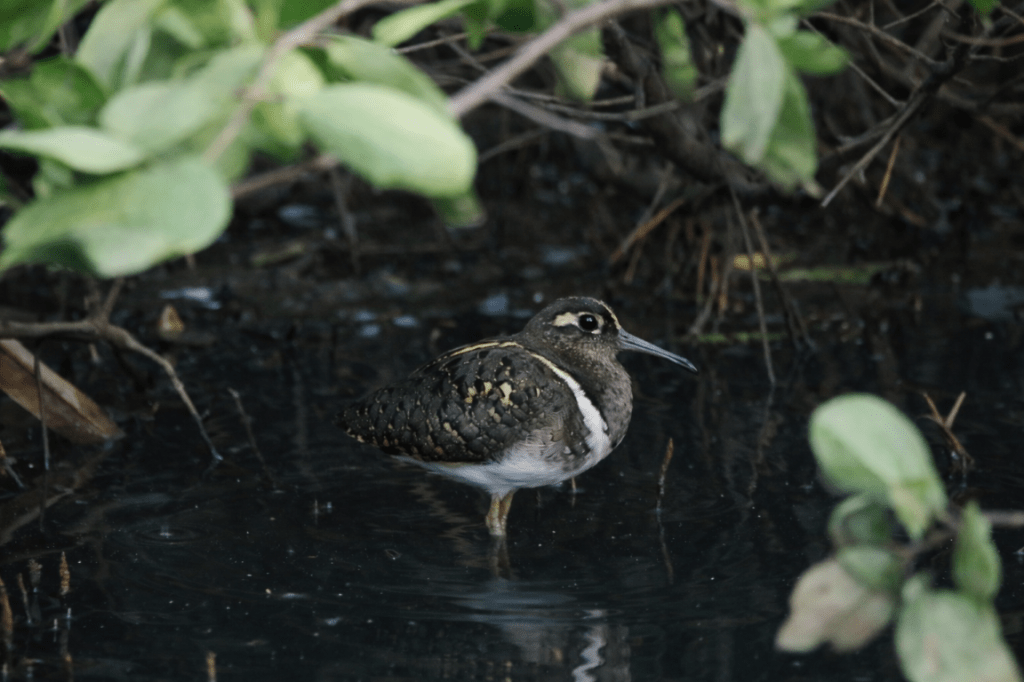
A female Greater Painted Snipe stepped out into the open. At last I could see the bird in all its stunning glory. Painted snipe are unusual among waders: the female is the brighter, more colourful sex, while the male is duller and takes on most of the incubation duties, a role reversal similar to that seen in phalaropes.
We watched, filmed and photographed the female as she fed along the mud. Soon she was joined by two males, and all three birds remained in view for ten or fifteen minutes before slipping quietly back into the mangroves. It was a true red-letter moment.
But the surprises didn’t end there. As we left the hide and walked along a narrow track beside some small rice paddies, I lifted my binoculars and was astonished to find another painted snipe. Having never seen one before, we had now seen four.
The following morning we returned, and this time we saw five different birds, allowing close views of their spectacular plumage.
A species that had taken me 59 years to find, but it was more than worth the wait.


 Andrew Chick Ecology
Leave a comment