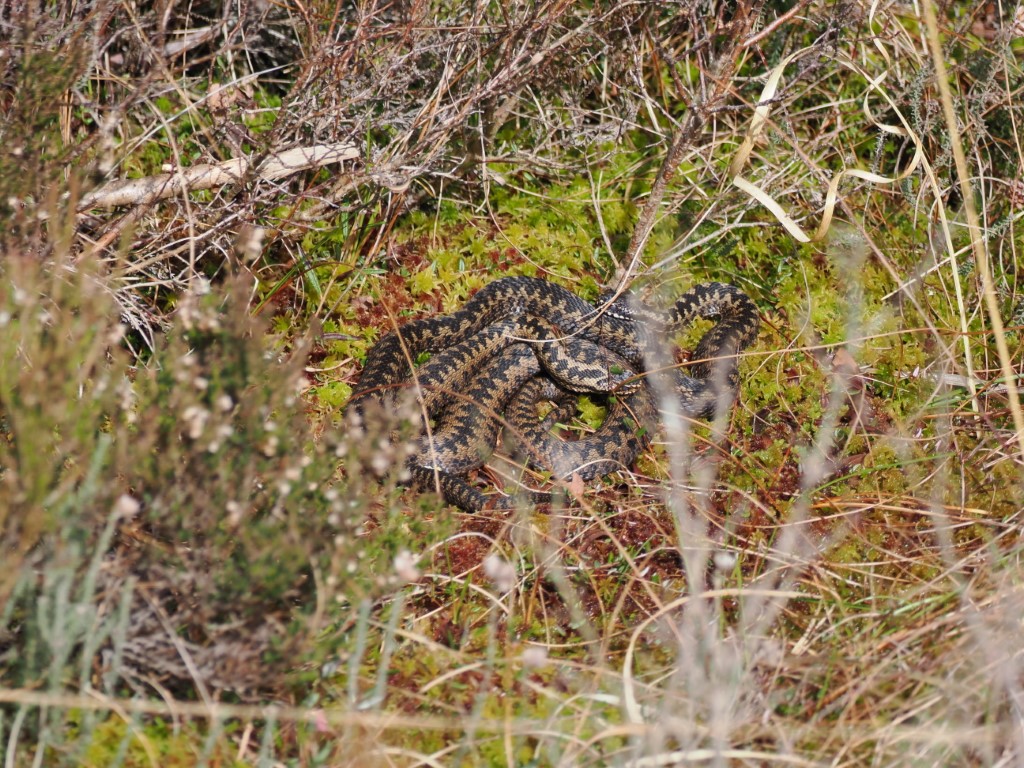
All photos (C) Andrew P. Chick March 2026
The Adder remains one of Cumbria’s most iconic reptiles, yet its current status is far from secure. Although still present across parts of the county, it is no longer a widespread or easily encountered species. Instead, populations are increasingly fragmented, localised and, in many areas, seldom recorded. For those working in the field, the species often appears elusive, not necessarily absent, but existing at low densities and confined to specific pockets of suitable habitat.
Across Cumbria, Adders are most closely associated with heathland, open moorland, woodland edges and, in some cases, coastal dune systems. These habitats provide the structural diversity required for basking, foraging and hibernation, but even where such conditions persist, populations can be small and vulnerable. Many sites support only a handful of individuals, and connectivity between colonies is often limited or entirely absent. As a result, local extinctions can occur quietly and without detection, particularly where monitoring is inconsistent.
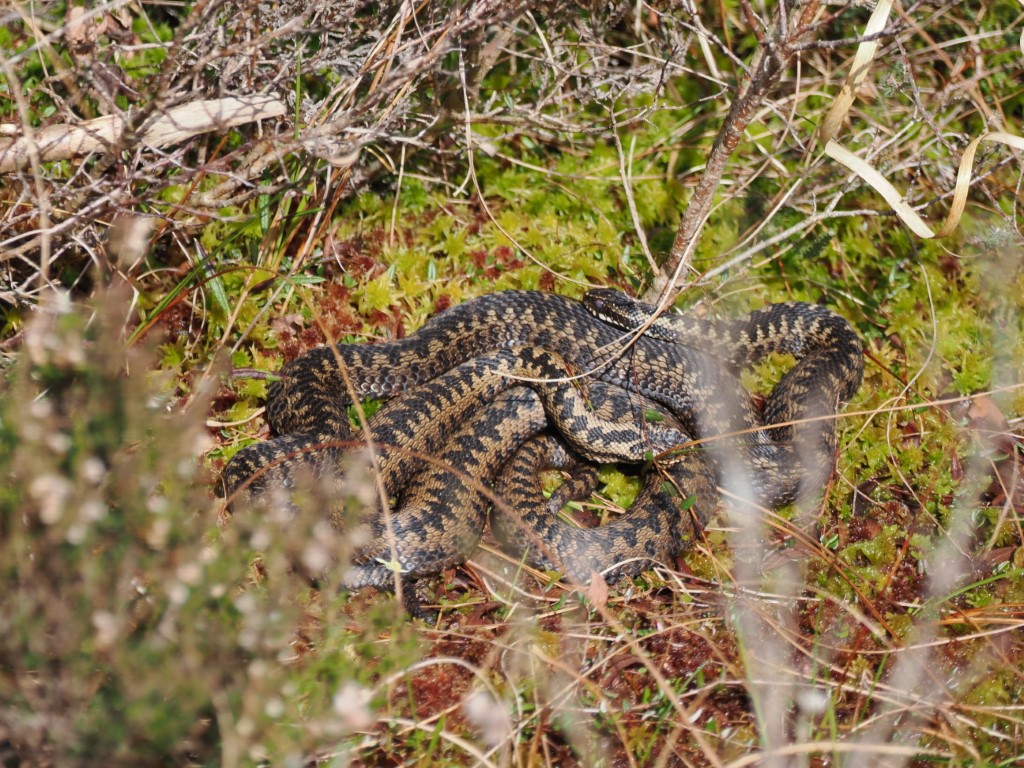
The situation in Cumbria reflects a much broader national trend. In England, the Adder is now widely regarded as a species of conservation concern, with long-term declines recorded across much of its range. Studies suggest that a significant proportion of populations are decreasing, and many have already been lost from formerly occupied sites. While upland areas such as those found in Cumbria may still offer comparatively favourable conditions when set against heavily developed lowland landscapes, this should not be mistaken for resilience. Even here, populations remain fragile and susceptible to ongoing pressures.
Habitat loss and fragmentation continue to be among the most significant threats. Development, changes in land use and inappropriate management can all reduce the availability of suitable habitat or disrupt the continuity required for populations to persist. In addition, increasing recreational pressure, particularly from walkers and dogs, can lead to disturbance, while deliberate persecution, though less common than historically, still occurs. Subtle changes in vegetation structure, such as the loss of transitional habitat or excessive scrub encroachment, can also render sites unsuitable over time.
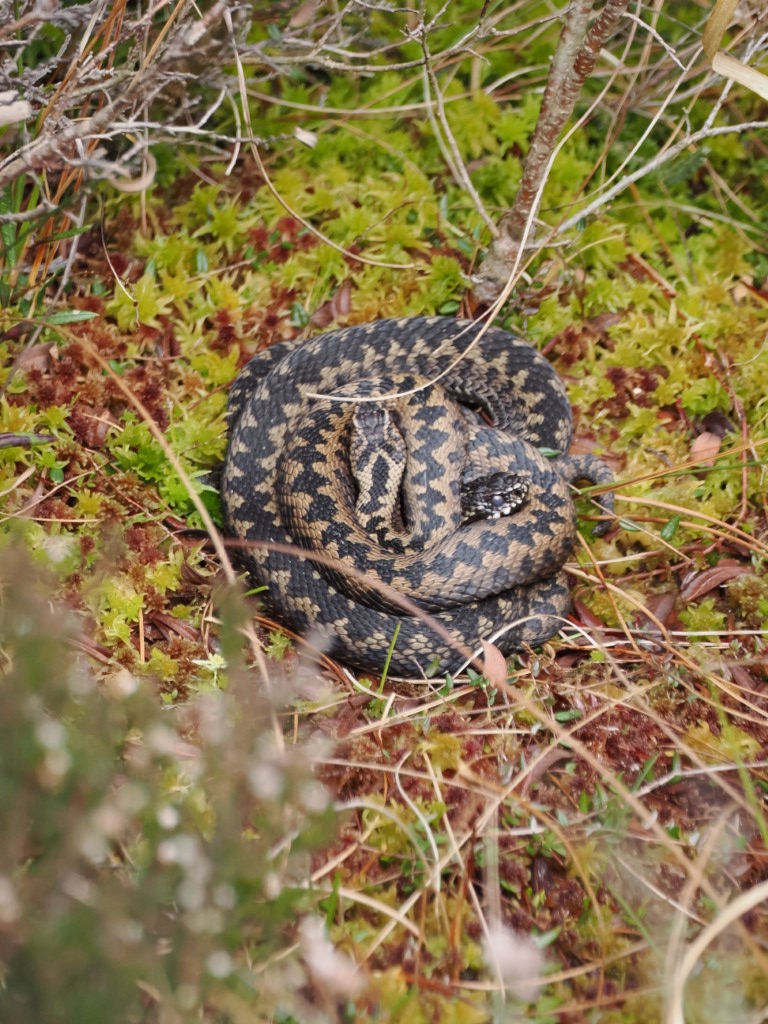
From an ecological and survey perspective, the Adder presents a familiar challenge. It is a species that may be present but undetected, particularly outside of optimal survey windows. Early spring, especially March and April, remains the most reliable period to confirm presence, when individuals emerge to bask near hibernacula. Outside of this period, detectability drops significantly, and absence of records should be treated with caution where suitable habitat exists.
Overall, the status of the Adder in Cumbria can best be described as present but declining, localised and vulnerable. While the county still supports populations, they are rarely robust and often dependent on specific site conditions. In many ways, the species serves as an indicator of habitat quality and continuity, its quiet disappearance from sites reflecting broader ecological change. Ensuring its persistence will depend not only on protecting known locations, but on maintaining and reconnecting the landscapes on which it depends.

 Andrew Chick Ecology
Leave a comment