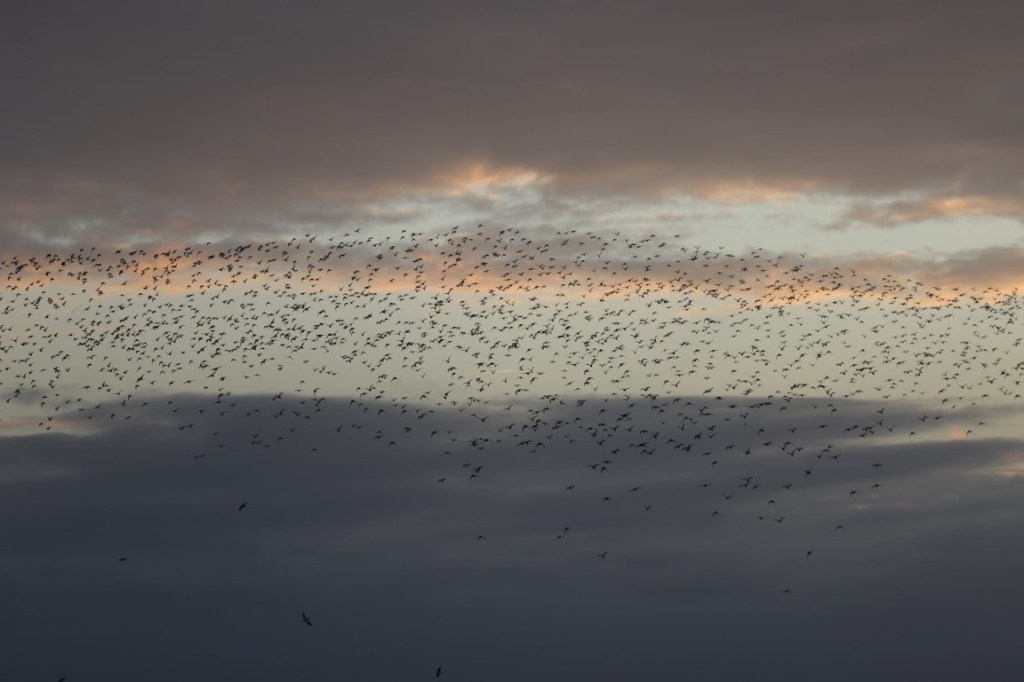
As the crisp chill of winter sets in, vast flocks of Golden Plovers can be seen gracing estuaries and coastal areas of Cumbria and the UK. But what drives this magnificent natural spectacle? It’s a fascinating story of seasonal migration, survival strategies, and the search for food and safety. Here’s a closer look at the key reasons behind the mass gatherings of these elegant birds.
1. Migration and Seasonal Movement
One of the primary reasons Golden Plovers congregate in large numbers during winter is migration. These birds breed in the northern regions of Iceland, Scandinavia, and other arctic and subarctic areas. As winter approaches, the harsh climate and dwindling food sources force them to head south to more temperate regions like the UK.
Escape from Harsher Climates The UK’s relatively mild winters provide a much-needed refuge for the Golden Plover. Unlike their breeding grounds, the UK’s coastal and inland areas stay frost-free for much of the season, offering easier access to food and shelter.
Abundance of Suitable Habitat The UK’s rich variety of habitats—from coastal mudflats and estuaries to inland grasslands and farmlands—provides the perfect environment for wintering Golden Plovers. These areas offer both roosting sites and foraging opportunities, allowing the birds to thrive during the colder months.
2. Foraging and Feeding Opportunities
Golden Plovers are opportunistic feeders, and their dietary needs shift as the seasons change. During the summer breeding season, their diet is rich in insects. However, in winter, their menu adapts to the availability of invertebrates, worms, and other small prey found in the UK’s fertile landscapes.
Access to Food As the ground in their northern breeding habitats freezes, access to food becomes limited. In contrast, the UK’s mild climate keeps the ground soft enough for Golden Plovers to forage for earthworms, insects, and other small invertebrates in the wet grasslands and pastures.
Use of Agricultural Land Modern farming practices play a crucial role in supporting Golden Plovers. Plowed fields and pastures expose soil-dwelling invertebrates, creating a foraging paradise for these birds. Agricultural land has become a vital winter habitat for many migratory bird species, including the Golden Plover.
3. Flocking for Safety and Protection
While the abundance of food is essential for survival, safety is just as critical. Golden Plovers employ a strategy used by many bird species: flocking together in large numbers to avoid predation.
Safety in Numbers By gathering in large flocks, individual Golden Plovers reduce their chances of being targeted by predators like peregrine falcons. Predators find it harder to single out one bird from a moving mass of thousands, making it a highly effective anti-predator strategy.
Vigilance Effect In large flocks, multiple individuals keep watch for danger. This “many eyes” approach means that each bird can spend more time feeding and less time on alert for predators. If one bird detects a threat, the entire flock can take flight almost instantly, further reducing the chance of a successful attack by a predator.
4. Social Behavior and Roosting
Golden Plovers are highly social birds, and their tendency to flock together goes beyond predator avoidance. It’s also a reflection of their social instincts and communal survival strategies.
Social Cues and Flocking Behavior Many wader species exhibit a natural inclination to follow each other to find the best feeding areas. Golden Plovers do the same, using the presence of others as a cue that food is nearby. This “safety in numbers” approach ensures they’re always in the right place at the right time.
Roosting Together for Warmth and Safety During high tide or at night, large flocks of Golden Plovers gather in roosting sites. Roosting together offers warmth and protection from nocturnal predators. By huddling in large groups, the birds reduce heat loss, which is essential for conserving energy during the colder winter months.
In Summary
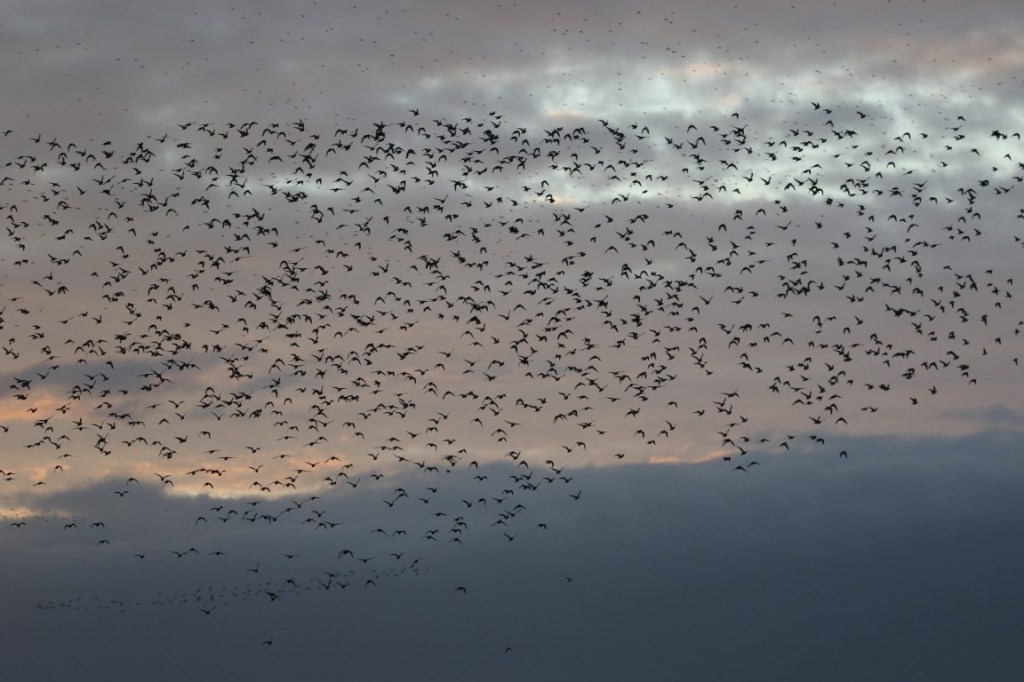
The sight of thousands of Golden Plovers moving in unison across a Cumbrian saltmarsh/estuary is a beautiful reminder of nature’s rhythms. These birds flock together for several key reasons: to escape the harsh climates of their breeding grounds, to access abundant food sources, and to protect themselves from predators. Their social instincts also play a role, as communal roosting provides both warmth and safety.
The presence of these striking birds highlights the importance of the UK’s natural landscapes as essential winter refuges for migratory species. So, next time you see a swirling mass of Golden Plovers in the sky, you’ll know that it’s not just a stunning natural display—it’s a finely tuned survival strategy honed over millennia of evolution.

 Andrew Chick Ecology
Leave a comment