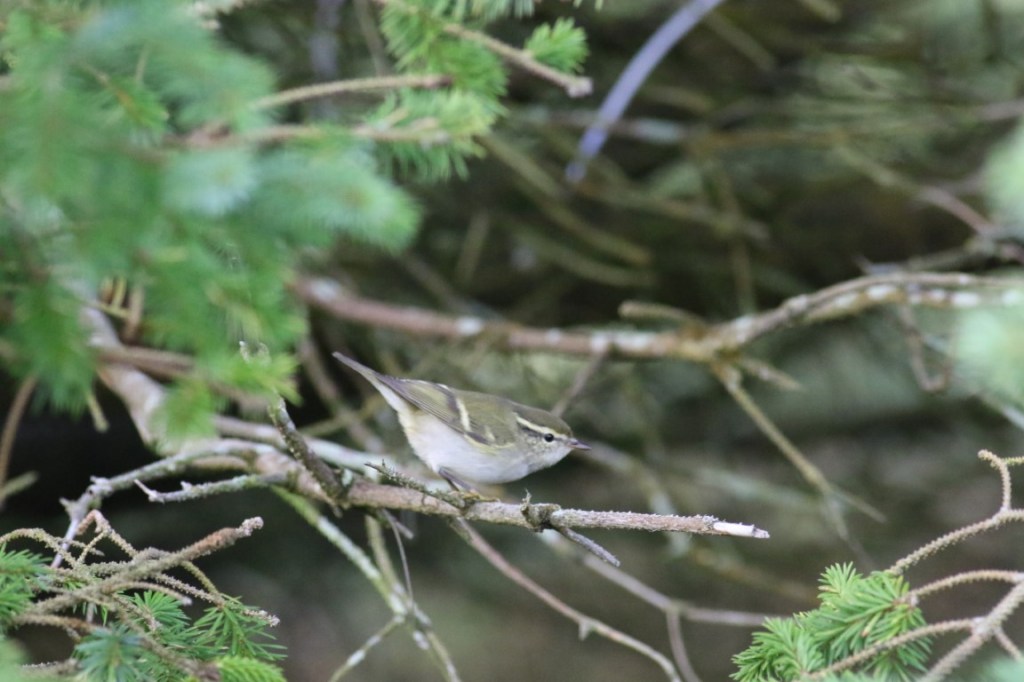
Are these birds vagrants, regular migrants, or both? New research explores the fascinating status of two Siberian Phylloscopus warblers in Europe.
Introduction: A Tale of Two Warblers
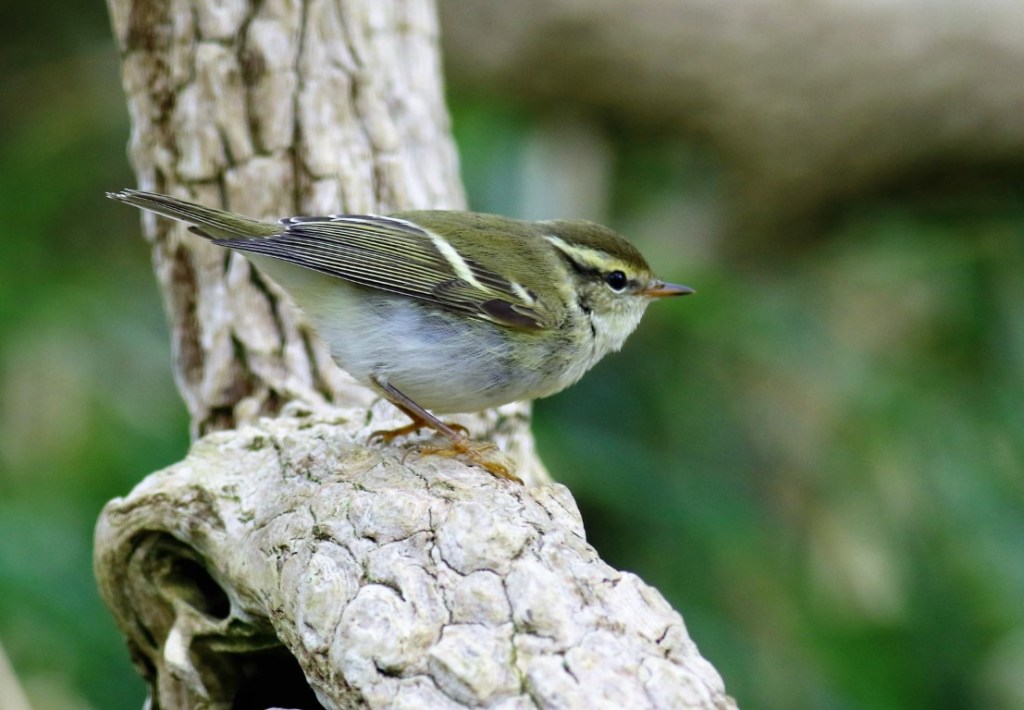
In recent years, Europe has seen an increase in the occurrences of two enigmatic Siberian warblers — the Yellow-browed Warbler (Phylloscopus inornatus) and the Siberian Chiffchaff (Phylloscopus collybita tristis). These small, insect-eating birds have long captured the attention of ornithologists, but their true status in Europe has remained a mystery. Are they vagrants, birds accidentally straying off course, or have they established new migration routes to the continent? A newly published study led by Paul Dufour and colleagues offers fresh insights, revealing contrasting patterns for these two species.
The Yellow-browed Warbler: Still a Vagrant
Every autumn, thousands — perhaps tens of thousands — of Yellow-browed Warblers are observed across Europe. This remarkable influx has prompted speculation that the species may be following a newly established migration route. Previous research hinted at this possibility, but no concrete evidence had emerged to support it.
Dufour’s team took a novel approach, assessing the age of 324 Yellow-browed Warblers observed across Europe. Their findings were striking: 98% of the birds were juveniles, with only one confirmed adult and five probable adults among them. This age distribution points strongly to the conclusion that Yellow-browed Warblers in Europe are primarily vagrants, not part of a new, regular migratory population.
If these birds were regular migrants, a higher proportion of adults would be expected, since adult birds typically return to familiar routes year after year. The near-total absence of adults suggests that the juveniles are misguided on their first migration journey. This aligns with the broader pattern seen in the species, as there are notably few spring records of Yellow-browed Warblers in Europe — a time when return migration would be expected if they had overwintered on the continent.
Despite the large numbers seen each autumn, the evidence suggests that most of these birds are on a doomed journey westward, far from their intended wintering grounds in Southeast Asia. The next step for researchers is to explore why this misdirected migration is occurring so consistently.
The Siberian Chiffchaff: A Migrant on a New Route?
In contrast to the Yellow-browed Warbler, the Siberian Chiffchaff may be a genuine migrant in Europe. Dufour’s team examined 117 Siberian Chiffchaffs, comparing them to the Common Chiffchaff (Phylloscopus collybita), which is known to be a regular migrant. The results revealed a much higher proportion of adults among the Siberian Chiffchaffs than in Yellow-browed Warblers.
In Sweden, 9.4% of Siberian Chiffchaffs observed were adults, and this figure rose to 29.7% for birds in southern France. This suggests that a portion of the Siberian Chiffchaff population is following a regular migratory route to southern Europe. Evidence from bird ringing and genetic analysis adds further weight to this conclusion.
Genotyping of birds captured in southern France showed that most of them were of dominant tristis ancestry, though a significant number were identified as intergrades — hybrids between tristis and abietinus Chiffchaffs. This genetic mixing likely occurs where the ranges of these two subspecies overlap in Siberia, and it raises the possibility that hybridisation may be playing a role in shaping migration patterns.
Some of these tristis individuals may be breeding near the contact zone between tristis and abietinus, with introgression (the transfer of genes from one population to another) potentially altering migratory behaviors. As a result, some birds may be genetically “programmed” to follow a new migratory route to southern Europe rather than heading to their traditional wintering grounds.
Unlike the Yellow-browed Warbler, the presence of adult Siberian Chiffchaffs in autumn suggests that they are not merely young birds gone astray. The presence of wintering tristis in Italy since the 1990s, with contemporary records from northern Italy, also supports the idea that the species may have been wintering in southern Europe for some time. While it is still rare in the Iberian Peninsula, Siberian Chiffchaff is increasingly observed in France, suggesting that France may represent the western limit of its regular winter range.
Climate Change and Changing Migration Patterns
One possible driver of the changing winter distribution of Siberian Chiffchaffs is climate change. As winters in Europe become milder, birds may find it easier to survive in areas that were previously too harsh. This could explain why the presence of Siberian Chiffchaffs in southern Europe has increased in recent decades. Milder conditions may not only improve the survival of birds already wintering in Europe but may also encourage more birds to attempt to overwinter on the continent.
Such shifts in migratory behavior are not unprecedented. Other bird species, including Blackcaps (Sylvia atricapilla), have shown changes in migration strategies, with growing numbers choosing to winter in the UK rather than migrating to southern Europe or Africa. Similar ecological pressures may be influencing Siberian Chiffchaffs.
What Lies Ahead?
This new research has brought much-needed clarity to the status of the Yellow-browed Warbler and Siberian Chiffchaff in Europe, but it has also raised new questions. For the Yellow-browed Warbler, the key mystery is why so many juveniles become “misguided” on their first migration, traveling westward to Europe instead of heading south or southeast to Asia. For the Siberian Chiffchaff, the growing evidence of routine wintering in southern Europe opens up questions about how long this pattern has been in place and whether climate change has played a role.
Ornithologists will now focus on unraveling these questions. The fate of the thousands of Yellow-browed Warblers that arrive in Europe each autumn is of particular concern, as many are unlikely to survive the winter. New tracking technologies and further genetic research may shed light on the origins of these migration anomalies and help scientists understand how birds adapt to changing environments.
Conclusion
The status of the Yellow-browed Warbler and Siberian Chiffchaff in Europe has long been debated. Thanks to new research, we now have a clearer picture: Yellow-browed Warblers remain vagrants, with no evidence of regular migration to Europe, while Siberian Chiffchaffs appear to be legitimate migrants using a previously unrecognised route.
These findings offer a fascinating glimpse into how bird migration patterns are shaped by genetics, hybridisation, and possibly even climate change. While the story of these two warblers is still being written, one thing is clear: migration is far more dynamic and complex than previously thought. As we continue to observe and study these small but mighty travelers, we may uncover even more surprising tales of survival and adaptation.
Ref: Dufour, P, Hellström, M, and 16 others. 2024. Using age-ratios to investigate the status of two Siberian Phylloscopus species in Europe. Ibis. DOI: https://doi.org/10.1111/ibi.13382




 Andrew Chick Ecology
Leave a comment