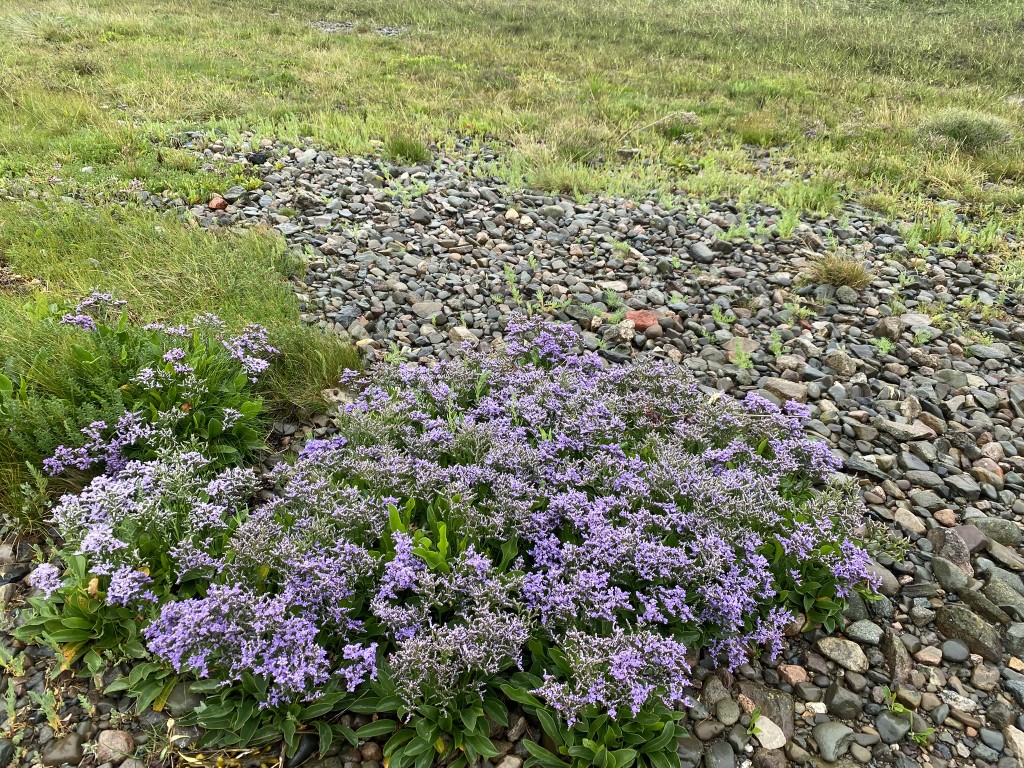
Common Sea-lavender (Limonium vulgare) is one of the most distinctive and beautiful plants found in the UK’s saltmarshes. Despite its name, it is not a true lavender, though it shares the soft purple hues that make it a visual highlight of the coast in late summer. This hardy perennial is particularly adapted to saline environments and thrives in the regularly flooded upper and mid-zones of saltmarshes, where few other plants can survive.
With its delicate sprays of small, papery lilac flowers rising above fleshy, spoon-shaped leaves, Common Sea-lavender creates a striking haze of colour from July through September. The flowers are long-lasting and attract a variety of pollinators, especially bees and hoverflies. In many places, entire marshes are transformed into soft purple carpets during peak flowering, a spectacle that draws naturalists and walkers alike.
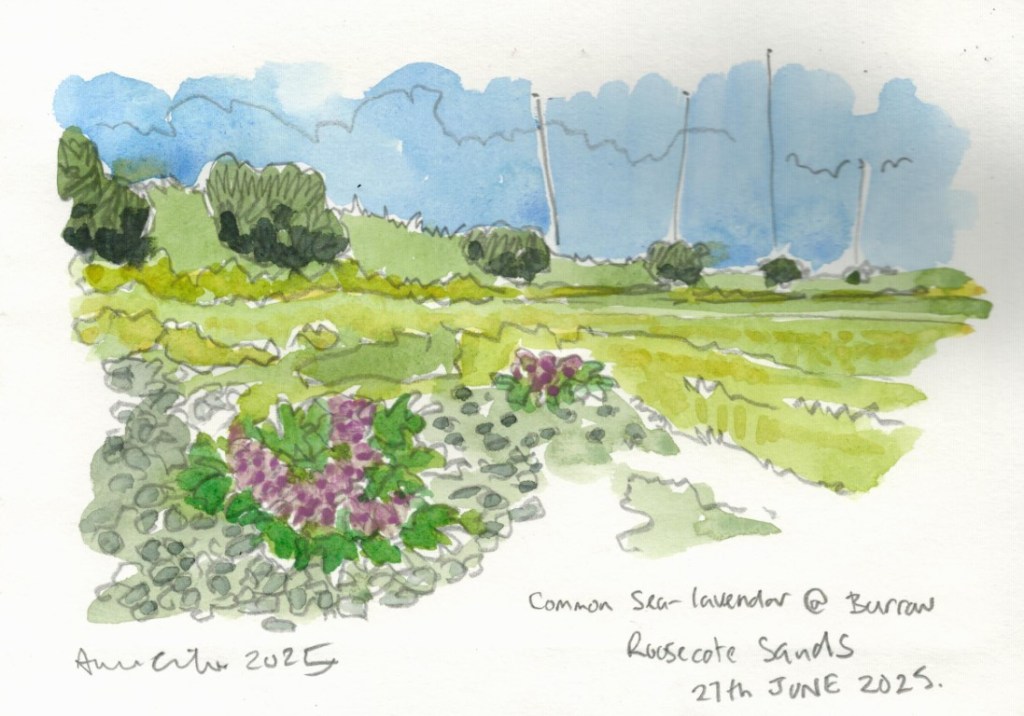
The species is widespread around the British coast, particularly along the North Sea and English Channel, where saltmarsh habitat remains relatively intact. However, like many saltmarsh specialists, it is vulnerable to habitat loss caused by coastal development, erosion, and sea-level rise. Changes in hydrology and grazing pressure can also affect its distribution.
Common Sea-lavender has long held cultural and ecological significance. Historically, it was sometimes gathered for dried flower arrangements, though this practice is now discouraged in protected areas. Ecologically, it plays a key role in supporting invertebrate communities and contributes to the rich tapestry of life in saltmarsh ecosystems.
Resilient, subtle, and unmistakably beautiful, Common Sea-lavender is a true emblem of the British coast—one that speaks to the quiet richness of our tidal landscapes.
See https://www.cumbriabotany.co.uk/the-flora-of-cumbria-recording-group/flora-distribution-maps/#Limonium_vulgare for distribution in Cumbria.
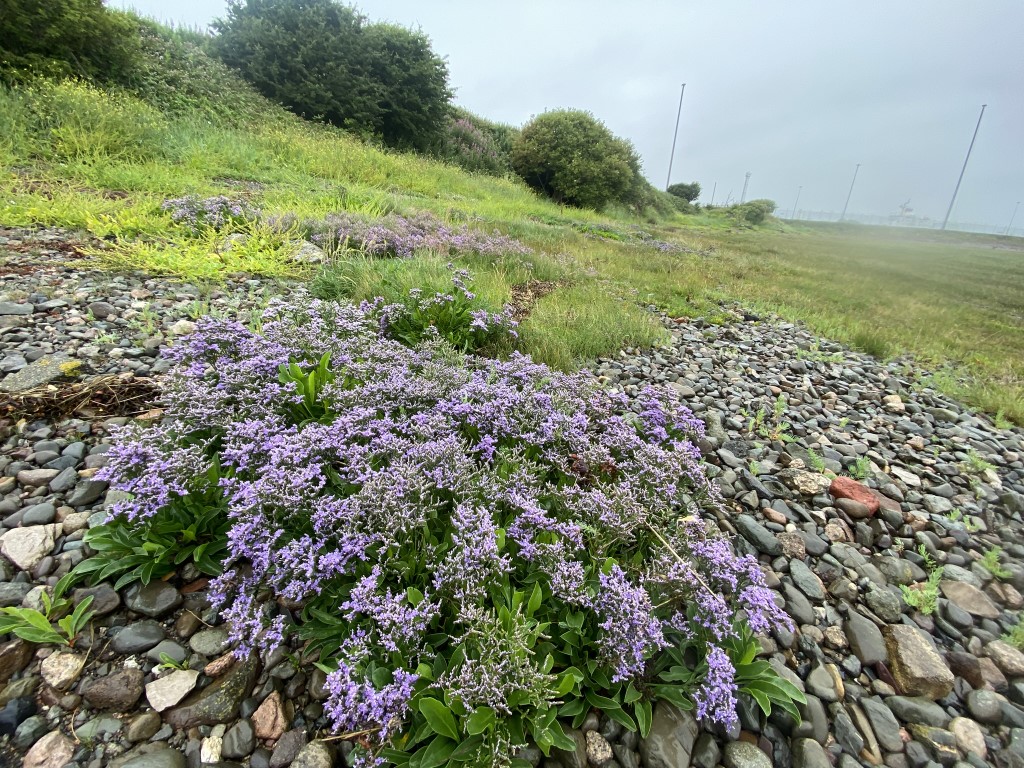
Common Sea-lavender is fairly frequent on the upper levels of saltmarshes and can be strikingly abundant and colourful in late summer. One of the most vivid displays in Cumbria occurs on the landward side of North Walney, where large swathes of flowering plants can transform the marsh into a soft purple haze. However, this abundance is not uniform. The species tends to decline—and in some areas has disappeared entirely—as sheep grazing becomes more widespread and intensive. A clear example of this loss is the Leven Estuary, where Limonium vulgare once grew alongside Limonium humile in the 1950s, but has now virtually vanished. There are no reliable records of Common Sea-lavender north of the Ravenglass Estuary. The accompanying photographs were taken within the ABP Ports boundaries in Barrow-in-Furness, where the species still persists in localised patches.
In June 2025 I recorded hummingbird hawk-moth feeding on the plant!


 Andrew Chick Ecology
Leave a comment