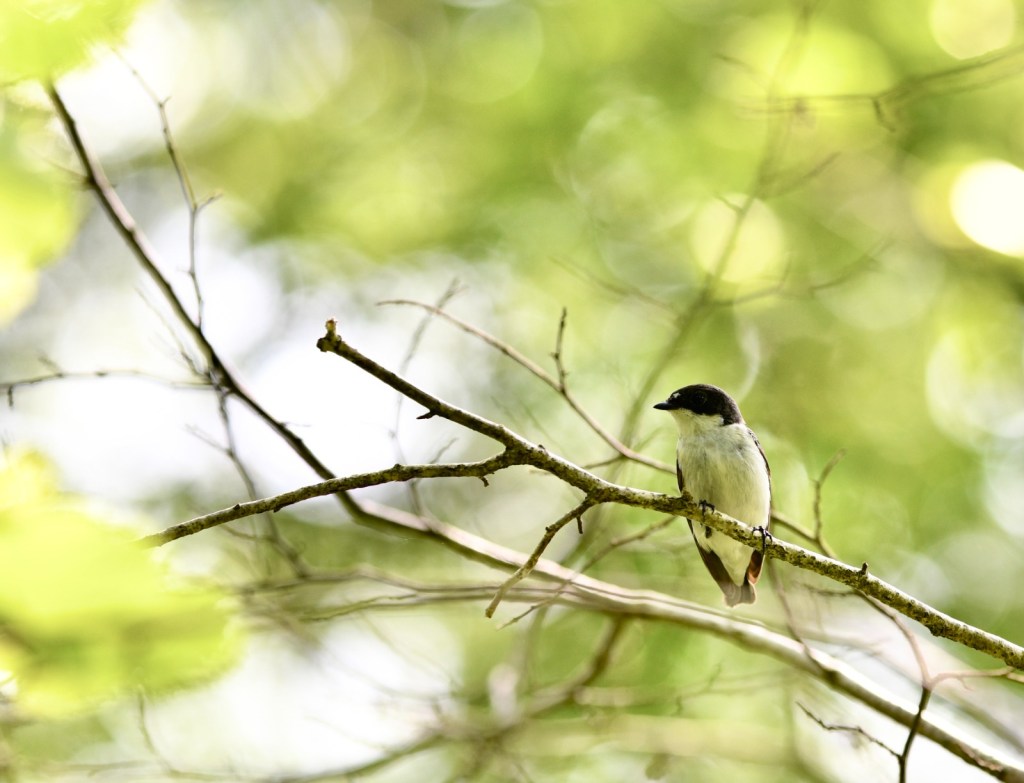
This article first appeared in the Cumbria Bird Club Newsletter in July 2025.
In 2023, I was given 25 surplus wooden nest boxes that were looking for a new home.
After discussing it with a local landowner, I installed the boxes in a private, predominantly oak woodland near Hawkshead, with the agreement that I could monitor and ring any birds that used them. The woodland has good potential, and with a few local sightings of Pied Flycatchers, I was hopeful the boxes might attract a breeding pair or two. I was pleasantly surprised when three pairs of Pied Flycatchers took up residence in the boxes during that first season. In addition to the flycatchers, I also had a number of Great and Blue Tit, but by the end of the season a number of the boxes had been damaged by Great Spotted Woodpeckers and Grey Squirrels.
In 2024, the landowner secured a Countryside Stewardship grant for the nest boxes and with the damage by Squirrels and Woodpeckers fresh in our minds we discussed the need for something more durable and eventually purchased 40 Woodcrete boxes from Wildcare (https://www.wildcare.co.uk/), which were delivered prior to the start of the bird breeding season 2024.
Unfortunately, four of the boxes arrived damaged, but Wildcare replaced them (and supplied a few extra) without hesitation, and I can fully endorse their customer service. Bringing the total number of usable Woodcrete boxes to 48. Additionally, I made six open fronted nestboxes in the hope of attracting Common Redstart which brought the total number of nestboxes in the scheme to a grant total of 79 for the 2024 breeding season.
The following is a summary of the results from 2024 and 2025. All nest boxes were monitored under my BTO licence, and all records have been submitted to the BTO Nest Record Scheme (NRS). This data contributes to a growing understanding of how environmental pressures, such as habitat loss and climate change, are affecting breeding success and fledgling numbers in UK bird populations.
Summary of the breeding season 2024
| Row Labels | Sum of Fledged 2024 | Count of Nests 2024 |
| Blue Tit | 112 | 17 |
| Great Tit | 59 | 10 |
| Nuthatch | N/A | 1 |
| Pied Flycatcher | 55 | 10 |
| Empty Box | 41 |
Having previously recorded only a handful of Pied Flycatchers on site, discovering ten active nests and witnessing 55 juveniles successfully fledge was both surprising and encouraging. Unfortunately, one brood failed completely, with all chicks found dead; these individuals are not included in the total count. Spring 2024 was notably cold, which appeared to suppress invertebrate activity and reduce prey availability. At one nest, an adult was observed feeding young with damselflies, an unusual choice that likely reflected limited food options. Despite this, the season was considered a success, with all nestboxes cleared and ready for future use by the end of the breeding period.
Summary of the breeding season 2025
| Row Labels | Sum of Fledged 2025 | Count of Nests 2025 |
| Blue Tit | 84 | 11 |
| Great Tit | 97 | 14 |
| Nuthatch | N/A | 1 |
| Pied Flycatcher | 53 | 12 |
| Empty Box | 40 |
The weather in early spring 2025 was notably pleasant, and by 11th May, twelve Pied Flycatchers were actively nesting on site, a promising start to the season. Blue Tit numbers were clearly down compared to previous years, but they compensated with large brood sizes, including one remarkable clutch of 13 and another of 12. In contrast, Great Tits were more numerous, with two broods of 11, three of 9, and two of 8 recorded.
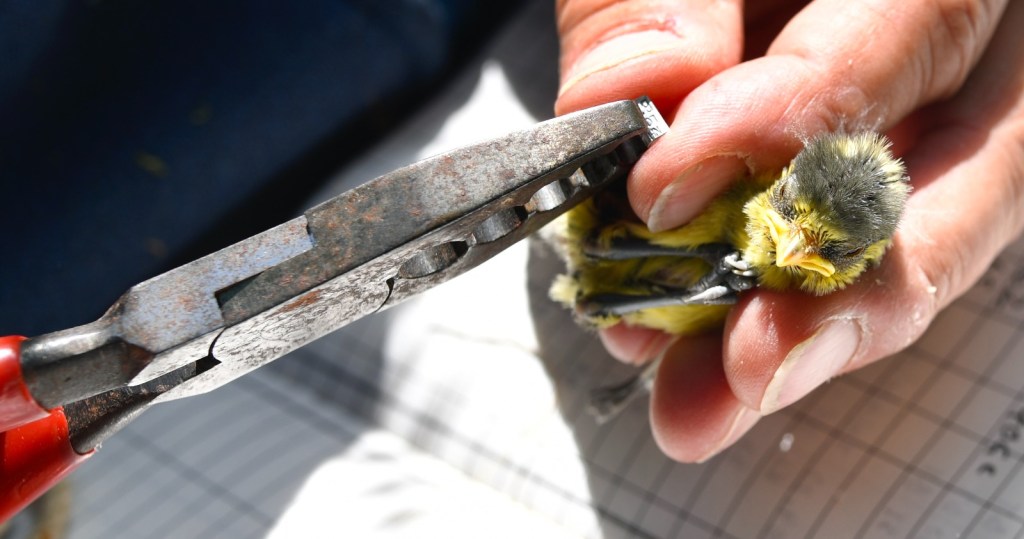
Despite this success, 40 nestboxes remained unused, which initially seemed high, though this is addressed in more detail below. Of the Pied Flycatcher nests, two were abandoned and one brood was entirely missed during monitoring, which slightly underrepresents their productivity in the figures above.
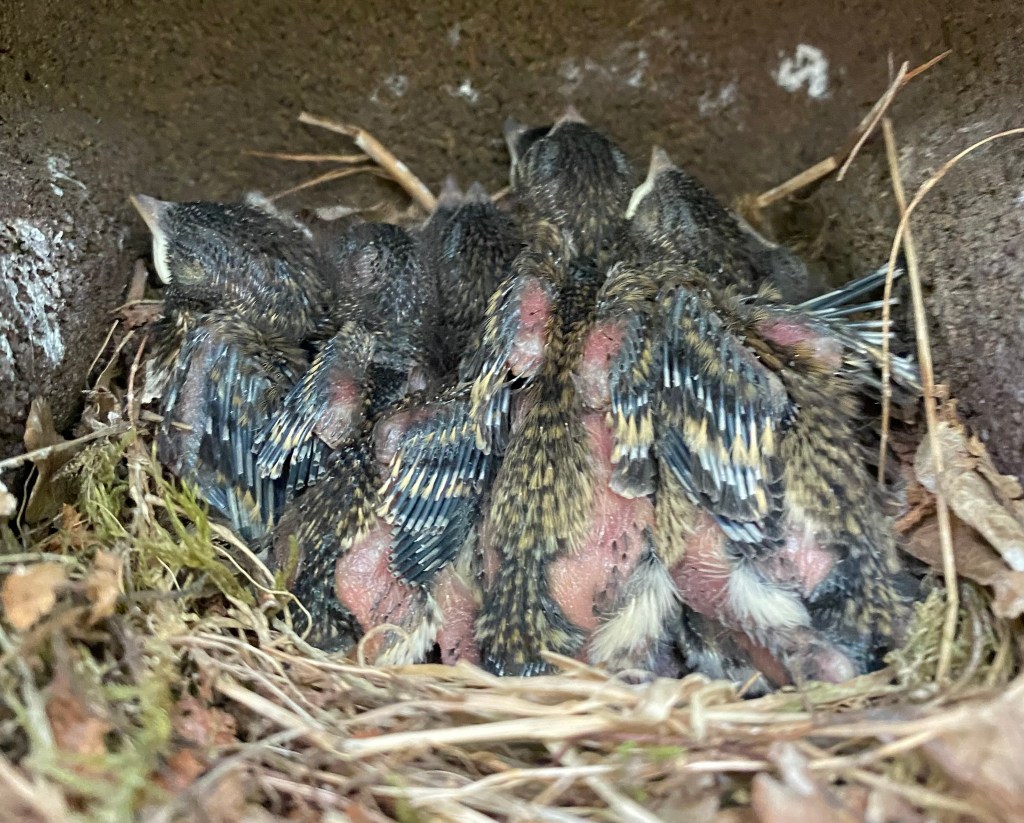
The weather broke at the end of May, bringing a week of cold, wet conditions that had a noticeable impact on breeding success. Several broods were lost, with dead juveniles found in a number of nests. Birds that arrived and bred early appeared to benefit from the fine weather in April and early May, producing large broods and achieving high fledging success. In contrast, those that initiated breeding later were caught out by the sudden drop in temperature and wet weather, leading to increased chick mortality, likely due to a decline in food availability.
In one flycatcher nest only one fully grown juvenile was ringed, with five dead chicks removed. The entrance hole had been enlarged by squirrels in the past, which had allowed water ingress, a box I will definitely replace for the 2026 season.
In both years, a single pair of Nuthatches nested on site, and on each occasion, they chose the woodcrete boxes. In both instances, they completely sealed the entrance, making it impossible to inspect the contents!
It’s also a bit disappointing to report that the six open-fronted boxes I carefully constructed have never been used by any species. I’m now considering modifying them ahead of the 2026 season to improve their chances of being occupied.
Woodland Habitat
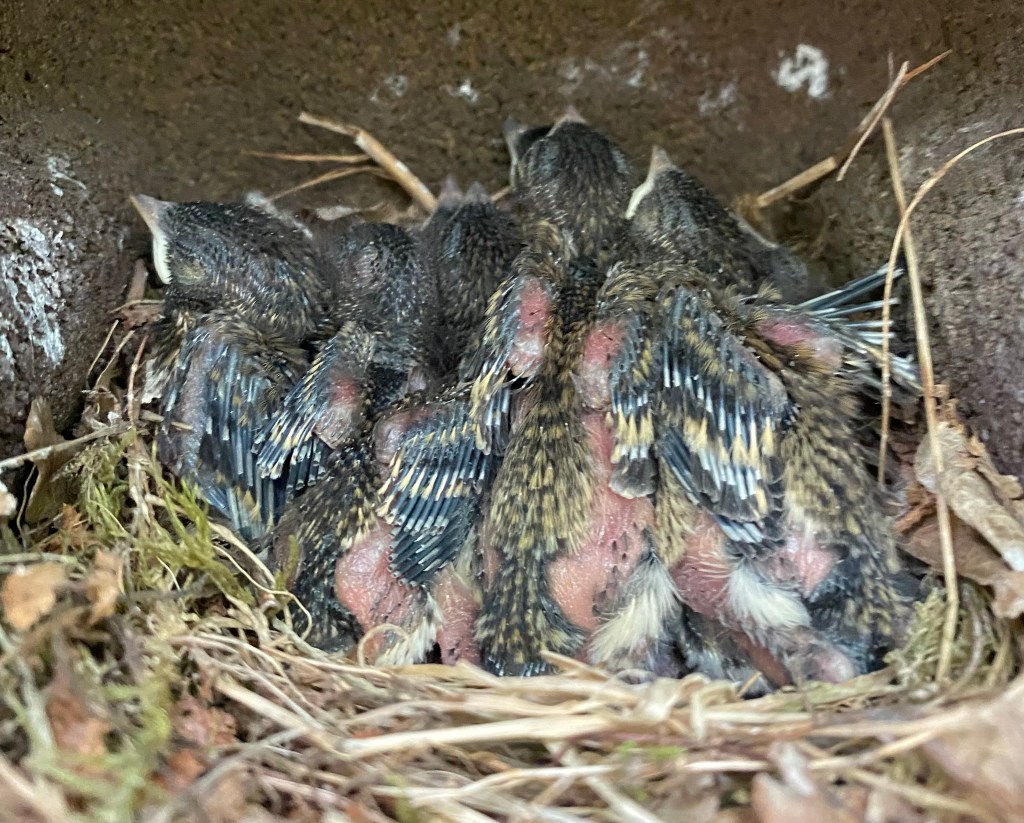
The majority of woodland where my nest boxes are located is made up of ‘young’ oak trees between 100 and 150 years old and it total covered 18Ha. Superficially the woodland looks great with a carpet of Bluebells in spring and other ancient woodland indicator species present. However, these trees don’t yet have the numerous natural holes or cavities that Pied Flycatchers need for nesting. Pied Flycatchers don’t create their own nests from scratch, they look for existing holes in trees, which is why they are quick to use nest boxes when they’re available.
In new or younger woodlands, the lack of natural tree cavities can be a problem. Without enough places to nest, Pied Flycatchers may struggle to breed successfully. This can lead to more competition for the few available spots, and younger or less dominant birds might have to leave to find somewhere else to nest. As a result, fewer chicks may be raised, which can affect the local population over time.
The installation of nestboxes in this type of woodland is surely positive for cavity nesting bird species.

Do Early-Breeding Great Tits Outcompete Other Birds for Nestboxes? How many nestboxes do I need?
The use of nestboxes offering safe and accessible breeding sites for a variety of cavity-nesting species must be positive. However, not all birds have an equal chance when it comes to occupying these artificial sites. Clearly the most dominant are Great Tits, whose early breeding habits and aggressive behaviour can give them a competitive edge over other species, particularly migratory birds such as Pied Flycatchers and Redstarts.
I have no doubt that if I had only installed a single nestbox in the woodland, then it would have been immediately commandeered by Great Tits.
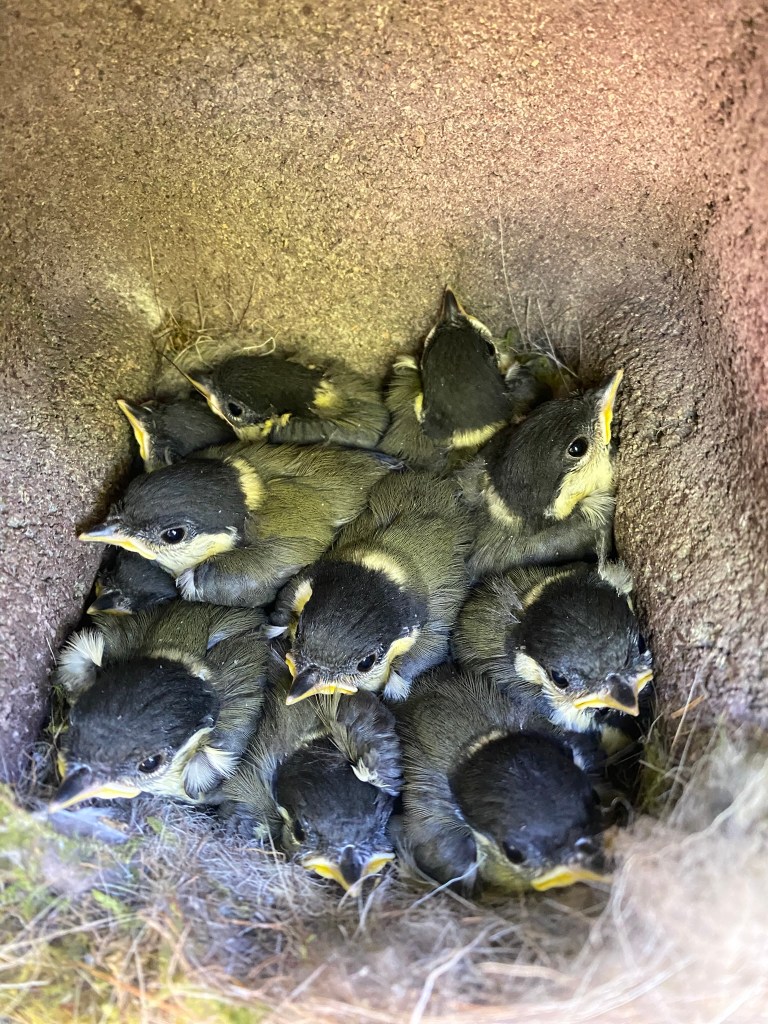
Great Tits begin prospecting for nest sites early in the spring, often weeks before migratory species return from their wintering grounds. This head start allows them to claim the most favourable boxes, typically those in optimal locations in terms of shelter, temperature, and proximity to foraging areas. As a result, by the time later-arriving species begin to seek out nesting opportunities, many of the best boxes are already occupied.
Beyond their early arrival, Great Tits are also notably assertive. They are known to defend their chosen boxes aggressively, sometimes even evicting or deterring other birds, including Blue Tits, Nuthatches, and flycatchers. Their willingness to fight for nest sites stands in stark contrast to more timid species like Pied Flycatchers.
This pattern of early occupation and aggressive defence can significantly affect the breeding success of more sensitive or subordinate species. In some woodlands, particularly those with a limited number of nestboxes, Pied Flycatchers may struggle to find suitable nesting opportunities, and their local breeding populations can suffer as a result.
Therefore, if only a small number of boxes had been installed, it is likely they would have been fully occupied by Blue and Great Tits. This highlights the importance of providing an optimal number of nestboxes to ensure that some remain available for later-arriving migrant species such as Pied Flycatchers.
I suspect that having forty empty boxes in both 2024 and 2025, that is nearly 50%, may be the result of a bit of overenthusiasm on my part. However, I plan to maintain the same number of boxes next season to see if this pattern holds and whether the current provision truly exceeds demand.
The species dynamics present important considerations for those considering putting nestbox up in local woodlands, especially where conservation of migratory species is a key objective. Several strategies can help level the playing field:
- Increase Nestbox Availability: By providing a higher density of boxes, the chances improve that late-arriving birds will still find unoccupied sites. The fact that I have a number of empty nestboxes suggest that there is availability of late arriving migrant species…
- Diversify Box Placement: Great Tits prefer certain habitats and microclimates; placing some boxes in shadier, less central areas can make them more appealing to flycatchers while discouraging earlier breeders, although to be honest I have just selected random sites on an easy to follow trail through the woodland.
- Monitor and Adjust: Early-season monitoring could/can inform decisions about box placement and species use, and adapt to changing population dynamics.
While Great Tits are a welcome part of the woodlands and provide valuable data in long-term monitoring schemes, their competitive dominance can pose challenges.
Recognising and managing this dynamic is essential for ensuring that nestbox schemes truly support biodiversity, offering fair nesting opportunities to a wide range of species, including those most in need of conservation support, specifically Pied Flycatchers!
I’m currently in full-time employment, so time is limited, and checking all the nestboxes is quite demanding, especially with parts of the woodland situated on steep hillside terrain, making the work physically challenging. If I had more flexibility, I might consider removing some boxes initially and only putting them up once the Great Tits have started nesting, to favour later-arriving species. Unfortunately, I don’t have the time to trial that kind of approach at the moment.
Thoughts on woodcrete nestboxes…
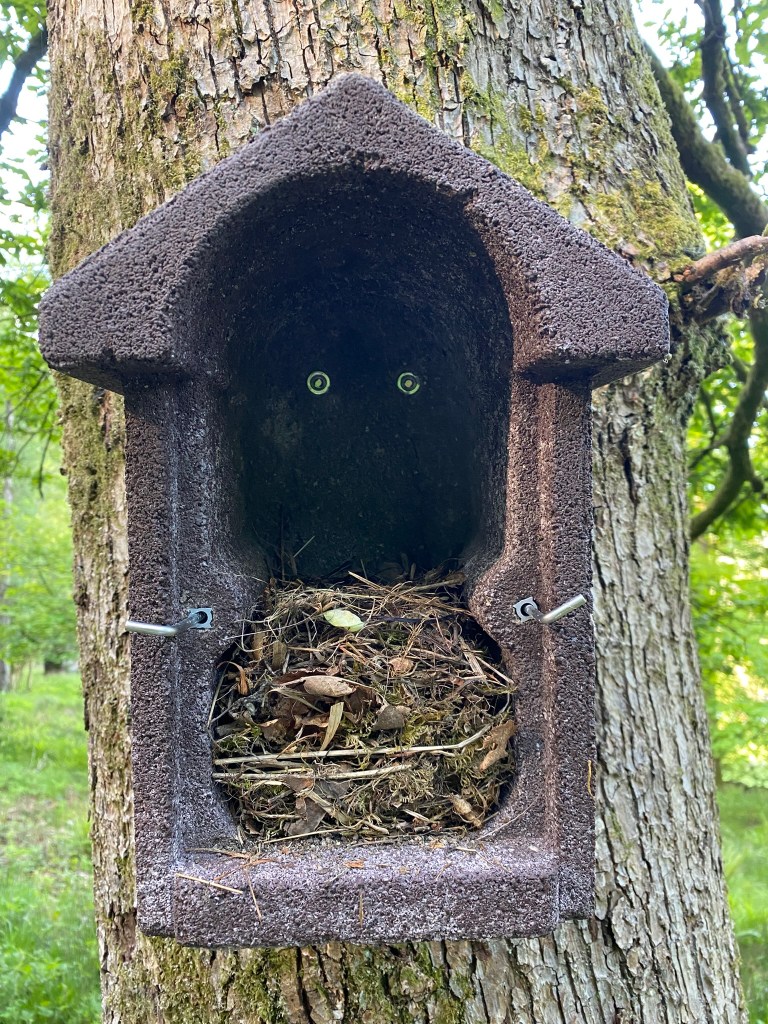
For anyone interested in providing safe nesting opportunities, choosing the right type of nestbox is essential. While traditional wooden boxes remain popular due to their availability and low upfront cost, woodcrete nestboxes, made from a durable blend of wood fibres and concrete, offer a range of significant advantages that make them the preferred choice for long-term use, particularly in demanding environments.
One of the most notable benefits of woodcrete is its exceptional durability. Unlike wooden boxes, which typically degrade over time and require replacement every 5 to 10 years, woodcrete boxes can last for 20 to 30 years or more. They are resistant to rot, weather damage, and general wear and tear, making them a sound investment for long-term projects or for use in remote areas where maintenance is difficult.
Predator resistance is another key advantage. Grey Squirrels and Great Spotted Woodpeckers are notorious for damaging wooden nestboxes, often enlarging entrance holes to gain access to eggs or chicks. Woodcrete’s dense, solid structure offers a much tougher barrier, helping to protect nesting birds from such threats.
Temperature and moisture regulation are also significantly improved in woodcrete boxes. The material offers excellent thermal insulation, keeping the interior cooler during hot spells and warmer in cold weather—creating a more stable environment for eggs and chicks. Additionally, woodcrete is breathable, which helps to prevent condensation and reduces the risk of mould and damp—issues that can affect chick survival in poorly ventilated wooden boxes.
Maintenance requirements are also minimal. Once installed, woodcrete boxes can often be left in place for years with little need for repair or replacement. This reduces labour costs and is particularly beneficial for organisations managing large networks of nestboxes or working on long-term monitoring schemes.
The weight and sturdy construction of woodcrete boxes make them more stable, especially in exposed or windy locations. They are less likely to be dislodged or damaged by animals or the elements, and many designs come with secure mounting systems to further reduce the risk of disturbance. At the request of the landowner the boxes were all installed with aluminium nails.
Finally, woodcrete boxes are often designed with conservation in mind. They are available in a wide range of models tailored to different species, with specific entrance sizes and internal dimensions. Importantly, because the material does not require chemical treatments or preservatives, it is also safer for wildlife.
In summary, woodcrete nestboxes may involve a higher initial investment than timber alternatives, but the benefits they offer in terms of durability, safety, and environmental suitability make them an ideal choice for serious conservation efforts, scientific monitoring, and anyone wanting a reliable, low-maintenance solution for providing secure nesting opportunities.
When to Clean Out a Nest Box: Timing, Tips, and Best Practice
Cleaning out nest boxes is a vital but often overlooked part of supporting healthy bird populations. While simply putting up a nest box is a positive first step, regular maintenance, especially timely cleaning, plays a crucial role in ensuring boxes remain safe, attractive, and hygienic for future occupants.
So, when is the best time to clean out a nest box? The short answer is: in autumn, once the breeding season is fully over but before birds begin to use them as winter roosts. In the UK and similar climates, this usually means between late September and early November.
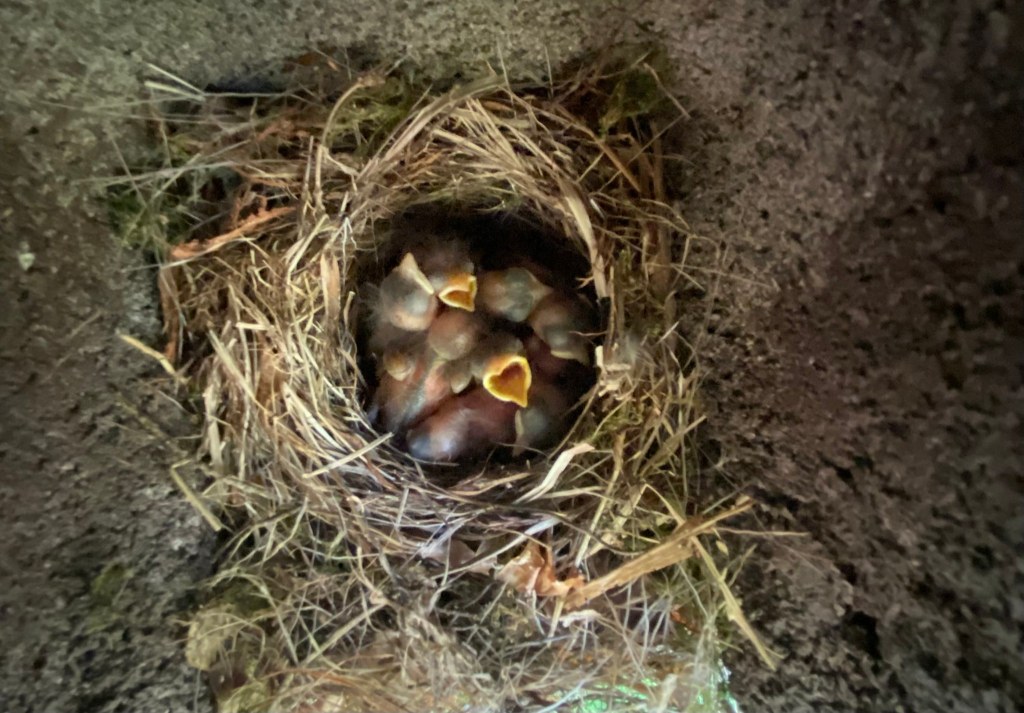
By this point in the year, most birds, such as Great Tits, Blue Tits, and Pied Flycatchers, have completed their breeding cycles. Any second broods have typically fledged, and the risk of disturbing active nests is low. Importantly, cleaning boxes before winter ensures they are dry, parasite-free, and ready to offer shelter during colder months, when species like Wrens and Tits often roost in them to stay warm.
The cleaning process itself is straightforward but should be done with care:
- Open the box and remove all old nesting material. Worn-out nests can harbour parasites such as fleas, mites, and lice, which may harm future nestlings or deter birds from reusing the box.
- If any unhatched eggs are found, they can legally be removed from 1 September onwards in the UK under the Wildlife and Countryside Act 1981. However, these must be destroyed and not kept.
- It’s advisable to wear gloves and a face mask, as nests can contain droppings, mould spores, or other irritants, something I never do…
Special consideration should be given to boxes used by later-breeding species such as owls or kestrels. These birds may still be raising young well into late summer or even autumn, so always check for signs of occupancy before cleaning.
Providing a clean box each year has several benefits. Not only does it reduce the risk of disease and infestation, but it also increases the likelihood that birds will return to the box in the following spring. Moreover, it supports overwintering birds by offering a dry, secure roosting spot during harsh weather.
Does Monitoring Nestboxes Impact Bird Productivity?
Nestboxes allow us to observe breeding behaviour, track populations, and assess the health of bird species over time. However, concerns are sometimes raised about whether this monitoring might itself affect the productivity of the birds being studied. Does human activity around nestboxes disrupt breeding, reduce chick survival, or lead to nest abandonment?
The evidence suggests that when monitoring is carried out carefully and with proper consideration, it has little to no measurable impact on productivity. In fact, long-running studies have demonstrated that regular monitoring can be compatible with successful breeding outcomes.
Species such as Great Tits and Blue Tits have been studied for decades using nestboxes. In these populations, researchers have found that regular inspections, when timed and conducted correctly, do not significantly affect clutch size, hatching rates, or fledging success. These findings support the idea that many cavity-nesting birds are tolerant of human presence during the breeding season, especially those that commonly use artificial boxes.
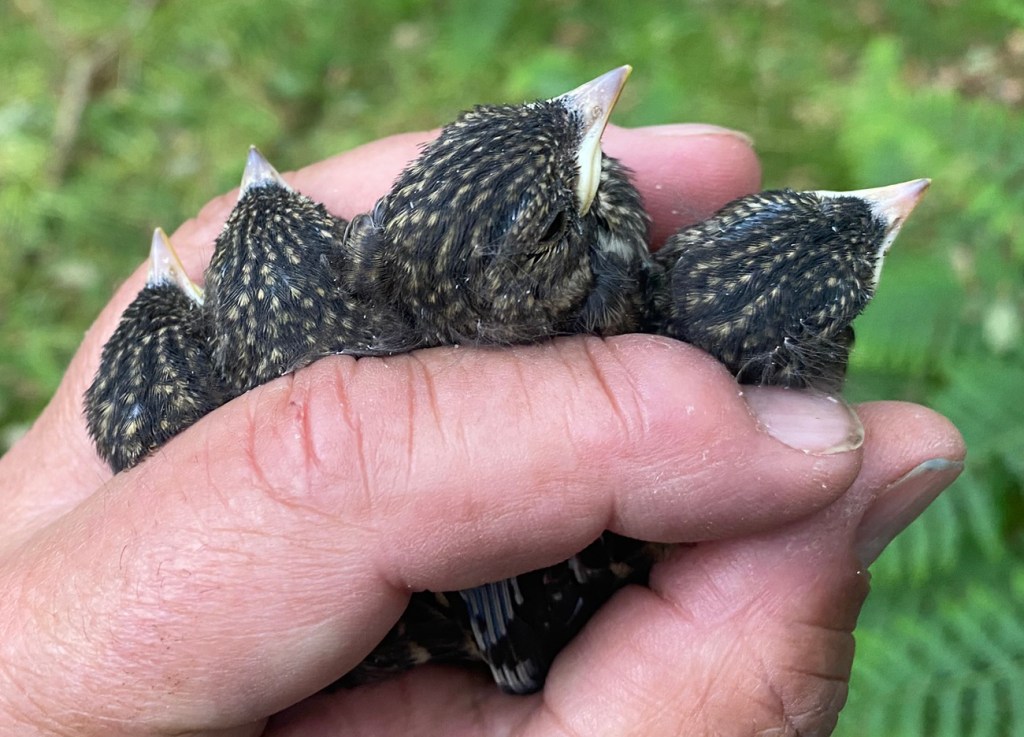
However, not all birds respond in the same way. Some species are more sensitive to disturbance, particularly during the early stages of nesting. Entering a nestbox during egg-laying or shortly after hatching can, in rare cases, lead to desertion. In addition, careless monitoring practices, such as excessive frequency, poor handling of chicks, or visits during inclement weather, can reduce chick survival or increase predation risk by leaving scent trails or damaging the structure of the box.
Despite these concerns, multiple studies have found that when best practices are followed, the risks are minimal.
To reduce the likelihood of negative impacts, it is recommended that monitoring visits be kept brief, observers should avoid handling chicks during cold or wet weather, use standardised protocols, and ensure nestboxes are designed for easy and safe access. Minimising disruption not only benefits the birds but also improves the reliability of the data collected.
Summary
Three years into the project, I feel it has been a genuine success, and I truly believe the nestbox scheme is making a positive contribution to Pied Flycatcher conservation in the local landscape. That said, I’m also aware that increasing the numbers of Blue and Great Tits in the woodland could be having an impact on other species, such as Marsh Tit.
Looking ahead to the 2026 season, it’s clear that many of the wooden boxes will need replacing. I’d have no hesitation in switching to woodcrete boxes, given their durability and their ability to deter both Grey Squirrels and Great Spotted Woodpeckers. That said, the thought of having to purchase 25 in one go is admittedly a little daunting!



Leave a Reply