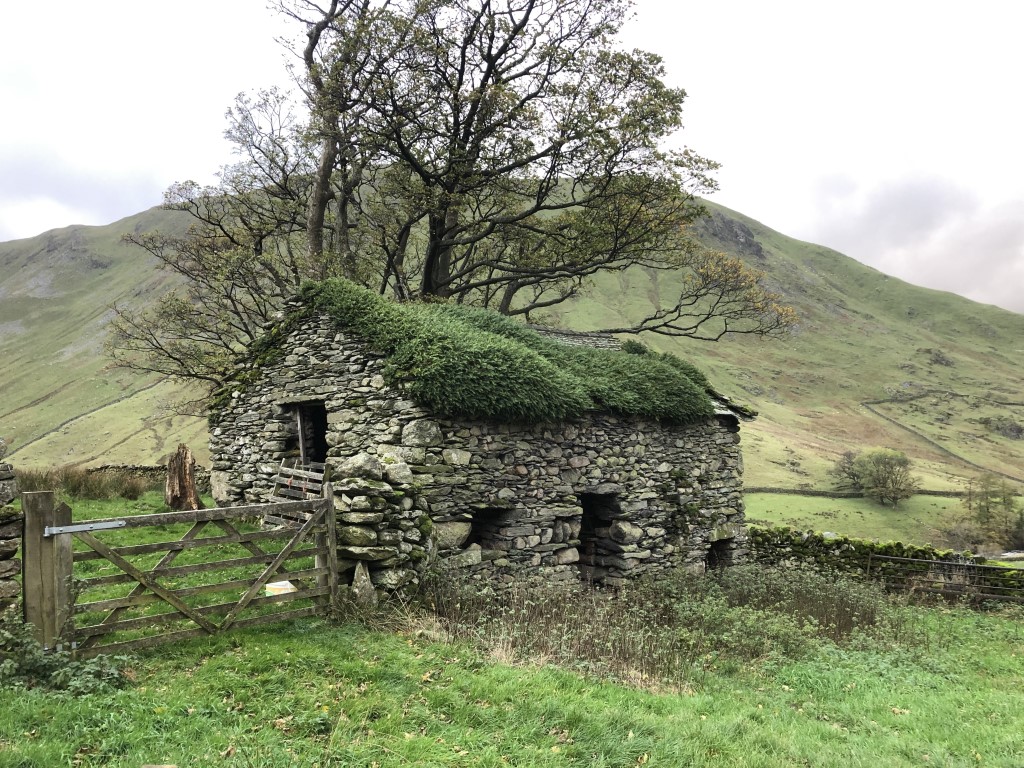
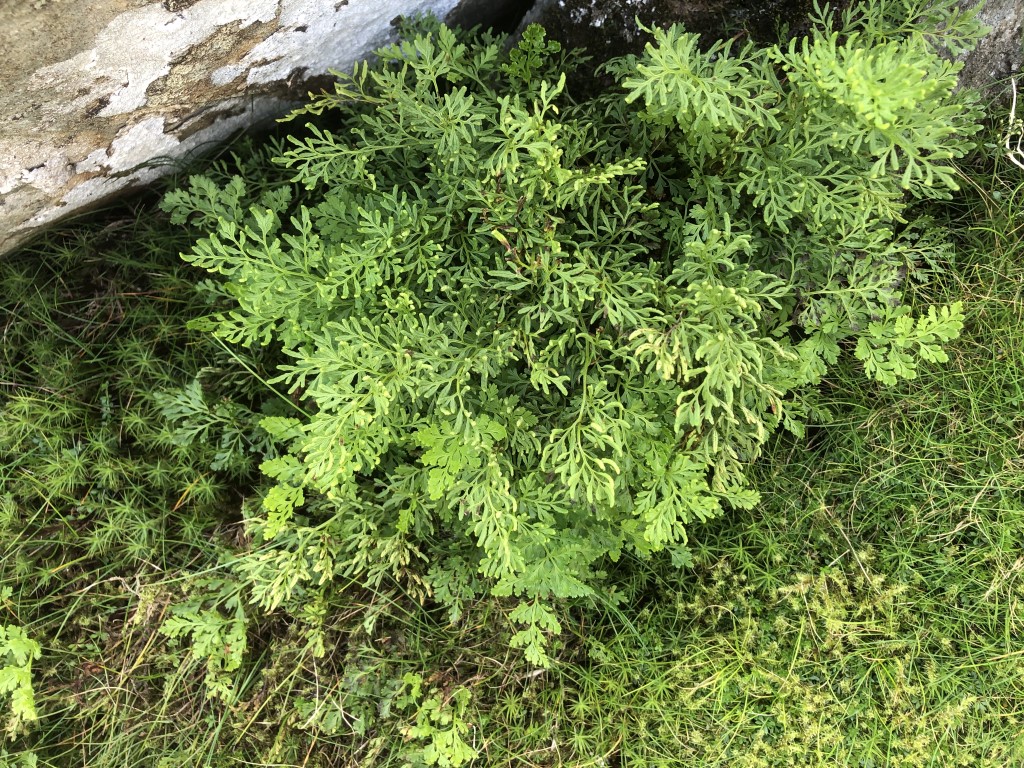
Common Polypody (Polypodium vulgare) is a familiar fern in Cumbria, particularly on rocks, old walls, moss-covered trees and other damp, undisturbed places. Its leathery, deeply divided fronds arise from creeping rhizomes, allowing it gradually to form extensive colonies. It is particularly well suited to the humid climate of the Lake District and, despite its association with damp places, can tolerate surprisingly dry conditions.
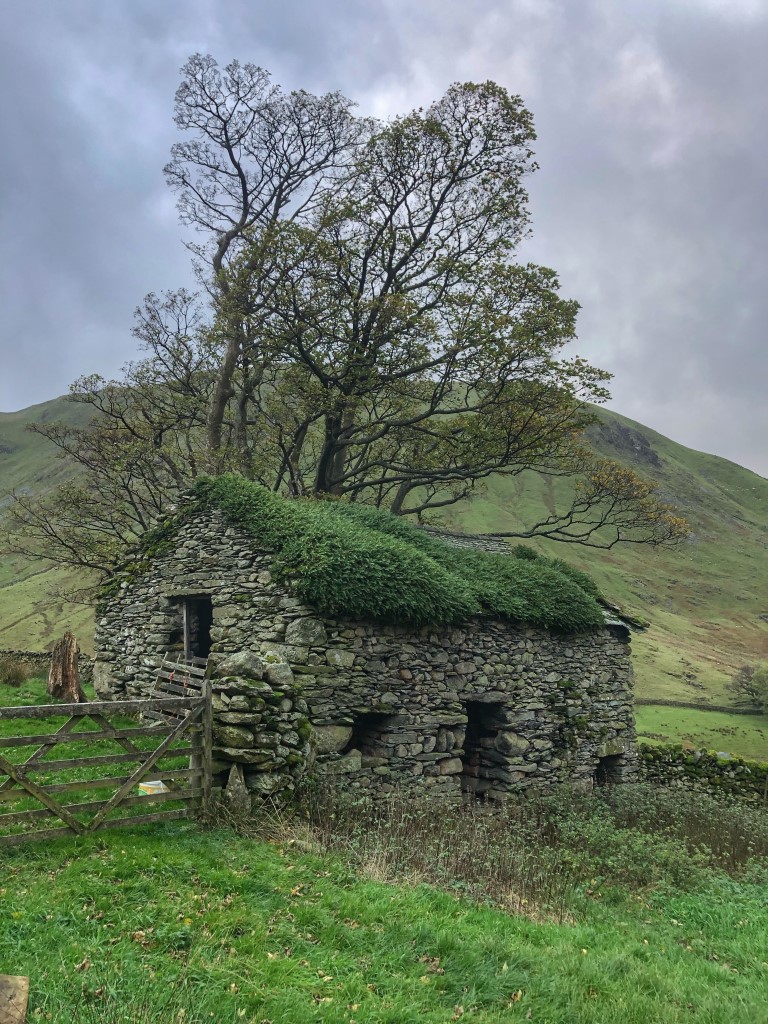
This old barn at Hartsop provides an almost perfect artificial habitat. Its traditional stone-slab roof has accumulated moss, humus and other organic material in the gaps between the stones. Polypody rhizomes can spread through this shallow layer, while Cumbria’s high rainfall and humidity prevent it from drying out for prolonged periods. The rough, undisturbed roof therefore behaves rather like a natural rocky ledge or moss-covered boulder.
Over many years the creeping rhizomes have spread across the roof, producing the remarkable green blanket of ferns visible in the photograph. Rather than simply growing on the barn, the polypodies have effectively turned its ageing stone roof into a miniature piece of Lakeland habitat.



Leave a Reply