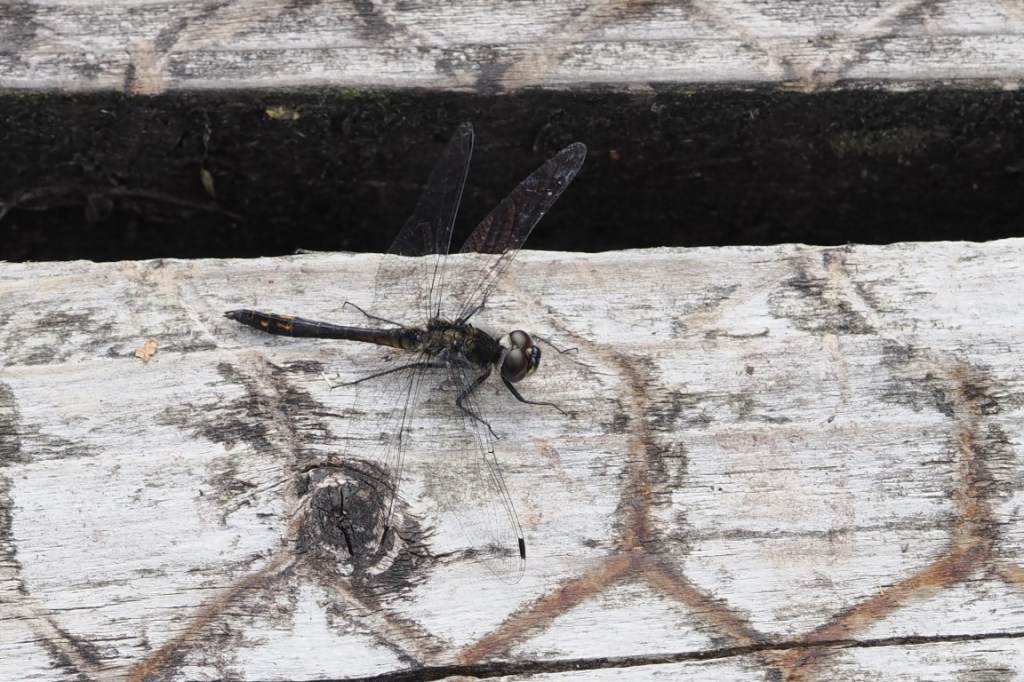
The Black Darter (Sympetrum danae) is one of Britain’s smallest dragonflies and a characteristic species of bogs, heathland pools and other acidic wetlands. It is particularly associated with upland and peatland habitats, making it a familiar late-summer sight in suitable parts of northern and western Britain.
Males are distinctive when mature, becoming almost entirely black, with only small yellow markings along the sides of the abdomen and thorax. Females and immature males are quite different, being predominantly yellow or golden-brown with extensive black markings.
Black Darters are mainly on the wing from July through to October, although numbers are often at their highest during August and September. On warm days they can frequently be seen perched on heather, rushes or other low vegetation, repeatedly darting out to catch small flying insects before returning to a favourite perch.
Although easily overlooked because of its small size, a mature male Black Darter is a wonderfully distinctive insect. Against the autumnal colours of heather and moorland vegetation, its dark body makes it one of the most attractive and characteristic dragonflies of our northern wetlands.



Leave a Reply