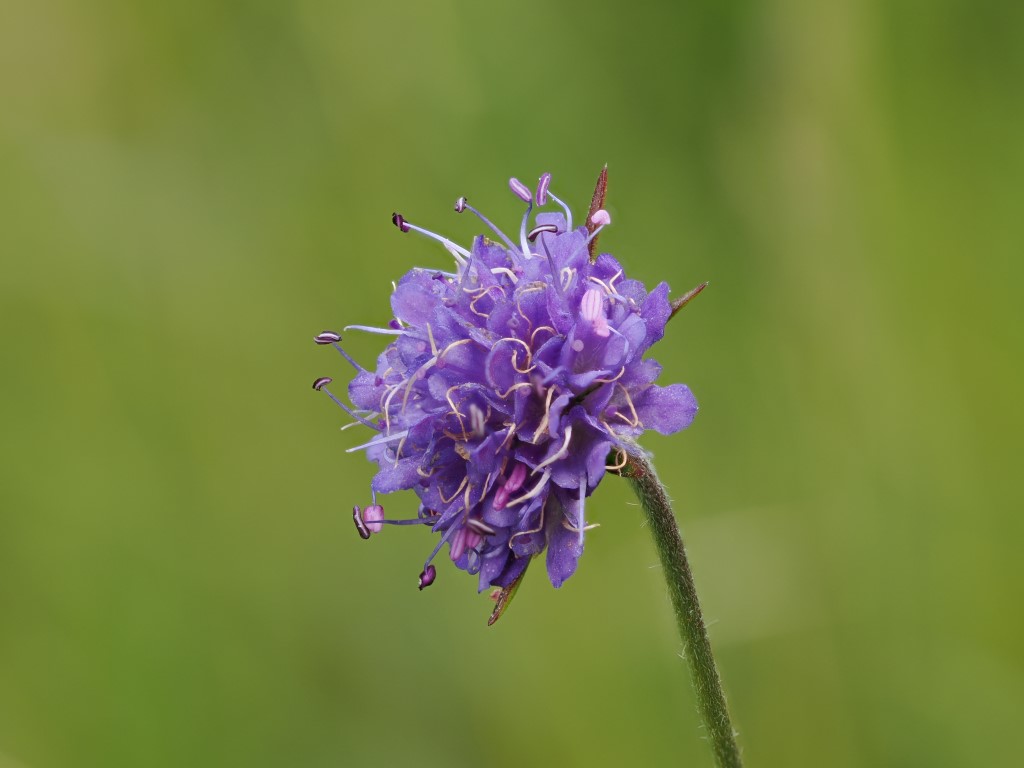
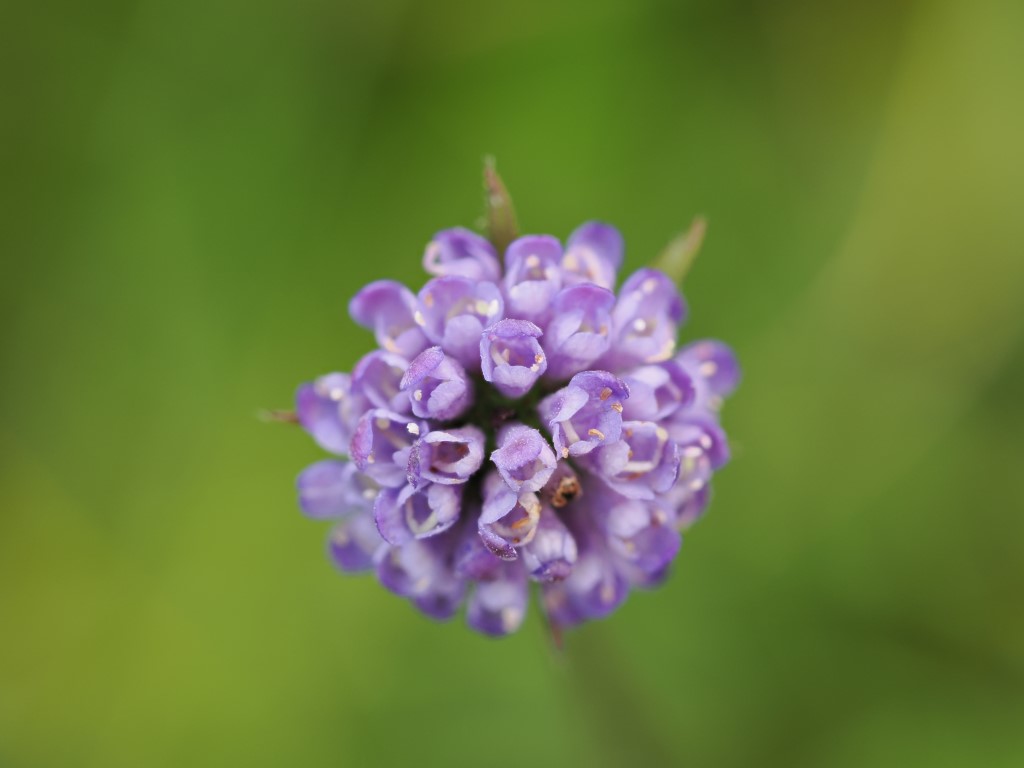
Devil’s-bit Scabious (Succisa pratensis) is one of the characteristic wildflowers of late summer and early autumn, bringing splashes of blue-purple to damp grasslands, meadows, heaths and moorland edges when many other flowers are beginning to fade.
Its rounded flower heads are carried on slender stems, often standing well above the surrounding vegetation. Flowering mainly from July through September and sometimes into October, it provides an important late-season source of nectar for bees, hoverflies and butterflies. Red Admiral, Peacock and Small Tortoiseshell are among the butterflies that can often be found visiting the flowers on warm late-summer days.
The plant is particularly important as the main foodplant of the Marsh Fritillary caterpillar, one of Britain’s most threatened butterflies. The caterpillars live communally in conspicuous silken webs amongst the leaves and depend upon areas where Devil’s-bit Scabious grows in sufficient abundance.
Its rather curious name comes from the plant’s short, abruptly ending rootstock. According to folklore, the Devil was so annoyed by the plant’s medicinal properties that he bit off the end of its root — hence “Devil’s-bit”.
With its rich purple-blue flowers appearing as summer begins to give way to autumn, Devil’s-bit Scabious is both an attractive plant and an especially valuable one for late-flying insects.




Leave a Reply